The Reserve Bank of India (RBI) on Friday announced that Rs 2,000 notes will only stay on as legal tender, and it would be discontinued from circulation. About 89% of the Rs 2000 denomination banknotes were issued prior to March 2017 and are at the end of their estimated life-span of 4 to 5 years, the RBI said in a notification.
Here are my key takeaways on this decision:
1) Can it be a legal tender?
The decision to withdraw the Rs 2,000 denomination banknotes from circulation was made under the RBI’s ‘Clean Note Policy’. However, they will continue as legal tender. This is both confusing and impractical. How can a currency that is withdrawn still be considered legal tender? People have been instructed to exchange it by September 30th.
If it were only reduced, like in 2019, it wouldn’t be called demonetisation, as acceptance wasn’t illegal. However, if a currency no longer exists, the question of it being legal or illegal doesn’t arise; it simply becomes void. Thus, although the government or RBI hasn’t officially termed it demonetisation, it is, in a practical sense, demonetisation.
Rs 2,000 denomination banknotes were infrequently used for transactions. Their usage declined from Rs 6.73 lakh crore on March 31, 2018—representing 37.3% of notes in circulation—to Rs 3.62 lakh crore on March 31, 2023, constituting only 10.8% of notes in circulation.
In a couple of years they would be down to less than 5%. There was really no need to do this unless the idea was to destabilise others politically.
3) Rs.2000 was not a popular medium of exchange
Other denominations of notes are sufficient to meet the public’s currency needs. The failure of the Rs. 2000 note as a currency isn’t surprising. In the market, what use is a Rs. 2000 note when you can hardly get change for Rs. 500, especially when liquid cash is becoming less prevalent? This has adversely affected consumption behavior and patterns. Most people don’t have any business using a Rs. 2000 note at a local grocery store. Firstly, shopkeepers won’t provide change. Secondly, an average middle-class person will typically spend around Rs. 500 in a store. Unless one needs to buy goods in bulk, the Rs. 2000 note is of little use.
Most people in the country prefer weekly purchases over monthly ones due to geographical reasons, storage issues, and fear of food spoilage. Items like rice, mustard oil, and dal are purchased monthly, making the Rs. 2000 note somewhat useful. Conversely, daily wage laborers and maids who make daily purchases of vegetables and essentials would find Rs. 100 notes more practical.
Consider a typical middle-middle-class family that mixes monthly and weekly purchases. Excluding rice and dal from weekly purchases and reserving them for monthly purchases, items like fruits, butter, biscuits, flattened rice, snacks, and diet chera would be bought weekly, using Rs. 500 notes. Monthly purchases of items such as rice, dal, mustard oil, white oil, medicines, and tea leaves would necessitate Rs. 2000 notes.
4) Productivity loss
As of March 2023, Rs 3.62 lakh crore worth of Rs 2,000 notes were still in the financial system. With notes worth Rs 20,000 allowed to be exchanged at one time, it would take 18.1 crore visits to banks to exchange all the Rs 2,000 notes. This process will be challenging for both RBI officials and citizens, affecting the country’s productivity due to time and effort wastage.
Let’s understand this with a hypothetical calculation. Rounding off 18.1 crore to 18 crore, and considering there are 131 days for exchange from May 22, 2023, it would mean 13 lakh citizens would need to stand in queue every day for an average of 3 hours (including transport time).
kids: exchange ₹2000 note at bank adults: order cash on delivery and give ₹2000 note legends: never had ₹2000 note
The 2016 demonetisation was a failure. Experts in law, economics, and other fields have acknowledged this. The idea was to remove corruption, but corruption has increased, with fleeing the country becoming a new method. Have Nirav Modi or Vijay Mallya come back? No. Instead, we have new names on the list, like Mehul Choksi and Lalit Modi. There’s no evidence suggesting that black money hoarding has reduced or that crony capitalism has been kept in check. Thus, repeating the same old idea with only theoretical changes makes no sense.
The Rs 2000 notes were also widely used by the fake currency mafia. According to a Business Standard report, most of the fake money seized in the last three years was in Rs 2000 denominations. In 2021, fake Rs 2000 notes worth Rs 4.84 crore were seized. Approximately 2.44 lakh fake Rs 2000 notes were seized in 2020, and 90,566 fake notes were seized in 2019.
"Just because you have failed, your intention was also flawed." SC on #Demonitisation verdict Are we serious? Who is going to compensate for the lives lost by heart attack waiting in queues, suic!de cases under pressure or due to plain poverty? Such privilege talks, isn't? pic.twitter.com/d5cTnUVwFJ
Since the printing of the notes stopped in 2019, they would have gone out of circulation. But it could be a way to expose those hoarding black money. They are bound to get exposed if they go to deposit large sums in the bank. The exchange for money in the first place or even deficit financing (printing of new money) has been proven to be economically inefficient multiple times.
Let’s understand the mathematical logic behind this. To replace the quantity of Rs.2000 notes with Rs.500 notes, RBI only needs to print 85,860 lakh pieces Rs.500 notes. In 2021-22, RBI printed 1,28,003 lakh pieces of Rs.500 currency. RBI has the capacity to print & supply around 2,22,500 lakh notes every year. How many counterfeit 2000 notes were detected by the RBI and banks since 2016? 79836 number of 2000 notes, ie, amounting to Rs. 15.97 crores.
Counterfiets of that Rs.1000 notes in 2017 were just 2.4 pieces/crore notes. So Rs.2000/- facilitated more counterfeits, almost 27 times of Rs.1000 notes. Same time, the number of Rs.500 counterfeits in 2022 was just 17.5 nos./crore in comparison with 64 nos./crore of Rs.2000 notes.
Data reveals that though the Rs.2000 notes are the highest, the counterfeit currency is a tiny fraction of Rs. 31,05,721 crores of CIC. Thus, RBI could have easily absorb the 2000 currency notes in circulation and replace it by 500 notes.
Besides, high value currency facilitates hoarding at ease than low value currency. A 100% counterfeit proof note cannot be made either. You don’t need to have an economics degree to understand that. It’s a fact.
Nothing can happen unless economic reforms take place to increase liquid cash in a middle class household. Besides better enforcement and replacement of currency without creating panic among people are sound practices adopted world over against the menace of corruption.
Thank you for reading For more such interesting write ups and political analysis, do follow me here or on Twitter. My social links are given below for more such freshly brewed content. 🙂
Disclaimer Any views or opinions represented in this blog are personal and belong solely to the blog owner and do not represent those of people, institutions or organizations that the owner may or may not be associated with in professional or personal capacity, unless explicitly stated. The views or opinions are not intended to malign any religion, ethnic group, club, organization, company, or individual. All content provided on this blog is for informational purposes only. The owner will not be liable for any errors or omissions in this information nor for the availability of this information. The owner will not be liable for any losses, injuries, or damages from the display or use of this information. The blog owner is not responsible for the content in comments. This blog disclaimer is subject to change at any time.
Currently there isn’t any state in South India that has a BJP Chief Minister. Karnataka was the last state to have a BJP Chief Minister. That too is now gone. The BJP has been in power for almost a decade now in India, yet it hasn’t been able to grab neither Bengal nor South Indian states. What’s the reason? What’s keeping the BJP away from South India? Why is it every time Mr. Modi visits Chennai he is welcomed by ‘Go Back Modi’.
1)Communalism doesn’t work here The BJP is a party that wins by portraying how bad your opponent is. The BJP doesn’t win by portraying how great they are. There is a deliberate portrayal that chooses between the better of the two evils. Whether there’s an evil present or not is a different thing. Indians by nature love to make difficult choices. A choice made in a dharm sankat let’s say is going to give more gratification to an individual than a choice made in otherwise normal circumstances. For example, BJP has portrayed a narrative that congress is a party that does minority appeasement and has divided the country. On the contrary BJP has portrayed itself as an unapologetic hindu nationalist party which has dictatorship. People would happily choose BJP over Congress. Why? Partition is a reality, congress has accepted its responsibility on multiple occasions. It’s a different thing that it was a necessary evil. As I always say, no one is interested in details. It’s all headlines. The picture below explains the point well.
South India being educated doesn’t fall for this. The Mughal empire was never part of South India. Thus, whether it was good or bad, they are least interested. Hinduism in South India is characterized by Dravidian customs and traditions, hence it is also called Dravidian Hinduism. The aryan superiority theory with pride over hindi and ancient mythology doesn’t work here. They live in the present, don’t wallow in the greatness of the past. Instead take responsibility for the actions of today. All the BJP has to offer is past. It knows congress history better than congress itself seems like. Not many would believe but congress was once considered a Hindu party.
Another explanation that can be given here is class. There are economic reasons behind communalism. Who goes to a riot? Children of the poor. Not children of the rich. Ever seen a capitalist taking sword training? Where do riots take place? In front of your house? No. Not in urban metropolitan cities. No not in cosmopolitan main cities but poor slums, villages or small towns. Not the lutyens zone in Delhi. Have you seen the politicians themselves with swords? Any muslim businessmen or hindu businessmen present? Who is present? Unemployed poor people who have nothing productive to do.
Herd mentality is present in all societies however differs in class.
Take the example of Russia. There was Tsar Nicholas II. When there was a monarchy in Russia, the economic condition of people was terrible. Frequent riots and communal violence could be seen in Russia. From 1881-1884 and 1903-1906 large scale anti-Jewish violence was prevalent. This violence was supported by the Tsar government. But after the Russian revolution when Bolsheviks came to power the situation stabilised. The economic conditions were better. People were employed, every person was considered human rather than Jewish, Christian or religious identity. Since people were aware, there were no religious identities.
A Hindu or Muslim kills each other in a mob for simply belonging to a different religion. It is not an impulsive action. The mob isn’t concerned with anything. A person belongs to a different community that the killer isn’t part of is enough a valid reason. You don’t call it impulsive action. It is a subconscious belief. No education can rectify it. Education doesn’t change human beliefs, whatever we say. A person has preconceived notions on the basis of his or her surroundings. Social conditioning is the toolkit. If a person doesn’t find a legitimate reason as a result of an unexpected incident or epiphany one’s subjective reality won’t change even in the presence of different realities.
2) Hindi imposition and linguistic barriers
If you have observed the BJP carefully, most speeches are given by the Prime Minister directly. Yogi Adityanath, Amit Shah and recently JP Nadda is in the news. Sambit Patra is only seen in television debates not public rallies. Amit Shah is however not as great as an orator as compared to Mr. Modi. Modi is proficient in Hindi. Shah is proficient primarily in Gujarati. There is no well known english speaker other than Mr. Jaishankar as the foreign minister in BJP but again not someone who addresses rallies. The most common language in South India is Telugu and Tamil. Local leadership of BJP is anyway weak there. Thus, a large section of masses cannot make a connection. English too isn’t the most spoken language. Like how North Indians take pride over hindi being their mother tongue. South Indians take pride over Tamil and Telugu being their mother tongue.
To top it all, the repeated efforts of BJP’s hindi imposition has done blunder. Besides there isn’t a popular well known national media channel that mainly speaks in Dravidian languages. Nor any social media platform is primarily dominated by Dravidian languages. Thus, brainwash by communal polarization, fake news or any logical fallacy isn’t effective. People cannot sense the BJP narrative as effectively as a North Indian. Psychological tricks too don’t work because of linguistic reasons.
There are multiple Podcasts, YouTube channels that show Bjp content or promote ideas indirectly, however it’s all in Hindi. Hardly there is any strong BJP presence in Dravidian language in social media that too by any South Indian person.
3) No Big Leader Except Tejasvi Surya there is no other known face from the BJP belonging to South India. Therefore, there is overemphasis on Mr. Modi as the campaigning. But Mr. Modi cannot be Chief Minister. No CM face. No common person masses can connect with.
4) No Celebrity Power Akshay Kumar, Amitabh Bacchan are big names which come to mind when we think of BJP supporters. Celebrity influence is epochal and significant. If they can sell paan, they can sell votes too. In West Bengal for example, every Tollywood celebrity openly supports a political party and hardly is there anyone not part of it officially. The maximum number of members in TMC top leadership as MLA or top designation is a film actress. People vote more as a fan of an xyz actress for the party she belongs to than a supporter of that party. Celebrities here are in fact very bold, there is hardly any actress whose political affiliations one is unaware of as a viewer.
However, in South no big celebrity shows open support to BJP. Prakash Raj, Siddharth come in mainstream but as anti-modi persons. Rajinikanth and Ajith too don’t show open support as fanboys. Others are silent.
5) Land of Periyaar WhatsApp Historians in BJP have made Vinayak Damodar Savarkar , Sardar Vallabhai Patel etc as their heros. This is at the cost of ignoring Periyar, Babasaheb Ambedkar and other figures. Seldom do they speak of Periyaar or Basavanna. People who follow Periyar won’t be influenced by Savarkar’s achievements.
Thank you for reading this article. Stay tuned for more such freshly brewed content. For more such interesting articles and writings don’t forget to follow me on Twitter – @RadhikaBarman5 You may as well read my book, “God, Religion and Indians” by Radhika Barmanavailable on Amazon and Flipkart India.
Karnataka Legislative Assembly elections were held on 10 May 2023 to elect all 224 members of the Karnataka Legislative Assembly. The votes were counted and the results were declared on 13 May 2023. The Indian National Congress won the election securing a 136 seats majority. The All India Congress Committee (AICC) has declared Siddaramaiah as the Chief Minister for the state who will be sworn on Thursday.
The Karnataka elections has brought in minds of the voters various questions. Here are some of my key takeaways on Karnataka elections.
1) Could there be an Operation Lotus?
The most important question which is being asked now is if there’s a possibility of an operation lotus happening. Will history repeat itself?
In July 2019, the coalition government collapsed due to resignations by several members of Congress and JD(S) in the assembly. Subsequently, Bharatiya Janata Party formed the state government, with B. S. Yediyurappa becoming Chief Minister.
On 26 July 2021, Yediyurappa resigned from Chief Minister’s post and Basavaraj Bommai was sworn in as the new Chief Minister on 28 July 2021.
On 19 February 2023, BJP leader H.D. Thammaiah joined Congress along with his supporters. On 9 March 2023, BJP MLC Puttanna joined the Congress. Former Karnataka Chief Minister Jagadish Shettar quit BJP on 16 April 2023 and joined Congress the next day. Other leaders that left BJP before the polls include Laxman Savadi, S Angara, M P Kumaraswamy and R. Shankar.
R.Ashoka of BJP said before result announcement that if Plan A fails then there is Plan B to grab power. One must notice that this statement can be openly stated and glorified by the media as Operation Kamal. Democratically elected government is now regarded a cliched concept that is no longer in fashion. Very soon India might as well witness the Gerrymandering system like the United States system of checks and balances. Is this surprising? No? What is then surprising? That BJP can afford to say so.
Here’s the explanation. Congress won 135 seats. BJP won 66. JDS won 19. Other independent candidates won 4 seats. A 113 seats majority is required to form government. BJP is a party that describes itself as a party of Hindutva Nationalism and Social Conservatism. JDS on the other hand is a centre left party that describes itself a secular party. It’s unlikely that two opposing ideologies will collaborate together to form a joint alliance for Operation Kamal. However, even if so happens it will come to 85 seats. Even if the independent candidates join BJP is still short of 24-28 seats to form government.
The BJP would then require to poach a minimum of 26 candidates from Congress. Given that it is no longer a coalition government as it was in 2019, it’s highly unlikely defections would happen. More importantly, even if people are ready to sell their soul at an individual level for 100 crore each, it is highly unlikely there will be stability of the future government. This is because the previous operation lotus government now has the reputation of being corrupt amongst the public and the fact that it too can fail is proven. Nobody would like to be part of a government having sold itself that isn’t stable. A operation lotus 0.2 would indicate political instability with a possibility of president rule in future. A election which the RSS too knew in advance wouldn’t be a bjp victory is for sure not a government that can fall now. Even if defections from Congress take place, exactly 26 is difficult to achieve when multiple leaders from BJP have joined it.
Perhaps, to poach exactly 19 members of JD(S) could be difficult. For a party that has now lost even it’s strong footholds will be extra cautious to such risky decisions. Fear of losing government again like it happened last time will make them fear selling their souls. 2023 election proved that even those seats that were historically strong holds of the JD(S) can be lost proved that it never was a regional party game thus, they wouldn’t be given importance even if they join BJP. Thus, mathematically and politically Operation Lotus is impossible.
2) Is the BJP out from South India?
There is neither a BJP government nor an NDA alliance government existing in south India now.
Historian Ramachandra Guha in conversation with journalist Karan Thapar, Guha sought to advance the narrative of a “BJP-free South India” while dismissing that the party’s vote share remained more or less intact. It’s strong performance in and around Bengaluru slightly underscores this argument. By uncritically upholding this template as an exemplary system of governance, political commentators are unwittingly committing the same mistakes as those who stereotype all South Indians as ‘Madraasi’.
Mr.Modi even in his Mann Ki Baat has highlighted the south Indian states, from Subrahmanya Bharathi’s poetry on Irish teacher Sister Nivedita, a disciple of Swami Vivekananda, to the Kashi Tamil Sangamam in 2022, one gets a sense of how artificial and contrived the divisive rhetoric of South Indian exceptionalism really is.
What is important for us to highlight here is BJP’s objective. The BJP’s objective was never about winning elections as in making chief ministers in South. BJP knows well it can never form a government in south India nor does it have a strong local face there. The BJP gives importance to state elections aggressively, in Bengal too it did a magnificent campaign but lost. South India too is about opening pockets and experimentation. Experimentation of how successful a communal agenda is amongst the educated class. Opening pockets as in motivating people to vote for them in general elections.
A general election algorithm is different from a state election algorithm. There are people who said in 2013, “Kejriwal for CM, Modi for PM.” Then there are people who said in 2021, “TMC for West Bengal, Congress for India”. This proves that people who may have voted for a party in state is not a party they necessarily support in the centre. I even know Communists in Bengal who voted for the left in state and BJP in the centre. To equate South India as a left heartland like in Bengal is BJP’s strategy. Everything else is stunt. There are many communists in Bengal who voted for the BJP in the centre, left in Bengal, but seeing TMC win elections they left CPM and joined the BJP. The left knows it cannot win in India, it has not the charm, thus its alliance with the Congress as a national party has never worked. For example, Kerala has a communist government, this explains why BJP has eyes at it.
Congress alliance with JD(S) and its collapse in state too proved that a national party can never be in alliance with a state party for regional elections in particular. The Karnataka elections was not about BJP winning, as it was clear by surveys it won’t. It was about seats disparity. 130 or 140 fight for the Congress. Whether the BJP will get 60 or 90 seats. If it had got 90 seats, the government could fail through operation lotus, the back up plan argument is designed on that basis. Anyway, JDS future is now uncertain, they can be anything but not a kingmaker in near future. Out of the bandwagon effect given to ideological considerations it may however want a coalition in future with the Congress in general elections.
3) How will this affect the 2024 elections?
Karnataka elections prove that BJP may win the Hindi heartland but not South India. It will never form the government there how hard it may try. As with regards to opening pockets that point has been explained above. The BJP agenda is limited to that alone. Congress victory has been credited to Rahul Gandhi’s Bharat Jodo Yatra. Statistically it makes logical sense. This will place Rahul Gandhi as a mass leader capable of winning elections in the Indian diaspora.
Emphasis on local leadership amorted rumours of internal conflicts in Congress. Multiple faces other than the Gandhi’s under Kharge leadership ceases off nepotism monopoly argument. Mallikarjun Kharge once called Gandhi puppet too shares credit for party victory. This sends a message to the common masses, that there are leaders in Congress who can make strategic plans and need not rely on ‘nods’ by the Gandhi Scion. Such a shift in general perception will be favourable for the Congress in 2024 elections. As reasons not to vote for Congress as given earlier are now losing ground. The BJP’s inability to offer any alternative made it even more clear.
During 2019 the BJP offered radical decisions like article 370 removal, ram mandir which it eventually even did. However, the Congress was accused of not offering an alternative. The state election perception is reverse now. Rahul Gandhi’s perception of post BJY is changed, thus 2024 perception backed by anti+incumbency arguments may just be like Karnataka.
4) Communal Agenda – Does it work?
Karnataka since last few months has been the hub of communalism. According to political analysts Phani Rajanna and Sandeep Shastri, with Karnataka polls nearing, the BJP is raking up more and more communal issues to divide people and polarise the votes. This has been shown by communal tensions started by right-wing Hindutva groups on hijab, halal, azan, boycott of Muslim-run shops, and moral policing of Muslims and Christians, which have been linked to the Bommai government.
The Bommai government courted controversy with its orders to take away 4% OBC quota from Muslims and redistributing them to Lingayats and Vokkaligas. In addition the government has expressed support for internal reservation for Scheduled Castes into SC right, SC left and SC ‘touchable’ and SC others. Communities such as the Banjara have protested this move as depriving them of a share drawing stark criticism from the opposition Congress, which accused it of neglecting governance issues.
The large share in Muslim votes proved that this happened due to bjp’s deliberate ragging of the minorities and that communal politics as a traditional approach is no longer contributing to electoral victory at least in states. People in India vote primarily for two reasons, how it will be benefited and out of bandwagon effect that is people vote for a party that can win elections as people don’t want to waste their votes. The former being relevant in state elections and latter in general for proportional and other demographic reasons. The BJP’s agenda hurt Kannadigas at an individual level. The Congress campaign with 5 guarantees sent a hope of being bennefited at a individual level. As it was a rainbow coalition with lingayat, SC, ST, Muslims, youth, women and all other sections showing Congress in the forefront. The Congress too in its manifesto gave promises for all which were well endorsed.
5) The Modi factor
The over emphasis on national leaders including the Prime Minister himself in election campaigns suggested that there is no local leader for the BJP in Karnataka. The Modi magic is no longer working in the sense that people in state elections want a proper CM face which the Congress was able to offer as Siddaramaiah or DK Shivkumar. During 2019 elections it was raised that INC didn’t have a proper declared PM face thus it lost support. Same logic applies to this election as well. Another thing important to note here is that even in the BJP there is no other PM face other than Mr.Modi with Amit Shah being infamous for frequent disappearances and Yogi Adityanath being CM. This has led to anti-incumbency factor portraying him his politics as old, irksome and non-dynamic.
6) The Karnataka Model as Battle of Britain
The Battle of Britain was a military campaign of the Second World War, in which the Royal Air Force (RAF) and the Fleet Air Arm (FAA) of the Royal Navy defended the United Kingdom (UK) against large-scale attacks by Nazi Germany’s air force, the Luftwaffe. It was the first major military campaign fought entirely by air forces. The battle also significantly shifted American opinion. During the battle, many Americans accepted the view promoted by Joseph Kennedy, the American ambassador in London, who believed that the United Kingdom could not survive.
Like Battle of Britain proved Nazi force can be defeated and victory for the allied forces is not inevitable, Congress too proved the same thing. That BJP can be defeated if a proper and effective campaign is done. EVM manipulation is a reality but not a fairy tale. Absolute contradiction cannot happen to general mass perception. Historically, there is no election which had an absolute 50-50 winning possibility be it state or national elections.
I wish my best wishes to the Siddaramaiah government in Karnataka. May they work for people and opposition unity increases during this tough time for democracy.
As Karnataka elections are ahead, the Indian National Congress and the Bharatiya Janata Party are busy in strategic discussions amongst themselves respectively. India has 28 states and 3 Union territories. Currently the BJP is in power in 11 states. As per exit polls, surveys and current scenario, the BJP will probably lose government in Karnataka. Thus, it has 10 states remaining in its hands. BJP politics is micro politics, that is micro strategies that generally don’t meet the eye actually result in a more long lasting subconscious impact than the usual gargantuan ones. It’s like the extra cheese toppings in a pizza which make you wonder if toppings itself is a Hobson’s choice. Here are 7 underrated election strategies that work magic for the BJP to win elections.
1) BJP no longer an upper caste party
The Mehta-Singh Social Index findings in 2017 brought out astonishing facts that prove bjp has been playing caste politics at a micro level.
The Government of Uttar Pradesh on March 3, 2000 (vide Order No. 334/64-I-2000-46/95 dated 10-3-2000) issued under Section 13 of the UP Public Services (Representation for SCs, STs and OBCs) Act, 1994 included Jats in the UP State List of Backward Classes which made them eligible for reservation under the UP State Public Services.
The BJP has become the most socially representative party in UP by caste. In the process, the party has reduced upper-caste dominance. However, this social engineering has been done without losing the support of the upper-castes.
Source: Fieldwork and analysis by Mehta–Singh Social Index. Lok Sabha and Vidhan Sabha candidates analysed from ECI data. Figures for Vidhan Sabha 2017 include figures for some seats contested by BJP alliance partners. UP BJP office-bearers analysed from party list issued on 23 August 2020. UP BJP government ministers’ list is accurate as of 30 October 2020. UP BJP district presidents’ list is based on party listing as of 25 July 2020.
In June 2020, Prime Minister (PM) Narendra Modi pointed out to his party workers that the Bharatiya Janata Party (BJP) was represented by 113 Other Backward Class (OBC), 43 Scheduled Tribe (ST) and 53 Scheduled Caste (SC) Members of Parliament (MPs) in the Lok Sabha (LS). In other words, 37.2% of the BJP’s Lok Sabha MPs were OBC, 14.1% ST and 17.4% SC. This meant that 68.9% (209) of its 303 Lok Sabha MPs elected in 2019 were non-upper-caste, and from castes that were traditionally considered lower down in the caste hierarchy. This is strikingly on par with the widely accepted national share of the population of these castes: 69.2%. If you leave seats reserved by law for SCs and STs alone, non-upper castes still account for almost 60% of BJP MPs from general constituencies. Within this, as many as 50% (113) were OBC.
What does this indicate? Double decking. The general narrative is BJP is an upper caste party. However, that is conventional, that is they want us to think so. They want to be accused of casteism. How does this benefit them? In three ways, firstly, an opportunity to be unapologetic, secondly, absence of social representation glorification sends wrong equation analysis to the opposition. For a party that glorifies in a hyperbolic manner almost everything happens in the country, be it the Prime Minister doing yoga or feeding peacocks, don’t you think they could have substantially highlighted this change in caste representation? Could they have not been boosted about being pro-weaker caste sections? They could, but bjp’s caste politics is limited to internal lobbying.
The opposition thinks bjp is anti-weaker castes, reaches out such castes in UP, only to find out they have already benefitted by the BJP. Those who have benefitted stay silent. Those who do not speak. The silent voter is mistaken as a newbie in polity. Efforts are made to bring it to a space thinking it will not be having preconceived notions. Thus, this works as a labyrinth only to make the opposition waste its time. Then there is the purchase of people. This works in a different way. Contrary to popular narrative, Nalin Mehta’s the New BJP suggests bjp votebank comprises largely rural India. The idea is to portray the party of the village, bully the opposition, give stunts, let it react, make it feel big thinking it has got an upper hand, only to keep it busy. The Prime minister stands here in the center of the labyrinth trying to confuse voters, being unable to convince them. Meanwhile, BJP sends its team to the secret lobby in places dominated by a specific community or caste group. A maths sum will be wrong if the final answer doesn’t match with the answer given. But that’s not a feasible idea for people to debate if there is a printing error. Thus, like GDP Mr.Modi changed the caste formula. If the formula is wrong, there is no way you can prove your alternative answer is correct.
“Propaganda works best when those who are being manipulated are confident they are acting on their own free will.” ~ Joseph Goebbels
The existing anti-poor, anti-dalit conventional narrative helps achieve this. For no one will be able to guess the real game, unless one observes statistics. Hardly, does one. Voters who are naive and timid, fall for this, not realising the larger purpose of creating an artificial non-existent conflict.
2) Unapologetic attitude
The BJP has an unapologetic attitude about everything. The establishment of Ram Mandir, removal of article 370, demonitisation, Ladakh being made and union territory were some of the radical decisions the BJP did in recent years. This left the internet divided into opinions that can be characterized with political ideas such as populism, secularism, social conservatism, etc. This is associated with emotions like anger, pride, revenge etc; Everyone in India today has strong opinions, that is extreme views. It’s either a religious fundamentalist or an anti-capitalist proletarian. Nothing in between, everyone is an extremist. What does this suggest? Vote is on the basis of emotions not logic.
The BJP had a crucial loss in 2018, Rajasthan, Madhya Pradesh and Chattisgarh were won by Congress. The BJP overcame this by presenting an unapologetic attitude. It’s like we have lost, so what, we won’t shift from our ideals. Political ideals in Indian polity cannot be judged on ethical parameters. Negative amplification and subjective focus should be the criterion. Most Indian voters vote impulsively. You will hear frequently, i voted for them earlier, now I don’t support it. Rarely, one finds a generation wise voter. There are even different party supporters in one family.
BJP’s refusal to remove from its religious nationalism and neoliberal ideas post electoral losses helps set a narrative. A narrative that says we are here to do seva (service), electoral victory is only profit in the due course. Usually people who are unapologetic are glorified as bold revolutionaries. The youth likes this impulsively.
“Propaganda must facilitate the displacement of aggression by specifying the targets for hatred.” ~ Joseph Goebbels
Generally a person who is unapologetic is deemed aggressive but regarded as a loyal person, if not anything else. A person who is better than the other evils. People like choosing. Trust me they do like making difficult choices, especially when offered a choice between two evils. A Dharm Sankat gives validation to the human self having made a choice, by overcoming something unconventional. However, what is regarded as unconventional is mostly conventional. People want to get validation having made a bold choice others didn’t make, but they did, thus, they are great. However, ironically, everyone in the room has felt the same thing. Thus “everyone” is an artificial reality that led to a multiplication effect with negative amplification.
3) Radical decisions
What does the word radical mean? The term radical signifies (used of opinions and actions) far beyond the norm. The youth is attracted to the conventional concept of boldness. Radical is even synonymous with the word revolutionary. Ram Mandir being established despite outrage was big. Demonitisation failed, even RBI admitted. Mr.Modi didn’t bat an eye. People said, “Mr.Modi has done, must have thought of something.” Even a 2014 magazine cover read, “Modi has big plans, but is India ready for it?”. Removal of Article 370 too was a decision that can be described as ‘big’. Here, the usage of the term radical and change, is ethically neutral. Change is not necessarily always positive. The youth wants change, creation and bold moves. Something has been established, created setting a new narrative, (which in this case is hindu nationalism) is sufficient for an impulsive voter to vote. A layman doesn’t bother about its ethical side, for it’s a controversial issue. Thus, refuses to touch upon out of political correctness.
“There was no point in seeking to convert the intellectuals. For intellectuals would never be converted and would anyway always yield to the stronger, and this will always be “the man in the street.” Arguments must therefore be crude, clear and forcible, and appeal to emotions and instincts, not the intellect. Truth was unimportant and entirely subordinate to tactics and psychology.” ~ Joseph Goebbels, Propaganda Minister, Nazi Regime
Bjp deliberately touches non-negotiable issues. Let us understand it with an example, some people claim we are children of God, some say evolution. The former supports divine origin theory the latter evolutionary even with respect to statehood. What is true? We don’t know; it’s not important to know. Observe the participants on both sides. You cannot convince an atheist, God exists. Similarly, you cannot convince a believer, God doesn’t. It’s non-negotiable irrespective of metaphysical or empirical reality. What we want to believe, we believe. Belief is based on emotion, convention and choice.
4) Colonial card
Recently I came across a video on a YouTube channel titled, “How did Modi end colonialism?” Dropping abide with me and replacing it with “Aye mere watan k logo”, While ‘Abide With Me’ is traditionally a Scottish Christian hymn, it has a fan following across religions and nationalities. Father of the Nation was a huge fan himself after he first heard it being played by the Mysore Palace Band. Moved by the tenderness of the piece, he included it in the Sabarmati Ashram’s bhajanavali.
Thank you for reading For more such interesting write ups and political analysis, do follow me here or on Twitter. My social links are given below for more such freshly brewed content. 🙂
Only when it looks deeply, one realises that the prayer wasn’t adapted out of sympathy with the British, but because of its beautiful lyrics. Have we come so low that we need to cherry pick prayers based on religion and origins of the lyricist? Bangladesh national anthem is written by an Indian. Nobody is baffled. Let that sink in.
What next, excluding Mughal cuisine, Mughal music? Well, it’s possible men or women who are part of the republic day celebration have been educated in schools built by the British, speaking English, a language introduced by the British. Let’s ban that too.
Another example was the change in navy symbol, in a bid to do away with the “colonial past”, the Saint George’s Cross has been removed from the Indian Navy’s new flag. One of the design elements honours Chhatrapati Shivaji Maharaj, the founder of the Maratha kingdom who had a naval fleet. Interestingly, Saint George died 1200 years before Britain was formally established. I guess the right wing got confused between King George and Saint George.
Rajpath being renamed as kartavya path, replacement of George V as Netaji statue, budget briefcase being Bahikatha, three Andaman and Nicobar islands being renamed and wearing of traditional outfits during convocations has given the youth reasons to vote for the BJP.
When built, the road was named King’s Way, or Kingsway, in honour of the Emperor of India George V, who had visited Delhi during the Durbar of 1911, and where the Emperor formally proclaimed the decision to move the capital. The Kartavya path was justified on the ground that the present government members are servants of the people as they use the road mostly. The irony is hierarchy is a social reality. The absence of a king, makes no difference, until social exploitation challenges are addressed. Interestingly, the same party members said before the 2019 mahagathbandhan alliance, “Jab saara opposition ek ho jata hain tab samajna raja Sacha hain (When the entire opposition is united, understand the king is true)”. No wonder, he isn’t the king, but still possesses the power to bless people if voted to power, as claimed by JP Nadda.
2012 magazine. This is an undemocratic headline. Let that sink in.
5) Self victimization
Often you must have heard Mr.Modi shouting how Congress is abusing him, how he is OBC etc;. This is self – victimization. People living with a victim mentality may internalize the negative messages suggested by the challenges they face. Self sabotage brings sympathy from the audience. Toxic behavior like this may be more often associated with narcissistic personality disorder. Narcissists may play the victim if they believe they gain something from making you feel guilty. The tendency to have low introspection combined with an exaggerated sense of superiority may leave them unable to see the situation in a way that doesn’t fit their worldview.
In general, people with narcissistic personalities have a difficult time being aware of their behaviors and how these affect others. They might not be able to “see it” even when you point it out to them. For someone who doesn’t remotely think he is wrong, will never accept he is wrong. The BJP hasn’t spared a momentum to introspect upon its actions. BJP doesn’t conduct evil knowingly. Does it not understand what’s wrong? It doesn’t. Here’s why!
Firstly, social conditioning is important. You will believe what you want to be true. But what you want depends upon your environment. If people around you eat meat, you suddenly cannot develop a choice to be vegan. If you come across some influencer or source to motivate you to do so, it may not be accepted by your family for multiple reasons like food availability, resources, health etc; You are more likely to adapt an idea, which five people around you preach and more likely to practice something you have seen others practice and live fairly.
The present generation has spent a decade in a BJP regime, a right wing narrative is set. It is accepted to the extent of glorification. Normalisation has reached its peak because people cannot accept they don’t have a good government or they voted wrong. If you grow up in a certain environment, it’s only obvious you will be immune to that. 10-18 years is the age when preconceived notions are perfectly molded in the being. Doesn’t change before 40. By that time mistakes are already made. There are people in our country who actually are realising that this is not a good government, things are wrong, not everything is correct but saying that even slightly would be a defeat. Then there is ego satisfaction. They vote to validate their ego, I can’t be wrong, I wasn’t wrong. There is a shift but it has resulted in silent voters.
Secondly, effective brainwashing. The BJP brainwashing tricks aren’t mere political tricks but human psychology served on a platter. Identification of human behaviour is in its pulse. If a human being can be convinced he can be persuaded in another way too. Conscience is absent here. No not because some humans lack it. It’s a biological reality all humans have. Why doesn’t it strike, you might be wondering.
Let’s understand it in two alternative ways.
Say there are two groups. Group A believes that the king is representative of God on Earth. Group B doesn’t. Consider the king human being.
Group A – “Group B has insulted God by reducing him to the stature of a human.” Group B – “We spoke of the King not God.”
Here, group B too can apply the same logic and say you insulted God by reducing him to a king that is a human designation. This is cognitive dissonance. Believing in two contradictory things equally.
Another alternative scenario,
In North Korea disrespecting Kim’s family is considered blasphemy. A mother faced a jail term in January for trying to save her children instead of former President Kim Il-sung’s portrait in an inferno. To us it may look only obvious that you will save your child. It’s not a choice you made between the greater and the smaller evil. Neither a choice you made under compulsion nor a choice you made looking at the bigger picture.
For a North Korean resident, even a sympathetic person would settle for the last argument. However, there was no picture. Thus, the argument stands no valid ground at first place. Similarly when a person doesn’t know, that what he is doing is wrong he has no problem with it. It’s not that he is doing it deliberately with intention. He has not the awareness it’s wrong. Similarly, many Indians still who comprise a large chunk of the BJP vote base are unaware of its anti-democratic practices and are not politically educated. Many still lack basic political literacy due to faults in our education system. What about educated voters? Well, again you believe what you want to.
“This is the secret of propaganda: Those who are to be persuaded by it should be completely immersed in the ideas of the propaganda, without ever noticing that they are being immersed in it.” ~ Joseph Goebbels
Knowledge is from various sources. They have read textbooks but they have also watched conspiracy theories, and heard well planned speeches that are influential. What we hear impacts us more deeply than what we read. Perhaps, history is wrong, textbooks have been whitewashed is a popular theory prevalent that helps backs bjp other propaganda theories more.
“If you tell a lie long enough, it becomes the truth.” ~ Joseph Goebbels
There are three ways to make someone believe your lie. Lie multiple times. Lie big. Give half truth. People will then think , something must be true, if not everything. Amongst those there will be few who will also say, even if 4% of it is true, why should that be true. Even 4% shouldn’t be true. Such impulsive narratives lead to negative amplification. This works in BJP’s advantage because the enemy always takes the move you aren’t expecting. No, you can’t always be smart to predict it or guess it. There’s no human who cannot be fooled. Hard truth. But it’s true. It’s how you say something that matters more than what you have said.
This is why narcissists feel attacked when you contradict them or tell them they’ve done something wrong. This just doesn’t align with their inflated sense of self.
I would like to end my article saying with a request, please be observant of human behaviour. Never underestimate your enemy. Remember these tricks, stay tuned, for another part of this article coming soon. As Mr.Modi said in 2019 after article 370 removal it’s only a teaser, this too is a teaser. Don’t forget to like, share and comment if you liked reading this.
Disclaimer Any views or opinions represented in this blog are personal and belong solely to the blog owner and do not represent those of people, institutions or organizations that the owner may or may not be associated with in professional or personal capacity, unless explicitly stated. The views or opinions are not intended to malign any religion, ethnic group, club, organization, company, or individual. All content provided on this blog is for informational purposes only. The owner will not be liable for any errors or omissions in this information nor for the availability of this information. The owner will not be liable for any losses, injuries, or damages from the display or use of this information. The blog owner is not responsible for the content in comments. This blog disclaimer is subject to change at any time.
I am Radhika Barman. An 18 year old student and a fellow citizen of the Indian republic. A blogger, author of a book titled, “God, Religion and Indians” and a political analyst. But as I write this today, I only identify myself as a concerned Indian citizen. https://www.amazon.in/dp/B09YLWX9QY/ref=cm_sw_r_wa_awdb_imm_R9GSDD5WDYPSTG2MDCG5
Five years back the much awaited Indian General elections started on 11th April, 2024. Today is 3rd May, 2023, we have less than one year left before the 2024 general elections to begin. Given the fact that campaigning should stop one month ahead, we have exact 10 months left. Last election the BJP won 303 seats that is 229,076,879 which is 37.36%. 272 seats are required for a majority. The Indian National Congress got 119,495,214 votes that is 19.46%. Thus, it was short of 10 crore + voters.
General Election, 2019
I know what you will be probably thinking reading this, such a weak opposition etc; You are free to think. It’s a democracy. But just remember you are not free to speak. Every injustice that happens in this country is brushed off under the carpet as internal matter. Well, it’s easy giving idealistic irrelevant speeches in social media but not easy to vocally go against this government.
A sense of fear, tendency of being politically cautious is not a very familiar reality in India. In our national history we have had freedom fighters like Khudiram Bose, Bhagat Singh, Lala Lajpat Rai, who went against social conventions, violated laws, left their family and joined the freedom movement. In their lifetime, they didn’t succeed in the sense they were dead before India achieved independence. We have surely failed our ancestors, Khudiram Bose that 16 year old young boy, who smiled and accepted death penalty. The present sense of fear, tendency of giving sugarcoated political views, the need to be politically correct is not something that was present 10 years back, when the Indian National Congress was in power. I think the congress never received so much debacle of the general masses as much it did during the Anna Hazare movement post 2011.
Who were part of the Anna Hazare movement? Politicians? Yes, a few. Aap supporters, most definitely yes. But the rest were civilians. The general mass, bankers, lawyers, students, traders, peasants, homemakers, doctors even beuracrats were part of it. Fast forward 2022, NDTV most watched and well reputed news channel does a prime time debate on the topic , “Should an economist join a political rally?” This was on the onset of Raghuram Rajan an ex-RBI governor joining Bharat Jodo Yatra done by Shri Rahul Gandhi. Interesting question. You know what is more interesting? That once liberal champian also did another interesting debate 2 years back, “Secularism – Is it essential for a democracy?” Wonderful. Yes, obviously the framemakers of the Indian constitution must be drunk while they thought to insert religious freedoms in the constitution. They should have instead discussed it with the Hindu Mahasabha league including Bal Narendra’s parents. Alas! They thought secularism is a non-negotiatable issue.
We are a pretty interesting democracy actually, we are outraged by saffron bikini in television but not rapes in temples. We are offended by green colour in Indian flag but not by RSS’s refusal to hoist the national flag after independence. We want welfare but vote for temples. Voting out of FOMO isn’t a big deal, but Rahul Gandhi visiting his grandmother is a national issue.
I mean Rahul Gandhi is irrelevant isn’t he? Yet we are obsessed with his t-shirt and beard. Insignificant still disqualified. Lacks intelligence yet invited by Cambridge University. Has no oratory skill, yet has done 100+ press conferences in India and abroad. On the contrary, Mr.Modi has a fake degree, but educational qualification doesn’t matters. True, let’s stop sending our children to school. How does it matter? Let’s make them pakoda sellers. The Prime minister has suggested. Obey it! Else you are not a perfect slave! Anyway, it’s startup culture. Pretty well executed plan you know, pannapramukhs, IT Cell expansion and so much more has happened. Ironically, you will even find IIT pass outs in it, yes ofcourse from universities build during congress regime. No wonder, the only person whose job is secured in India is the photographer of Narendra Modi and the only sector that is expanding with supernormal profits is the BJP IT Cell.
Pretty interesting regime. A regime where a person’s consience is worth 5kg rice. A person’s political affiliation is shaped by YouTubers. Social media is the basis for political education and justifying Mr.Modi’s absence of degree is the only activity deemed progressive. We hail Rishi Sunak upon being the Prime Minister of UK, but give death threats to a widow woman who spend more years in India in her in-laws house than in her birthplace. We don’t have problem with corruption being legalized by electoral bonds but we have a problem with Congress wanting to ban communal parties.
To top it all, we have a neoliberal section comprising of naive neutrals, apoliticals classified into different regional parties. You know its good to play safe, but only at the cost of your survival not the country’s. One man’s ego is not worth losing the principal tenets of our democracy.
Neutrality is at times a graver sin than belligerence.
Louis D. Brandeis
We criticise Mr.Rahul Gandhi for apparently being too vocal about India’s political situation in his interactions abroad as an alumnae. Well, then what were we expecting him to do? Give wild lies like sab changa si? Sorry but no sorry, it suits the Prime Minister with monogrammed suit not the Gandhi family scion. Firstly, why have we reduced India to such a legacy where all Mr.Gandhi can do is say mere lies to portray everything is well in India? Why is everything not well in India at the first place? Why couldn’t Mr.Modi who boasts about his 56inch chest scare Rahul Gandhi to the core to give a balanced narrative. You know why because there’s nothing left to balance anymore. Its an open secret India is a recession. India is a kakistoracy and is undergoing an undeclared emergency.
Some people claim, “If not modi then who?” I hear, “If not Hitler then who?”. I wonder if these persons have read history. Who would have thought PV Narasimha Raos minority government would last 5 year successfully? He is even credited to be an economic reformer and Indian liberlisation. I studied about it in my economics textbook too. When I hear Congress, i remember MNREGA, RTE, RTI, Gandhian socialism, Food security act, POCSO, Prevention of Domestic Violence Act, Green revolution, IT revolution, etc; which I have studied in school textbooks. When I hear BJP, i remember communalism, Islamophobia, Gujarat riots, Muzaffarnagar violence, electoral bonds, demonitisation, GST, GDP fall etc which I have again studied in school books. (Yes I was fortunate to not have read the edited NCERT.)
Then when I hear someone saying, ‘If not Modi then who?’ Two questions come to my mind. Why Modi? Why not Rahul? Mr.Modi is the anti-thesis of Rahul Gandhi. That is Rahul Gandhi is everything Mr.Modi isn’t. Clean image, well educated, smart, compassionate, humble, loyal, has bold opinions, unafraid to speak the truth.There have been historical evidence, of government being thrown out from power by civil war and other civil society movements. Congress too lost the 2014 election due to the Anna Hazare movement. India is the only country where citizens want a perfect opposition but have no problem having a failed government.
The two pillars of political correctness are, willful ignorance and a steadfast refusal to face the truth. – George MacDonald Fraser
Those who blame congress for not being a strong opposition should look at themselves and ask what they have done for the country. Expression of dissent is the highest form of patriotism. There are more than 2000+ political parties registered in the country. 6 are national parties. Congress and Mr.Rahul Gandhi happen to be the only vocal voice against the BJP. It feels like people hate congress more than they hate bjp. If not modi then who? Well, if you were so concerned about the country, why did you elect a riot accused person to power at first place? The country doesn’t wait for anyone. Anyone from congress can be made the prime ministerial candidate. The country doesn’t waits for a leader, when a leader has to come, he or she will. The phrase goes the King is dead, long live the king. Perhaps, it’s a well calculated reverse psychological manipulation bjp uses to confuse the voters in their side. Ultimately who is benefitting by your expert analysis of Modi vs who? BJP and Mr.Modi. If you cannot convince them, confuse them.
It’s more like neoliberals want the opposition to be weak by repeatedly manifesting the weak opposition narrative. There isn’t anything that the congress party could do but hasn’t done as yet. More importantly, you cannot clap with one hand. The ultimate choice lies upon you and me as citizens. The general mass doesn’t comprise of politicians alone? Why haven’t we done any civil society movement like Janata Andolan? Why did any other Anna Hazare movement not happened? Why is congress alone exclusively responsible to throw this government? It isn’t the only voterbase in the country. Why have you voted for mr.modi? For development or temples? Ask yourself. If out of religious solidarity then what evidence do you have to support religious nationalism. Countries like Turkey, Pakistan etc have broken and are destroyed for supporting religious nationalism.
You cannot even say with full confidence you voted for Mr.modi for development he did in this decade. Inflation rate is high, gas cylinder is 1100, sensex is crashing, PhD holders are standing in peon queue for jobs, economic abuse has become a new reason for suicides in the country. The country is happy? Are you happy?
It does not matter whether you support congress or Rahul Gandhi or not. What is happening is a collective bullying of an opposition leader, violation of democracy and supremacy. We have to stand up to the sycophants of the regime and the regime. If you are not bitter, sad or angry about this country, you are part of the problem.
We have less than a year left for 2024, and given current conditions, Mr.Modi is going to probably stand alone, as Mr.Rahul Gandhi has been now disqualified as an MP, thus he cannot stand for elections. Do we realise? That we have reduced ourselves to China. One extremely strong significant political leader alone has monopoly over the political system. Opposition leader is forcefully removed from parliament, mic is turned off, not allowed to speak, defamation suits given, journalists are killed, people are lynched, students are arrested, yet we are the mother of democracy. Your dream for perfect politics has reduced India to a totalitarian regime. Still you require excuses to make mr.modi stay in power.
They tried to silence a voice. Now every corner of the world hears the voice of India. pic.twitter.com/HQ71nLwxW0
When David chose to fight with Goliath, people laughed. But their laughter didn’t lead them to stand for Goliath. During 2019 election, many voters voted for Mr.Modi because they didn’t find Rahul Gandhi as a strong alternative candidate. Here I have only two things to say, firstly, if your vote depends on winning probability then either you lack political education or you lack conscience. I find the latter more believable.
If you have settled for the if not Hitler then who argument, then some would say you are merely sitting in the fence. I don’t like mincing words so I won’t. Not everyone has the guts to be a BJP supporter openly thus, these are mere excuses.
Often people settle for regional parties. I have only one thing to say here, that is I am sure unless you are a new voter, you won’t be naive enough to not understand that a general election is fought between national parties for the Prime Minister. Regional parties are legally allowed to participate but their participation is as nominal as the President of India is. It works like a vote cutter, to uplift the votes of a party with winning probability. Same for NOTA.
You know what, I think you are very intelligent. Your ignorance can make you not waste your vote by making your patriotism vote out of FOMO. Interestingly, that too on regional parties. It’s a good idea actually. It’s better to be a sheep in wolves clothing than a mere sheep.
It is unlikely that a citizen will hate his country. No one really knows what patriotism means. You can’t expect a commoner to understand the difference between nationalism & patriotism. The world is a mesh of perception, left to be picked & chosen. That’s the fascist advantage. The objective of the BJP is to reduce down India to a morality cafe, to objectify human beings as sinners. It was never about Hinduism vs Hindutva. The former is a spiritual ideology the latter a political. The RSS idea is to create a non-existent fight and keep people busy.
I can’t believe you know sometimes that India where a statesman like Abul Kalam Azad served as the first education minister, is now a country where the youth won’t study about its education minister. Why because he is a muslim? Dr. Abdul Kalam, where are you? The India of your dreams has been destroyed into pieces. Not long ago did we have an economist as the Prime Minister and a scientist as the President of India.
Keep going with this coward attitude, i am sure you can prove to be an excellent bjp voter too, so my advice to you, don’t do this unnecessary drama. Be a BJP supporter, and vocally support your fascist party. Stop pretending to be a liberal. Neither your apoliticism nor your cowardice fence sitting can remove the bjp. The only party which can is the Indian National Congress.
If you don’t wish to, it’s fine but just remember those who choose to be neutral in times of moral crisis have reserved places in hell. If an elephant has its foot on a mouse you can call yourself neutral and justify the stance saying, it won’t survive anyway, the elephant will win for sure, but the mouse won’t appreciate your neutrality. What’s next? The elephant will have you on table, as it’s dinner feast, to celebrate its victory over the mouse.
The term political correctness has always appalled me, reminding me of Orwell’s Thought Police and fascist regimes. – Helmut Newton
In India, political neutrality is the new morality. I don’t subscribe to this belief. My conscience says dissent is highest form of patriotism. It is not merely a mundane political battle but a modern day Kurukshetra war. I have taken the side of the truth and I shall stick to it unapologetically. I have never sat on the fence and never will. The attitude of silent tolerance of injustice and glorification of neutrality, has helped shaping majoritarianism. Lest, the dream of perfect politics took the form of sinisterhood. For a nation drowned in hero-worship, if you now choose to give up oppression, it will last forever.
There is a term called political correctness, and I consider it to be a euphemism for political cowardice. – Milos Zeman
Thank you for reading. If you liked the article do like, share and comment. For more such interesting write ups and political analysis, do follow me here or on Twitter. My social links are given below for more such freshly brewed content. 🙂
Disclaimer Any views or opinions represented in this blog are personal and belong solely to the blog owner and do not represent those of people, institutions or organizations that the owner may or may not be associated with in professional or personal capacity, unless explicitly stated. The views or opinions are not intended to malign any religion, ethnic group, club, organization, company, or individual. All content provided on this blog is for informational purposes only. The owner will not be liable for any errors or omissions in this information nor for the availability of this information. The owner will not be liable for any losses, injuries, or damages from the display or use of this information. The blog owner is not responsible for the content in comments. This blog disclaimer is subject to change at any time.
Mr. Adani has been in news for a long time now for allegations of crony capitalism and other fraudulent activities behind his rapidly mysterious growth. Here are 5 other worrisome facts that you will be shocked to know.
1) Impact of changes in the Finance Bill
With the Finance Bill brought in 2022, Mr.Modi has shot 3 birds with one stone. The three birds are higher tax collections, capital controls, bank Deposits, that has reduced cost of government funding. This will hurt growth. There have been significant changes in the economic sectors of India in recent times which have gone unnoticed. End of LTCG on debt, Gold ETFs, Overseas or Any mutual fund that invests in less than 35% india equity bought after 1 Apr-23.
STT has been raised by 25%. Tax Collected at Source (TCS) raised to 20% (5% earlier) & threshold reduced to Zero (Rs7 lac earlier)
2) Shortage of Liquid Cash
The Banking system is facing a shortage of liquidity. Primary motive for the changes in the Finance Bill in my opinion. The liquidity crunch has happened because of weak deposit growth vs credit growth, this reflected in rising Credit/Deposit ratio. Modinomics has exaggerated the fall in India’s gross domestic savings rate, which started in 2012. As a result deposit Growth has been lagging behind.
In 1st half of FY23, it fell to a 19 year low of 26.2% as suggested by Motilal Oswal Private Limited. Fall in Household savings is driven by job losses & more recently high inflation and higher taxation. Higher level of consumption is leading to a sharper fall in household net financial savings which according to Motilal Oswal fell to a 30 YEAR LOW of 4% in 1HFY23 (Mar-Sep22). MotilalOswalLtd fell to a 30 YEAR LOW of 4% in 1HFY23 (Mar-Sep22).
Household savings consist of two parts – Physical (Property, Gold) and Financial (PPF, EPF, MF, Deposits, Insurance etc) Post the Covid BLIP (GFS @ 15.7% of GDP), Financial savings dropped sharply to 10.80% of GDP in FY22 with reopening of the economy. In particular, in FY22, savings by households into deposits nearly halved as there was some shift from deposits to MF, EQ, NPS, PPF due to better returns.
In FY23 this has gotten even worse with Houshold NET financial Savings almost halving to 4% vs 7.3% in FY22. Interestingly, High Inflation period of 2009 to 2012 coincided with the best years of Domestic Deposit growth and health HOUSEHOLD savings rate Current Period (FY18-FY23) of Deposit growth has been weakest since 1990s.
3) The Gold plating Capex
Large part of Indias Savings is household which is falling as well. Modinomics – If India is spending so much (300-350% growth in past 8 years) on CAPEX/INFRA. Shockingly cement growth has only been 4.7% CAGR ? Thats even below GDP growth . This suggests a Gold -Plating Capex.
3) Automobile Industry is in crisis
Modinomics – Vehicle Growth Across All segments
Growth falls from 4.2% CAGR in UPA2 to just 1% CAGR in Modinomics. In New India intellectuals will justify that Pax are flying instead of using trains. (Reminds me of: two wheelers are at a 10yr low since ppl are buying cars). This chart is Across India for FY09 to FY21. One should ignore Covid Year FY21 but you can see, barely any growth.
The Society of Manufacturers of Electric Vehicles (SMEV) has sent a petition to a Parliamentary Standing Committee on unpaid subsidies. The industry body said the allegations against EV manufacturers regarding violation of localisation norms were ‘fake’ and ‘mischievous’, the EV body highlighted the disruptions caused by Covid-19 for two years and the 12-month delay in subsidies.
🔸85% of the cases are above 50Cr. Loan 🔸85% of the companies are big corporate 🔸This money loss amount is equal to 20% of India’s Gross tax revenue (as per 2022-23 budget figures)
India has already become an over taxed economy on the consumer considering how such few people pay Income tax, poor people pay GST while corporates pay very litte.
Combined Center & State Tax to GDP over 18%!! Compare that to China. In china the Tax to GDP is 20% but important things to understand is the key difference between India and China is that, in China, 1/4th of the 20% tax goes towards Social Security Contributions (EPF, PF, Insurance, ELSS etc) which in India is termed as Savings and NOT Tax.
Effectively China Tax to GDP is 15% vs 18% in India. Another key Difference in China is that Personal Income tax (including Capital Gains) is just 1.1% of GDP while Corporate Income Tax (including CG) is 4.2% of GDP (400% of Personal Income Tax Collections).
In India Personal Income tax is => Corporate Income Tax Collections. This is one of the big reasons why it’s becoming obvious that India is turning out to be a high tax economy for hard working individuals while corporates (and smart Businessmen) benefit with lower taxes.
Like China, tide needs to turn to tax corporates more than individuals.
Rising Bank Frauds and their consequent economic losses, rise in taxes, fall in deposits, gold plating capex, high taxation, implementation of a flawed finance bill and weakening automobile industry are serious threats to an upcoming economic disaster. If not addressed soon, it will lead to long term negative consequences which can no longer be managed.
By denying women the right to wear the hijab and demeaning those who choose to do so, we are essentially judging a woman based on her attire.
Here, we often discuss how a woman’s character should not be judged by her dress. So why are we then reducing our civil discourse to personal choices? Personal choices—such as dress, language, and food—are just that: personal. Social conditioning is a vague justification often used to uphold incorrect ideas. The real issue is segregation. Segregation, whether based on gender, religion, or other factors, is morally and legally wrong.
Pluralism is both a moral and an inevitable reality. Uniformity is impractical. In a multi-religious state like India, it’s easy to identify someone’s religion by their name alone. It’s common to say, “That’s Radhika, a Hindu. That’s Fatima, a Muslim.” Neither Radhika needed to wear a rudraksh nor Fatima a hijab to be identified.
When it comes to religion, remember your childhood: you prayed to God every day before school. Did you think of religion then? There’s no school in India without a morning assembly prayer. You didn’t think of religion then, so why now? I am Hindu, studied in a convent school, sang hymns, and read the Upanishads in assembly. I have also seen my friends dancing to the music of pluralism.
Religion is an inevitable reality, especially in the Indian context, whether in academic or non-academic settings. The notion that a hijabi is a practicing Muslim and a non-hijabi is not is a stereotypical prejudice lacking logical explanation. It is not religion that intervenes in education; it is this prejudice that does. This idea targets one particular community. Set politics aside if necessary and consider this objectively.
Right-wing critics argue that it’s unfair for the Supreme Court to grant special privileges to Muslim girls wearing the hijab. They question why special permissions aren’t given to Hindu girls, pointing out that if Hindu girls petitioned, they might receive similar allowances. The issue, however, isn’t about fairness but about respecting individual choices.
The right-wing also questions why special privileges are granted to a minority of Muslim women who wear the hijab. The crux of the matter isn’t whether the hijab is essential to Islam but whether an individual woman chooses to wear it. As long as this choice doesn’t harm anyone else, it should be respected.
Our society is patriarchal, and many practices can be criticized for reinforcing patriarchy. However, taking decisions on behalf of women does not empower them. Instead, we should allow women to study and make their own choices. In contrast to Iran, where the hijab is mandated and women are protesting against this imposition, here the issue is about respecting personal choice.
Article 25(1) of the Constitution states: “Subject to public order, morality and health… all persons are equally entitled to… the right freely to profess, practice, and propagate religion.” The hijab is covered under this right, not traditional dresses.
Uniformity in schools is important, but it does not equate to homogeneity. Schools can prescribe specific colors and designs for the hijab to ensure it aligns with the basic uniform requirements.
If the issue is that the government is denying education to girls, it’s crucial to recognize that education is a fundamental right. The government has a duty to remove barriers to education. Whether the hijab is a personal choice or a societal expectation is secondary to this duty.
If male students wish to wear lungis or dhotis as part of their religious practice, they could petition for permission to do so, provided they consistently practice this attire.
Critics might argue that girls choosing to wear the hijab over attending school are making the wrong choice. However, this perspective overlooks the importance of agency. If you aim to protect these “poor girls” from patriarchy, you should also respect their agency and choices. Choices are made based on viable alternatives.
The issue should be addressed with empathy and a search for an amicable solution, rather than escalating the conflict. If you can’t empathize with these young women, it suggests a deeper opposition to their choices.
Regarding concerns about students potentially concealing Bluetooth devices under the hijab during exams: While it’s important to conduct checks when there is suspicion, these should be carried out with dignity and respect for privacy.
It was never about hijab, women, or education. But it has always been about othering people and and separating them, based on religious identity.
Recently, former Jammu and Kashmir Governor Satya Pal Malik has claimed that after February 14, 2019, Pulwama attack in which 40 CRPF personnel were killed, Prime Minister Narendra Modi had asked him to stay silent over some alleged lapses he flagged.
In an interview Friday with Karan Thapar for The Wire, Malik, Governor of J&K from August 2018 to October 2019, claimed that the Home Ministry refused to provide five aircraft requisitioned by the CRPF to ferry its personnel which resulted in a large number of security personnel moving by road in a convoy and becoming the target of a deadly terrorist ambush.
Malik said National Security Advisor Ajit Doval, too, had told him to keep quiet. He said, “yeh mat boliye, aap chup rahiye.” He is my “class fellow…he can tell me anything…he said Satpal bhai yeh mat kaho.”
I would like to believe the revelation from the Governor is a coincidence. One thing we can surely highlight is the Prime Minister’s choice of negligence. The Prime Minister was busy shooting for Bear Grylls show and refused to pay heed to the issue of national security. It’s not that he didn’t know or it was merely a happenstance. As the Governor of Jammu and Kashmir, he was well aware and insisted on blaming Pakistan. This was to use the attack in his favor, as a nationalism trick.
However, seen from an electoral perspective, this isn’t disadvantageous for the BJP. Firstly, the Governor of Jammu and Kashmir himself isn’t a trustable person. He is equally to be blamed for the lapse and secondly, there were alleged contradictory views in interviews you gave earlier before this revelation. That is for obvious reasons, however, it doesn’t cease the fact that he behaved irresponsibly.
The common masses would be considering this as a critical point and the BJP voters would simply label Malik as a politician who ‘ditched’ them. The unconditional support that the bjp workers have for their party would prove to their advantage.
The need for unconditional solidarity and blind obedience would escalate the IT Cell’s productivity. That has already begun for that matter. This is evident from the recent brutal murders of two Muslim men in Prayagraj. Efforts have been made to shift the idea of national security back to communalism. A non-negotiable issue creates an artificial conflict through psychological manipulation.
The Indian media was quick to point out the irresponsibility of Malik, carefully ignoring the issue of the national security lapse. It has created an alternative scenario of a greater-than-two-evils debate. While people are busy debating, the reality gets wiped off underneath.
In Indian politics, there have been multiple practical examples of cognitive Dissonance. Cognitive dissonance is the unpleasant emotion that results from holding two contradictory beliefs, attitudes, or behaviors at the same time. For example, we say we want to see young faces in politics, but at the same time, we have a problem with inexperienced people. Or let’s say, we make a big fuss of nepotism at the same time, say it’s not a big leader. The only difference is the political alliance of the given leader concerned, as to whether we support or not.
During the 2019 Pulwama attack, the country believed in giving unanimous support to the government, given the country faced an act of external aggression. We carefully overlooked reasons that possibly hinted at an intelligence lapse. Trucks of explosives ran across Kashmir for 10 days, there were issues with them as well the intelligence. These are not revelations but truths we have been reminded of by calling attention to motion (metaphorically). One who carefully observed the Pulwama Tragedy in 2019 wouldn’t need Satyapal Malik to inform these.
Satyapal Malik has informed us how the government wanted to Pulwama to be used to attract votes. The Prime minister has even been spotted in his rallies directly asking for votes for his party. The 2019 victory is self-explanatory. Why? Well, the country runs in emotions not logic, the rush of impulse, and the feeling of missing out on a widely believed narrative or emotion. This led them to believe it would be an unpatriotic act. Before we even realized the BJP had carefully planted patriotism as an adjective in the Indian dictionary of morality.
Cognitive dissonance comes here to play a role. The people are blaming an intelligence lapse, but they are also falling for the ‘country is under attack’ narrative. From a third-person perspective, it’s a person agreeing that the Pulwama tragedy is an intelligence lapse but Pakistan did attack India, the government wasn’t aware of it.
Makes one wonder, if one is criticizing the government or trying to defend it. If perspective A is to be considered, that is there was an intelligence lapse, one is likely to blame the government. If perspective B, is to be considered that Pakistan attacked India, security lapse is irrelevant, one is likely to defend the government. It puts a moral dilemma upon the citizen who is a newbie to the world of patriotic morality, as to whether to support the government or not and whether to listen to Satyapal Malik or not. In either of the cases, the only thing evident to the laymen is there was an attack, where Indians died, which is sufficient to generate a sense of anger and vigor to fit into the standard patriotic ideals. Intelligence lapse or not is irrelevant also because of the blind support the common masses have for the Prime Minister. “Modi ne kya hain kuch such kar hi kya hoga. Aur yeh Malik yeh toh party se abhi hi nikla hain, isliye badnaam kar raha hai.” (Mr.Modi has done, he must have thought something before doing. Satyapal Malik just left the party, now he is taking revenge) This argument of revenge perfectly qualifies as an out-of-box narrative amongst the right-wing group. The narrative we would tend to believe not for the rationale behind it but because of the way it has been put and the tone used to express it.
Congress as an opposition is a scapegoat here. It is going to be blamed in two ways, firstly, for doing “politics” out of it, and secondly for not being “patriotic” enough.
Interestingly, Satyapal Malik can be asked in interrogation why he didn’t quit earlier but Ghulam Nabi Azad cannot. It’s as if we are asking convenient questions to give convenient answers. The support of the media is going to make matters worse, that would give away the BJP a scope to plan a greater manipulation trick.
For a government that has a history of swearing chief ministers at 5:30 am, normalizing horse trading and getting away with it, glorifying patriarchy, nationalism and conducting absolute totalitarian activities, and still being voted back to power, this controversy isn’t tough to handle. Even if it were otherwise, were the civilians agitated for the intelligence lapse, and this be proven as a legitimate act of incompetent governance, it wouldn’t have mattered much.
The election is the nucleus of the polity. If an Indian election were to be observed, it is primarily four reasons why people vote for a particular party. Firstly, anti-incumbency, secondly, similar economic ideas, thirdly, freebies and revedi culture, fourthly, FOMO, and lastly secret lobbies and silent voters. What makes you then think, that this exposes it’s an unpleasant experience for the BJP?
Some critics have commented that this is a diversion tactic from the Adani controversy. I disagree here. For in both cases, whether it’s the Adani issue or Pulwama, the ball is in BJP’s court. Diversion theory is accepted as an advisory or word of caution to the opposition but not as an assertion said to imply it’s a deliberate tactic by the BJP. It may not benefit them but will not necessarily prove to be detrimental.
In either of the above menabove-mentionedy the time the 2024 election will come, the issue will be old and of no use. People are going to vote anyway. Mr.Modi will have attempted a straw man logical fallacy and the truth will never be investigated. Remember how Mr.Modi tactfully used Rahul Gandhi’s “Chowkidaar Chor Hain” campaign against him, by transforming it into the “Mein Bhi Chowkidar” campaign.
That’s how Mr.Modi wins elections, does something radical, the opposition criticizes, stays silent, says stupid stuff, plays victim cards, pretends his losing, and then comes up with a stunt. Before one realizes, he has already won the election. One thing I have understood about observing elections in the last few years is that Mr.Modi always tries to create a scene where the people seem to think he is nervous and is possibly going to lose. A situation where people tend to believe he is scared and is therefore making impulsive decisions of giving controversial statements. Like it or not, it’s difficult to predict his next move. This is a common pattern before every election, an important point I hope Congress has noticed.
Karan Thappar interviewing Satyapal Malik
“We shall never change our political leaders until we change the people who elect them.”
In India, the educational and social status of Muslims often appears more challenged compared to that of Dalits. This issue is not solely a consequence of external factors like government policies or Hindu attitudes but stems from internal community challenges, including resistance to educational advancements and modern reforms.
Historically, figures like Sir Syed Ahmad Khan, who sought to establish institutions such as Aligarh Muslim University, faced significant opposition from within the Muslim community itself. Sir Syed’s efforts were met with numerous Fatwas, reflecting internal resistance to progressive ideas. Similarly, Dr. A.P.J. Abdul Kalam’s faith was scrutinized, and Prof. Abdus Salam, a distinguished Muslim Nobel laureate, faced persecution in Pakistan. In contrast, international recognition and support for prominent figures, such as Einstein’s offer of the Israeli presidency, illustrate a more supportive environment for exceptional individuals.
This internal resistance highlights a broader issue where the community’s most accomplished individuals are often marginalized rather than celebrated. This pattern suggests that Muslims, like any other community, are judged by the actions and attitudes of their members.
One pressing issue within Islamic conservatism is the inequality in divorce laws for Muslim women. In the 21st century, the existing legal framework often places unfair burdens on women seeking divorce. Women may be forced to forfeit their Meher, alimony, or maintenance, and sometimes even make financial payments to the husband or in-laws to secure a divorce. Despite the right to “khula” (a form of divorce initiated by the wife), its implementation often leaves women at a significant disadvantage, requiring them to surrender entitlements or assets, even in cases of domestic violence or abuse.
Recently, there has been a call for a hijab ban in schools and colleges. A hijab ban, under the guise of promoting secularism, can actually interfere with Muslim women’s education by restricting their right to religious expression. This ban can lead to exclusion and discrimination, limiting educational opportunities and representing unnecessary state interference in personal and religious matters. The decision to wear a hijab is largely a result of family conditioning. This is particularly true in cases where Muslim women stopped attending educational institutions after hijab bans in Karnataka. It is crucial to understand that the girl does not always have the agency to decide; the parents do. If a girl is conservative, it is often due to her parents’ influence. Even if she is conservative herself, it is because of her upbringing, and a ban might push her further towards religious activities instead of focusing on education. The purpose of a democratic state should be to remove barriers to education and make it easier for girls to pursue their education. Demanding that parents shouldn’t be conservative is not a solution. The more one is told not to do something, the more resistance it may provoke, especially when it seems to come from a position of antagonism rather than empowerment.
Addressing these challenges requires a critical examination of both internal and external factors influencing the status of women and the community as a whole. Promoting education, advocating for legal reforms, and fostering a supportive environment for progressive voices within the community are essential for effecting meaningful change.
The recent Hijab controversy has brought India into extremes. One side talks of secularism while swearing over religion and another side talks of identity preservance as a basic fundamental right.
The BJP and its New India is however, playing a game of definitions. Definition of “what is religion” while the liberal class is playing safe with wrongly comprehended idea of intersectionalism. The good example of this is the classification of Indians as majority & minorty.
Substituting “Muslims” for “Minorities” contributes nil in the fascist battle. It highlights the inherent division of majority & minority, by offering privileged sympathy to the cause. Perhaps, creates the ground for identity politics, as “they” (the oppressed) should have been humble.
The idea is to add a concious “they” prefix to the oppressed. The BJP is actually playing a game of definitions and not perceptions. It is about systematically & consciously othering people by religious identification. The majority wants to establish prejudice as a matter of righteousness.
Minorities include parsi, Christians and other Abrahamic religions including Islam. However, religiously they can’t be placed under one umbrella. For they have various differences. This is primarily because though Abrahamic religion is primarily monotheist its justification and practice differs not only religions respectively, but also individually.
The BJP wants to hide the plural dimensions of Abrahamic religions by highlighting the singularity of Abrahamic religions. This further assisted by neoliberals who project minorities to be under attack by the majority, which is essentially the Hindus.
The majority that in any case has newly learnt to differentiate between Hindutva & Hinduism, has no longer any interest to know about Abrahamic religion plurality. In other words, Islam, an Abrahamic religion has been generalised to be an oppressive, bad one for singularity is harmful. The harmful side of singularity also happens to be an idea endorsed by liberal sections of Indian society.
The alternative BJP has offered to this is Hinduism. A religion carefully depicted to be plural, for it’s polytheistic nature. A average laymen here sees too labels “poly” and “single”. The idea of ” theism ” is vanished for it a theist is only understood to be an atheist by the middle class.
Perhaps, the BJP’s advantage is the majority belongs to Hinduism. Hinduism happens to be a henotheist religion. Henotheism is monotheism in principle and polytheism in practice. Thus, whenever needed vedic glory can be embraced in context of plurality. So who is been essentially projected “good” at the end of the day? A Hindu, perhaps a well read one (scripture wise). This happens to be a Brahmin, thus establishing Brahminical supremacy over vedant and knowledge.
This is perhaps in denial of the casteist nature of Hinduism. The primary reason for Hindutva, is the system of caste. The system of othering is inherent in the religion that ironically also speaks of Vasudaiva Kutumbakam (the world is a family). India with it’s distorted secularism has fueled the casteist fire even more.
Nonetheless, the belief of Hinduism to be different than Hindutva is from the idea that Hinduism once upon a time was good and has now been corrupted. However, instead of asking for religious reformation the demand is to revive back the previous glory. But the past cannot be revived. There is no agreed picture of the past. What shall we revive? Shall we revive the old habits of our people when the most scared of our castes indulged in all the abominations, as we now understand them, of animal food and intoxicating drink? Shall we revive the twelve forms of sons, or eight forms of marriage, which included capture, and recognised mixed and illegitimate intercourse? Shall we revive the hacatombs of animals sacrificed from year’s end to year’s end, in which even human beings were not spared as propitiatory offering to God? Shall we revive the Sati and infanticide customs.
What the BJP desires to do, is to convert prejudice to the question of righteousness. This is by establishing numerous narratives in public to be picked and chosen. Then fight on, while they screw the economy. Perhaps, the repeated emphasis on the term “Hindutva” at least in a differentiating manner has only helped the BJP than doing any harm.
The solution to communalism is rising above religion. But having made this distinguish, you no longer need to for it is supposed to be perfect.
This is the root of the problem- the idea that your religion is absolute perfect. How can “my religion” be wrong isn’t? No no…I am mad to think so. Also immature to understand that being religious is different from being spiritual.
For it is already good, you no longer need to change it, what you need to is to outrage as to why your religion is being demeaned this way, by the “other” – the Hindutva. Well, that is precisely what BJP anyway wants you to do, think, and practice. The idea is to trap Indians by labels of morality. That is in denial that morality is subjective.
Hindutva claims their actions to be acts of “Dharmic” preservance. Dharm here is the Hindu religion. It wants to paint Hinduism with one colour that happens to be Saffron. Here, the liberal class raises objection, calling Hinduism to be multicoloured. However, what strikes not to the common man, that both mutually have an perception about Hinduism. Here is the problem, the existence of perceptions over definitions that have not been decided.
For the counter idea is no religion is oppressive. Oppression is the conviction of patriarchy. Patriarchy arises from majority insecurities, by men who have read no scripture. While this isn’t untrue, but here again patriarchy happens to have a scriptural thus religious association.
The idea that Hinduism is different from Hindutva rises from the belief that everything that’s let’s say “bad” in society, is due to some “misinterpretation” or later assertion to the holy books. However, this is not adding any brownie points to the neoliberal pandora box. Maybe, it was meant that way, or maybe it wasn’t? Who knows? You and I didn’t live then. This infallibility of the vedas, testament, and other such scriptures is the reason for our fallibility as sapiens.
The critical question then arises, who should be given the position to define Hinduism and why? How do we and why should we be deciding who is a “proper Hindu” and by what parameter? Who will decide the parameter? Will it be subjective or objective?
The answer lies in atheism, a perception that is not comfortable either by the majority and minorty. The innate tendency to live in the past paints religion white (The majority again won). Thus, we witness to types of politics in India, communal politics versus Identity politics. Intersectional is the answer, but those who demand it, do so from an anti-identity politics angle. This reduces down the idea of intersectionalism for it is anti-perception without acknowledging the perception. That is oppression. Lest, you cannot question the rage of the minority when they are been screwed from all sides.
After all, you are speaking for Muslims because they are the minorities. So you too are consciously identifying them (humans) with religion, defending it with religion (vedic hinduism). That only illustrates man’s inescapable nature to look over religion.
Ever read a headline saying “human dead” when a Muslim man was killed, without a “minorities are been attacked headline”. That is essentially because we love the word Muslim only in times of politics. This perhaps is because Hindians conciously deem Islam to be oppressive. Had we not, many lynchings could have been prevented in India, including the the present Karnataka ruckuss. This is happening because this is normal. This is normal because this accepted. It is not religion, it is majority preference.
We forget that all of us are conscious sinners, establishing a concrete idea “this is religion” adds more fuel to the burning fire. For that is what the BJP wants this battle to be fused with ideas of right and wrong, often that are multiple to create confusion and an eventual “dharm sankat” where both sides would be illustrated to be right. This perhaps, explains why the issue of Hijab came in amidst the election season.
Indians go gaga over women who abstain from western clothing, wear ghunghat. But Hijab is objected on secularism grounds. The former isn’t religious but always associated with religion. Hijab is not culture upliftment because for the majority culture means consciously Hinduism. The comparison with ghunghat was both necessary and unnecessary; necessary for explanatory purpose and unnecessary because it is whataboutery. This is what the BJP wants.
The BJP doesn’t desire to be anti-Muslim, it wants you to be so. The BJP is not against Hijab, neither does it want you to be. The BJP only wants you to be confused. You to be confused in the privileged quest, “Then, what is right?”
The reality stands, that BJP is not anti-Muslim, it is anti-human. Anti-democracy & anti-intellectual. It desires is to make India a game of definitions than perceptions. To classify Indians in two extremes, by illustrating “what is religion”. You are thinking the way they want you to.
Following some rituals doesn’t necessarily define one as a Hindu; rather, adhering to the core values of Hinduism is what genuinely reflects one’s Hindu identity. The true threat to Hinduism does not stem from external sources but from individuals who claim to be “more Hindu” than others. These individuals often engage in divisive behavior to polarize society and advance their political agendas.
Hinduism, as elucidated by scholars like Wendy Doniger in her seminal work The Hindus: An Alternative History, is fundamentally characterized by its diverse practices and interpretations. Doniger’s analysis highlights that Hinduism encompasses a wide array of rituals and beliefs, illustrating its inherent pluralism. According to Doniger, Hinduism is an amalgamation of various practices, with different sects and communities embracing distinct forms of worship.
Historian R. S. Sharma, in his studies on ancient India, underscores that Hinduism’s evolution has always been marked by a multiplicity of rituals and beliefs. Sharma’s work reveals how the diverse practices within Hinduism, from vegetarianism to animal sacrifice, reflect the religion’s adaptive and inclusive nature.
In contrast, contemporary political entities like the BJP and RSS seek to impose a narrow, homogenized view of Hindu identity, focusing on their “Hindi-Hindu-Hindustan” concept. This agenda is a significant departure from the religion’s traditional pluralism, which is deeply embedded in its historical and cultural fabric.
K. M. Shrimali, another notable scholar, discusses how Hinduism’s richness is derived from its historical evolution and the integration of various cultural practices. Shrimali’s work shows that the essence of Hinduism lies in its ability to accommodate a range of beliefs and practices, rather than conforming to a singular narrative.
Moreover, Martha Nussbaum’s philosophical insights into pluralism and the ethics of diversity provide a broader framework for understanding how Hinduism, despite its internal diversity, contributes to a more inclusive societal fabric. Nussbaum’s work helps contextualize how Hinduism’s inherent pluralism is essential for fostering tolerance and understanding within and beyond the Hindu community.
The insistence on a singular, politically driven definition of Hinduism by groups like the BJP and RSS undermines the religion’s multifaceted nature. Their attempt to create a monolithic identity is not only a distortion of Hinduism but also a threat to its rich tradition of pluralism and inclusivity.
In conclusion, the true challenge lies not in external threats but in addressing the internal polarization driven by those who seek to exploit religious identity for political gain. By embracing the diversity inherent in Hinduism, as articulated by these scholars, we can uphold the religion’s core values and foster a more inclusive society.
Recently, Mamta Banerji has been in news for having requested for SP alliance for the upcoming state elections (Goa, Uttar Pradesh, Punjab, etc). As funny as it may sound it indicates the nervousness the Bengal ruler is currently undergoing. But why so? What happened to the talks of grand propaganda that the TMC so boosted off, months back? Mahua Moitra, the popular TMC cadre has been repeatedly contradictory to her previous statements, is she under pressure, why so?
India Today
Mahua Moitra recently commented, that, “INC should alliance with us, to defeat the BJP.” She is trying to accentuate the same old argument, of how Congress is the reason for all problems, thereby saying, if BJP wins, TMC won’t be held accountable, for INC wasn’t willing to alliance for its ego. After all, TMC is a regional party, what much can it do? That’s a narrative, the neoliberal would fall to, for Congress has been shaped to suit best as a punching bag. Lest, we forget that the same party that has a regional leader aspiring to be PM, can willfully choose to provoke defection in light of the national crisis, can of course not be power-hungry.
Indian Express
For that matter, the media chose to portray TMC, the representative of the third front, as a favor that has been forced to rise to populism, for of course the congress’s failure of opposition. The supposed evidence that has been attached here, is the recent defections from Congress namely Saket Gokhale and other liberals, hence, suggesting that a regional party is in a far better condition than the national opposition.But it’s not a favor, and ideally, this shouldn’t be deemed as competition either. When glasses will break, all persons under the roof would be affected.
India Today
What the TMC is thus wanting is to create a dual narrative to scapegoat the congress. For instance, if it wins, the congress would be rebuked on two grounds, that being failure to be a proper alternative to the BJP, sugar-coated with a regional party’s strength to defeat an old national party, and second, being equal to BJP. The former narrative is already in process of being normalized by the media, however, the second is the new one that has risen, that comes from the belief that the congress is naive but not fool to lose everything in a do-or-die situation, it must be planned for multiple defections have taken place (again reshaping the internal conflict stigma).
Twitter
The attempt to impose such a narrative is even more evident, from General Secretary Abhishek Banerji’s statement, “Every vote to BJP is a vote to INC.” The switch to “scapegoat Congress” noesis from “blame Rahul” theory, comes with a conscious denial of Congress’s furthermore better position as an opposition, and saturated ignorance. It is that conscious decision that willfully chooses to overlook its privilege, and tactfully endorse a wrong idea, that being HATE here, in its metamorphic sense. It is that upper-middle class attitude that reaches the zenith of order not via prejudice but privilege.
NDTV
Besides, the TMC inclination here serves as a favorable substitute to the Indian Neutraphobia, for it neither declares itself to be pro-left or pro-right, and we Indians out of our conscious privilege overlook the center-right agenda. Rahul here stands as the middle line, which is both inevitable and It is this congenial politics that hurt the liberal conscience.
Indian National Congress, Official handle, Twitter
Tmc-ism goes down to our conscious ignorance in daily lives, in complete denial of pathos. The attitude of silent tolerance of injustice, and glorification of neutrality, has helped shape majoritarianism.Lest the dream of perfect politics took the form of sinister governance. In a world of clashing interests – war against peace, nationalism against internationalism, equality against greed, and democracy against elitism – an oracular God-like Mahua Moitra was able to project a convincing utopia. None of us want to acknowledge and take the responsibility of having this murderer in power. Blaming the opposition is not an output of any political observation;For that matter, it is a form of self-gratification, in denial of our elitist prejudice & apoliticism.
Congress party is bringing a big change in the country, starting from Uttar Pradesh, where it has given poll tickets to those who have suffered injustice at the hands of the ruling BJP.
Recently, Priyanka Gandhi came in news for empowering women by making them fight for elections. Asha Singh, whose daughter was raped and whose husband died in judicial custody, is to contest from Unnao on the Congress ticket.
An ASHA worker who was roughed up by the police, a Congress leader who was jailed during Anti-CAA protests, and now yet activist who was attacked during Panchayat elections are all amongst the first list of Congress candidates in UP. Priyanka Gandhi does seem to walk the talk in UP. On the other hand, BJP gave a ticket to Kuldeep Sengar’s wife in the panchayat polls only to cancel it later.
Democracy is a government of the people, for the people and by the people, we were taught. But in reality, the democracy we have grown up with has been governments of, for, and by the politicians. For the first time in my memory, a major national party seems to change that.
Tickets have been granted to the most marginalized people born on the wrong end of the power structure, people who’ve known oppression, and people who have fought against it. They are survivors, not victims. They understand the pain, and will hopefully be empathetic legislators.
Yes, they may lack “experience and intimate know-how of the system”, and we have no idea of their competence since they have never been tested. But unless given the opportunity, how will anyone gain experience?
Some may dismiss this as “tokenism”. But why would a party that is fighting a “do or die” election risk pandering to tokenism? Congress is talking of empowering the marginalized, and they are walking the talk. I, for one, rejoice.
Whether the congress wins or loses, for the first time a major party has given tickets to the truly marginalized.
If change has to come, it can only come by empowering marginalized people who have known oppression. Others speak of upliftment, Congress in UP seems to be working towards it. It will be hypocrisy to dismiss it off in the name of tokenism, as it not only dismisses the challenges that will be faced by an abuse survivor to fight a tough political battle but also subscribes to the narrow-minded rape taboo. Instead of sympathizing over the “abuse” prefix let us be empathetic enough to acknowledge the importance of changing power structures, as that is the real fight in Indian democracy, much beyond elections.
Lasting social change will only come when the most marginalized are empowered to speak for themselves. And that’s what feminism stands for – true equality for everyone and recognizing the humanness in everyone. For this, what’s needed is not a passive defence of toxic masculinity but affirmative actions of bringing people from all diaspora to have a real chance at contesting and winning elections.
Thus, in a world of clashing interests – war against peace, nationalism against internationalism, equality against greed, and democracy against elitism, the UP elections are now a litmus test. It is a test of our humane credentials as to whether we subscribe to the idea of hate, violence, misogyny or love, peace, and progress. Whether or not, India will choose love over hate, is a question of time, but all we can hope for now is that the political fabric continues to strengthen itself to be inclusive.
With the onset of social media, sexual abuse & online harassment is common thing now, but as if things couldn’t be worse for us women, men introduced Sulli Deals.
Imagine yourself waking up one morning only to discover you have been auctioned off on Social Media. No, not a historic tale on the Slave Trade of Imperialism, but a deplorable reality of Muslim women in India today.
Sulli Deals is an online platform, app, and website that takes publicly available pictures of women and creates profiles, describing the women as “deals of the day”. The app pretends to offer men the chance to buy a “Sulli” – a disparaging slang term used by right-wing Hindu trolls for Muslim women. It was not a real sell, but a method of a targeted attack on women via social media.
Several women whose details were shared on the app have taken to social media to call out the “perverts” and vowed to fight. Nevertheless, the experience has left women scarred. Women featured on the app were mostly journalists, activists, artists, and researchers. A few have since deleted their social media accounts and many others said they were afraid of further harassment.
Prominent journalist and activist Rana Ayyub, who has been at the receiving end of vicious sexualized trolling for her outspoken views, said that this was and is done “systemically” to target vocal Muslim women.
Me: How horrible! How can someone say so? Also me: Why are you surprised? What else do you expect in a country run by women snoopers, where marital rape is legal?
The photos that were circulated and sexualized belonged not only to Indian Muslim women but Pakistani women as well. Previously, right-wing groups chose to create Twitter trends in support of a sexist Youtuber too, leaving the women in further discontent.
In May, a YouTube channel named ‘Liberal Doge Live’ ( Ritesh Jha ), live-streamed the photos of Muslim women on the festival of Eid with a virulent Hindi caption -“Today, we will stalk women with our eyes filled with lust.”
There have been similar accounts of disgusting comments and derogatory songs for Kashmiri women when Article 370, special semi-autonomous status to the former state of Jammu & Kashmir, was revoked. It’s a reflection on India’s broken justice system, a dilapidated lawn order arrangement. This makes us question that if we are becoming the most unsafe country for women? (Well that was already certified by Reuters though, a year back)
However, with much activism & outrage, the app was put down a few months back. With their perpetrators out in open for obvious reasons, it’s no surprise that it could emerge again, & it did.
Sulli Deals has now emerged itself as ” Bulli Deals”, and yet again started their devilish activities. It’s time we all be united regardless of religion & gender, & fight this fiendish atrocity, God forbid tomorrow it may be one of us, maybe your daughter too!
This is not the new year India was waiting to celebrate, lest Sulli Deals isn’t just misogyny but a religious hate crime too. Instead of writing a social media thesis of ‘101 ways women can protect themselves’ let’s switch to telling men not to harass.
Removing selfies is no solution, to stop online sexual abuse. Like how women in Burkha’s too are raped, men would look for any opportunity to harass one. Photo removal may reduce voyeurism but not misogyny & rape culture. Tell men not to harass instead.
Often when it’s revealed that a girl has been raped, the first question she’s asked is: “What were you wearing?” It comes from the mouths of people from whom the rape survivor seeks solace, protection, understanding. They can be the survivor’s spouse, boyfriend, or partner, or parents and other family members. Lest, we never ask rather tell men not to rape, do we? “Did you do something to provoke the rape? Did you tempt the rapist by sending out signals that you wanted sex?” are the questions secretly asked because in social media you have the chance to be trolled isn’t it!?
This mindset that women need to be told, how to live ‘the perfect modest life’ has to stop; men, shut up, for heaven’s sake. This idea that men have that women require to be told and/or taught “how to protect ourselves” irritates me to the core. As a woman, let me make this clear, all that is required, is for you to shut up. No uterus, no opinion.
In a recent amendment, the marriage age for both sexes was increased to 21. Now I found that a perfectly fine decision, but then my social media was full of long thesis’s on why it’s a ridiculous idea, changes nothing, child marriage is good, this is a human right violation and blah blah; Was surprised for a while, but then recalled we live in India.
This is an unpopular opinion, but I think there’s no real legitimate reason as to why the marriage age increment is a bad idea. Why should a woman be married off, before she is emotionally & financially stable (if not independent)? Is 18 an age for this? You know where do these sentiments come from, the old school believes that being an adult means it’s time for the woman to settle down, and of course, marriage is the only way and motherhood completes a woman. Yeah, marriage is sacred, so is exploitation.
I understand the issue of state intervention &the stigma of pre-marital sex too. But aren’t bad laws the founding ground of social evils too. We can’t cease it off, in the name of ‘private life. Dude, then marital rape also falls under “private affair”. But needs to be criminalized. Also, marriage isn’t & shouldn’t be deemed as a license for sex.
Sure this government can’t be expected of having any “good intentions” as such, but coming up with rather a hyperbole conspiracy theories is no solution. Marriage is a ridiculous yet the toughest decision of a woman’s life. Giving idealistic lectures on pathos, love, etc; is easy for you because you are privileged.
But maybe you should have a look at responsibilities associated with it than just the knotting of a union, perhaps the invitation of forced motherhood in most cases. Then there’s society. Do you really think a couple can rear a child at 18, in case, the woman ends up being pregnant? Are we naïve enough to not know of in-law pressures that start coming up after the completion of a year of marriage, particularly in joint families? Child pressure, possible domestic violence, education balance, new phase, new partner, new responsibilities, is that the environment you would want your daughter to be at such a vulnerable age? She isn’t your neoliberal TV serial heroine dude, who manages all whole day, yet, never looks tired.
Isn’t it too much for a young lad who could be having a well off stable career, to handle, and come on, no matter how supportive your in-law family is, you can’t be getting that level of comfort as you otherwise would as a single woman. But then who cares, her biological clock is ticking isn’t it?
Then being in awe of the beautiful union that’s happening, let us not forget about the ever-increasing rate of “unreported” domestic violence, that has happened in nuclear households itself, right after marriage. I mean don’t get me wrong, am not against relationships, love is the most beautiful thing that can ever happen in a person’s life, it’s rather tragic that as a society we shame love & sex. But can we deny the fact, that in a marriage, the man is in an overpowering position to abuse as compared to that of a non-married relationship? And unfortunately, you cannot even come out of it, because who would want to be labeled as a “house breaker”, and young girls, being vulnerable for their age, aren’t supposedly “adjustable” enough isn’t it? We live in a country where even Ph.D. holders take years to get a job. And if it happens to be a female candidate, you can expect to be discriminated against. Even 21 is not enough for a woman to get herself emotionally prepared, if not financially.
Because of the flawed parenting system, adulting is difficult and takes time to adjust to the world and society that in most cases, turns out to be unexpected. I have seen many women regretting their early choice of love marriage too, even inter-faith instances. Yeah, it’s three more years of harassment in that case, but also gives you more time, to know the man u plan to sleep permanently with tomorrow better. Why hurry? It’s rather foolish to marry off without being financially secured in an independent sense. What if the marriage breaks? When it comes to betrayal or any other marital issues, men being trash, oversee religion. Dude, it’s of course not necessary for you to be a working woman, but advisable considering present times. At least have a MA degree & some years of professional experience. if your husband leaves you tomorrow, by abandoning you of everything, how will you feed your stomach? Men are unpredictable, rather everyone is, that too in such a short time. Relationships that have lasted 12-13 years have also had short marital time. Nobody can assume a married life. If the marriage breaks, you will still be having a secure and proper degree & expertise, to start something afresh. Given the toxic patriarchy & unemployability crisis, it’s not easy but not impossible either.
Rather let’s normalize living relationships, pre-marital sex & adoption. We cannot get away ceasing responsibility on the pretext of “taboo”. Like it is us who have created the taboo, haven’t we?
To be true, 25 is the appropriate age, generally, youngsters have secured some degree and expertise by then. I mean yes there is surely the aspect of free choice of a legal adult, but as a woman, I wouldn’t want a young girl to be married off early to a man she knows not much, only to be mocked off for her ‘Less education’, in her in-laws’ house, I mean come on, it’s a harsh reality but it’s a fact, we Indians haven’t got over our quest for an educated slave yet. Also, have we fixed our dowry problem?
Thus, the decision if analyzed from the angle of “More can be done and needs to be done” then the logic stands valid. Therefore, if you ask me if it’s a good or bad decision, then it’s a good decision, for it’s fundamentally against the concept of child marriages. Since the age limit is raised now hopefully parents would commence marriage only at that age limit. It’s only a stepping stone to achieve the much-needed inclusivity that we need in India today. We need another law too that says that all marriages that have happened before 18 are illegal, because the existing law that is there, maintains that child marriages are voidable but not completely void.
We need to work on the structure of the hierarchy. It’s an overly layered issue not to be solved by one plain law for sure but should be, however, deemed as a good start. Am no expert, but as someone who has observed many failed marriages in a social circle, this is just my opinion. Then endorsing a ridiculous idea like marriage which is practically speaking nothing more or less than a legalized & socially acceptable form of procreation, we should work in correcting our narrow-minded approaches towards consensual living & adoption.
Next, same-sex couple recognition. Only if so much outrage & discussion would have been to legalize their marital union. Ever thought, how they feel, when they receive a marriage invitation? Perhaps, even the inclusion of non-savarna women priests in that “sacred” ritual called marriage is necessary. But then we are a doomed country perhaps, a kakistocracy. Criminalize marital rape, we can discuss your utopian marriage idea later. Electing the government & beginning an untrained & tough journey like marriage can’t be compared. Dear men, please refrain from your unrealistic analogies. You are not forced to make the uterus a built-in stove.
Time for us to decide if we would want our daughters to return home in coffins, or stop endorsing the so-called “sacred” institution of marriage. But then, why does she need to study so much? Well, to be privileged enough to divorce.
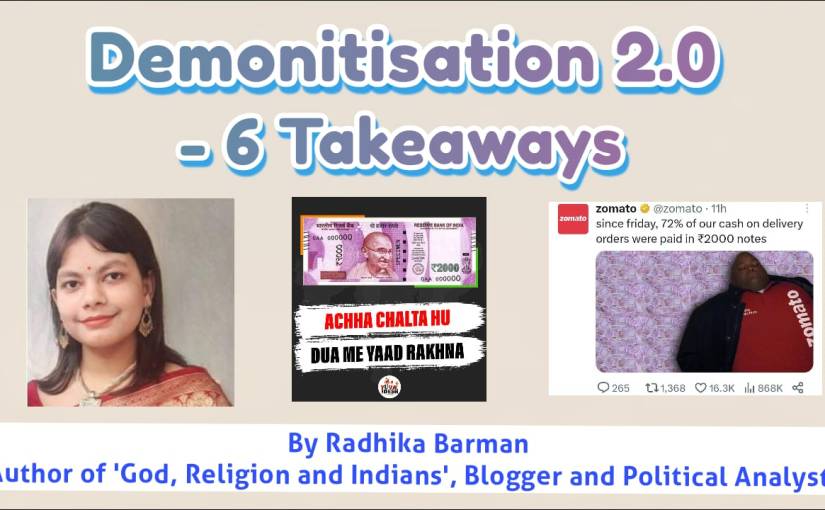


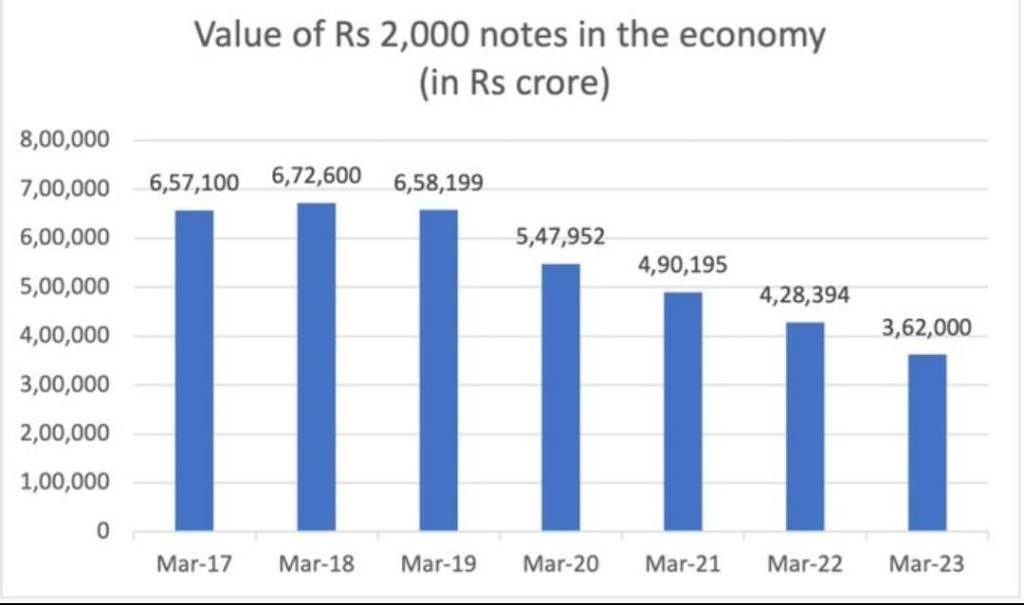
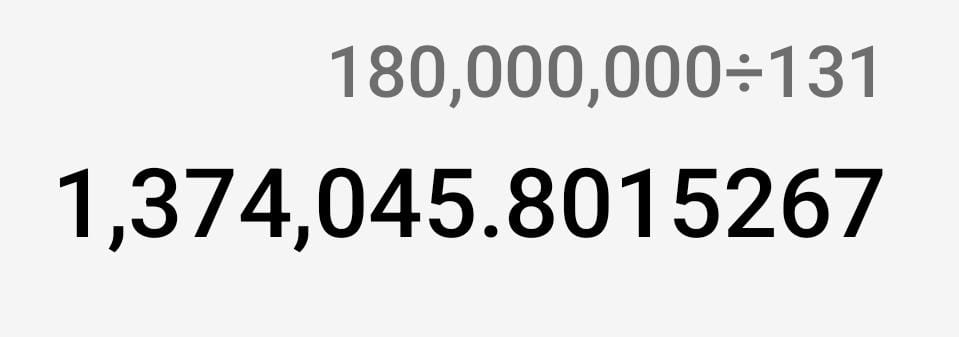
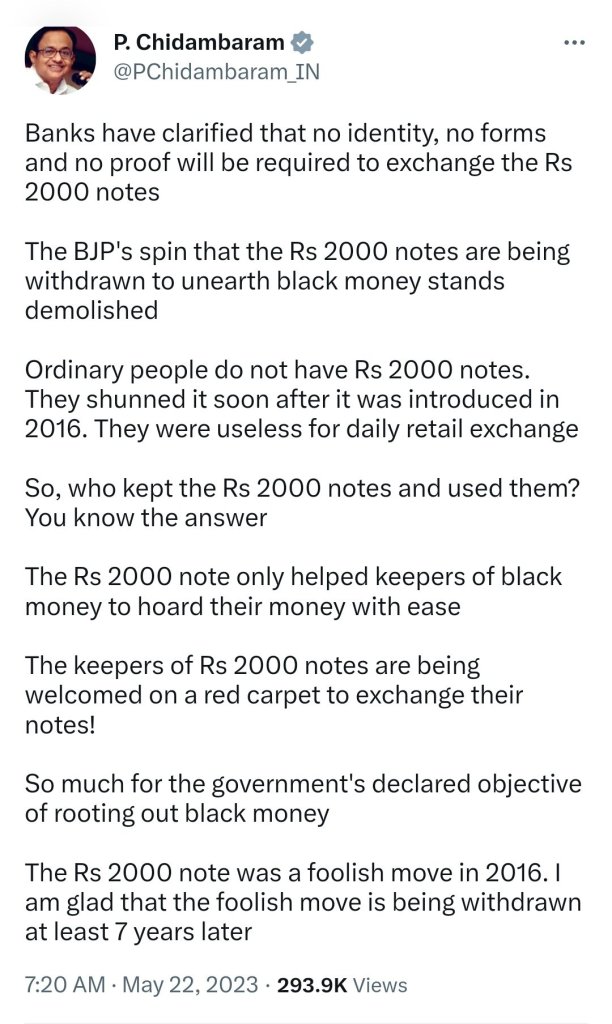


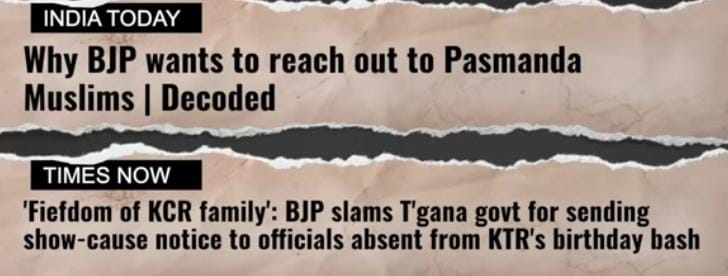





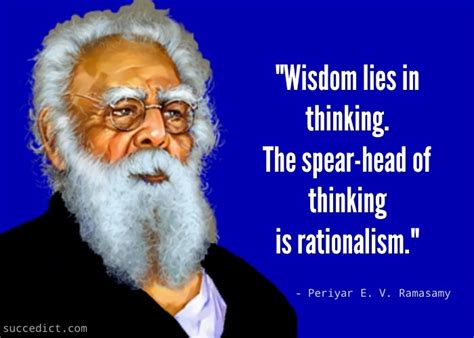
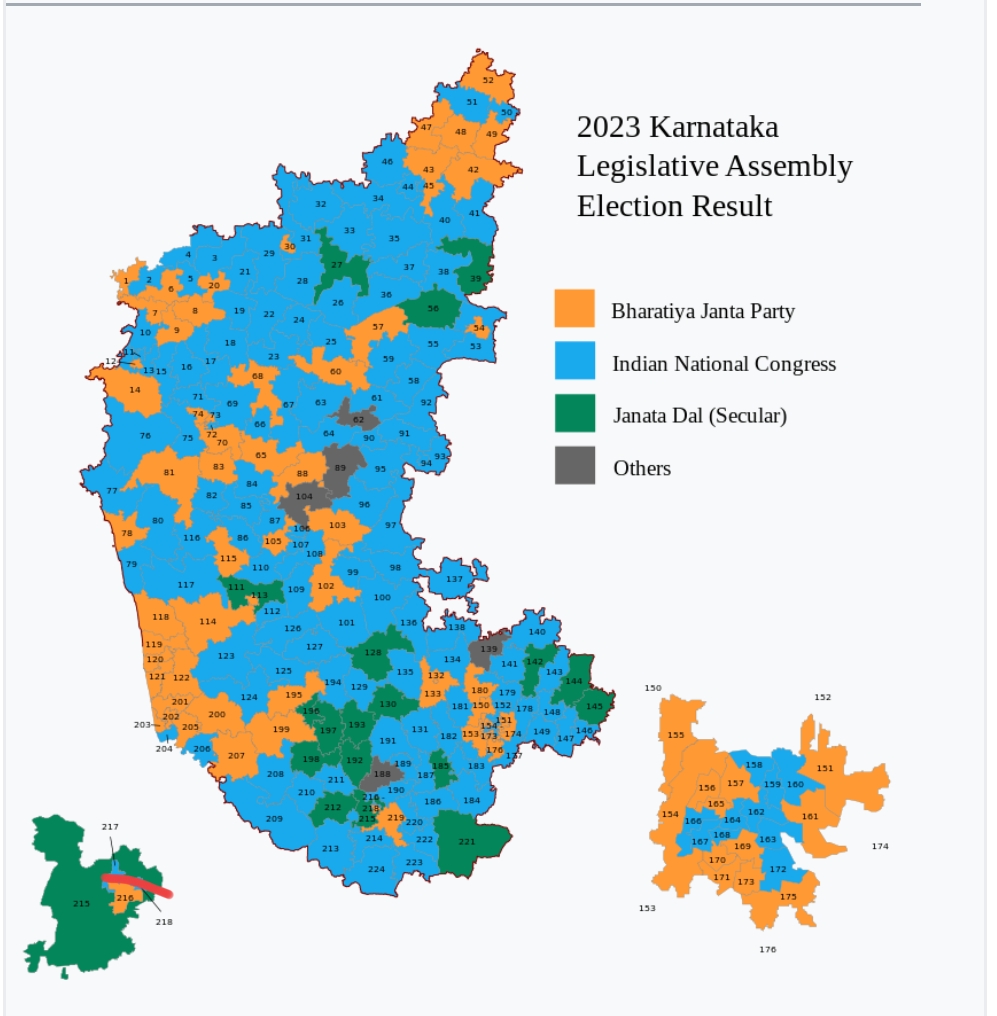

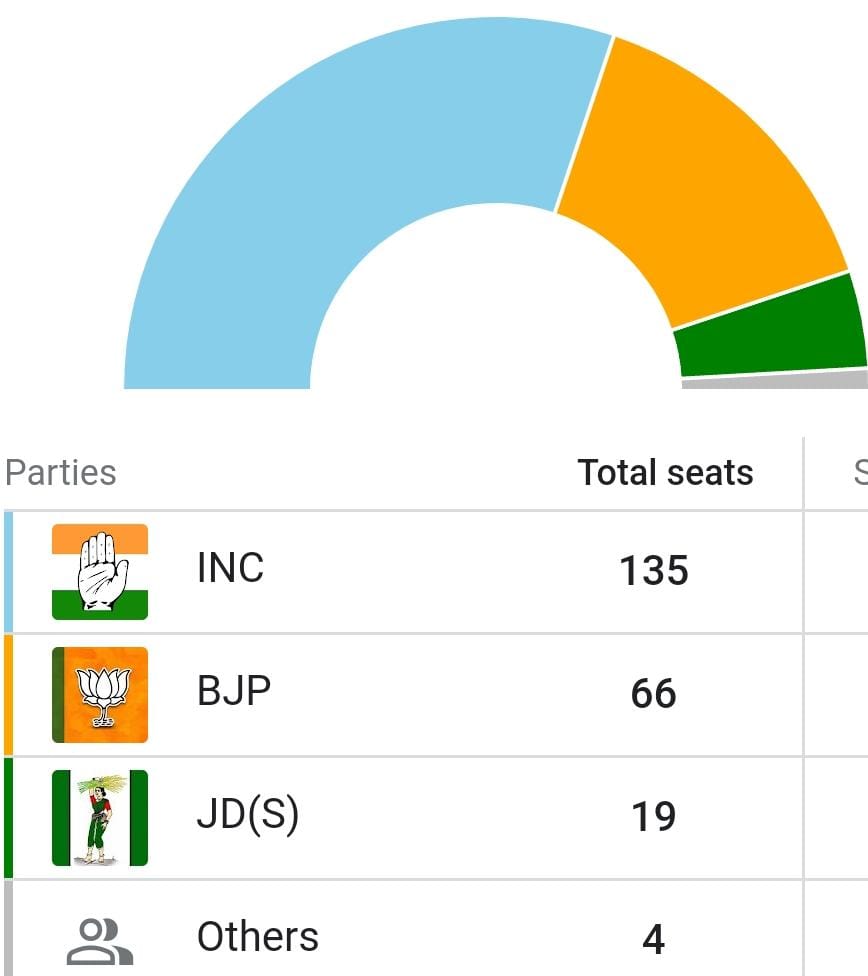


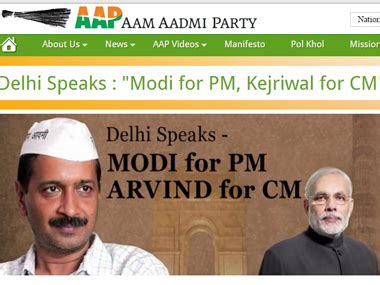
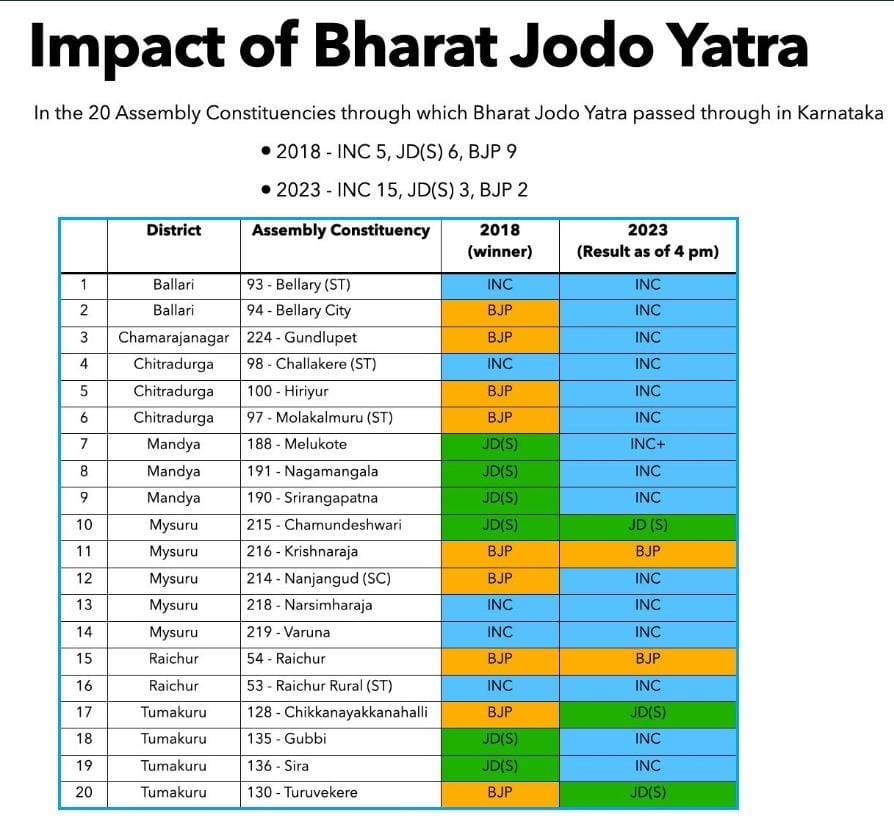


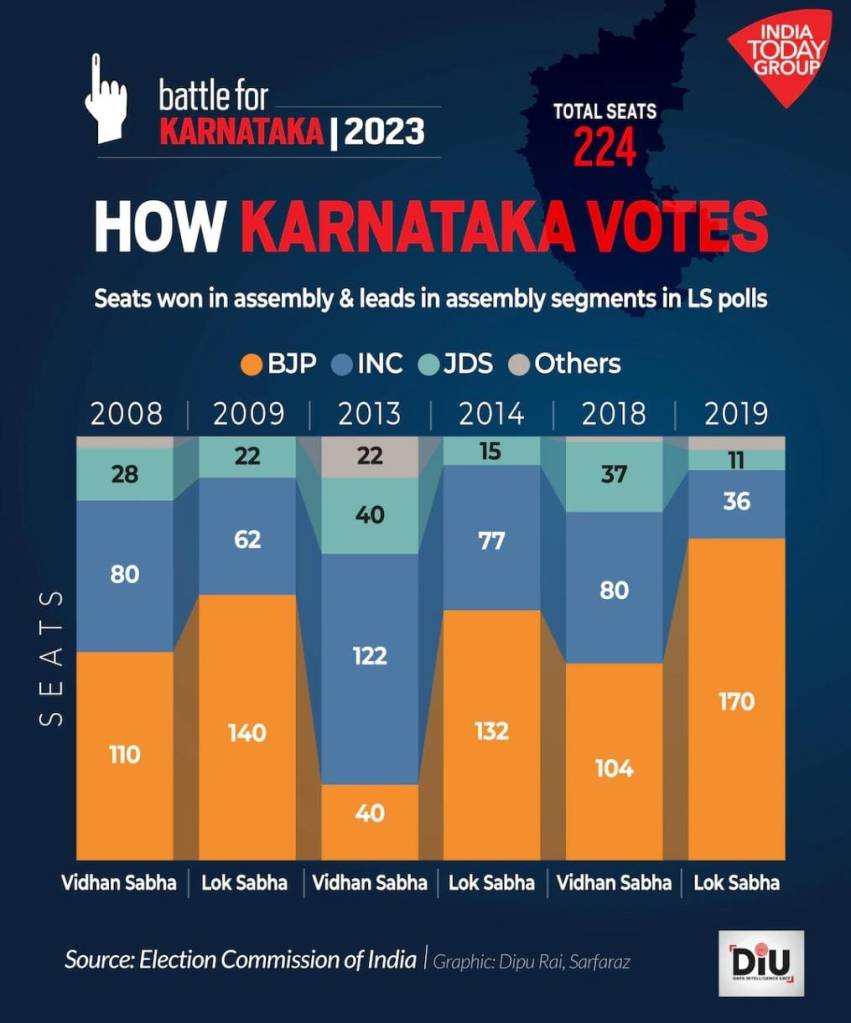

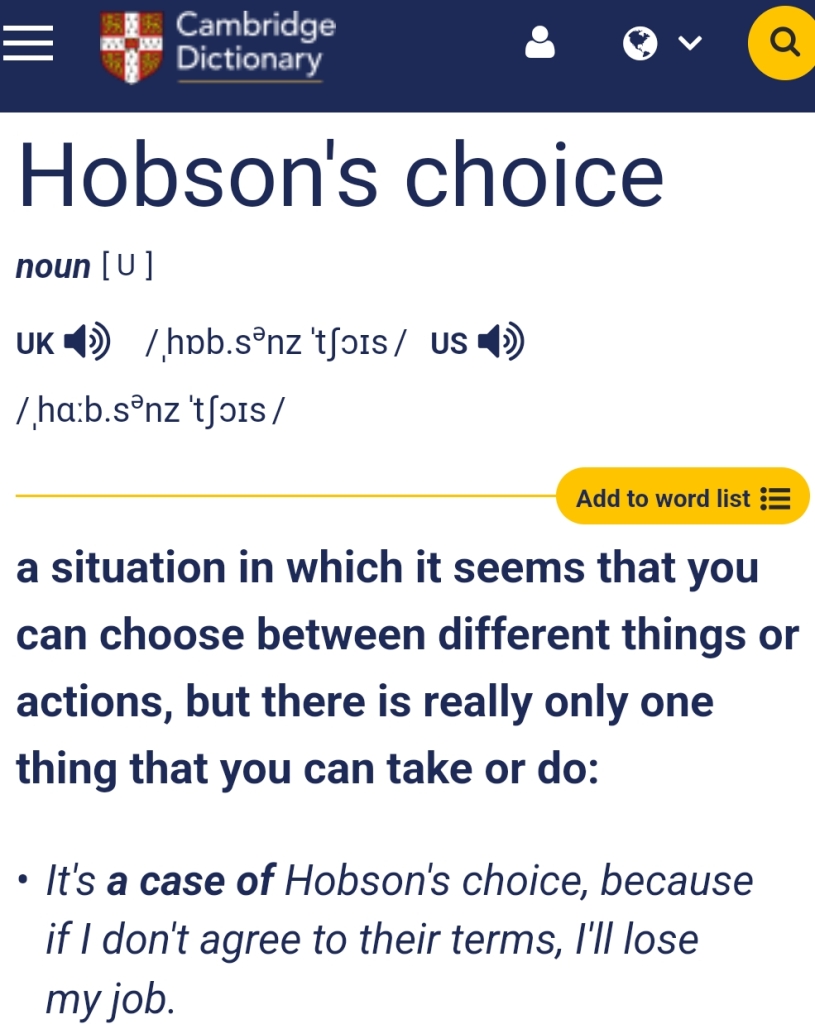
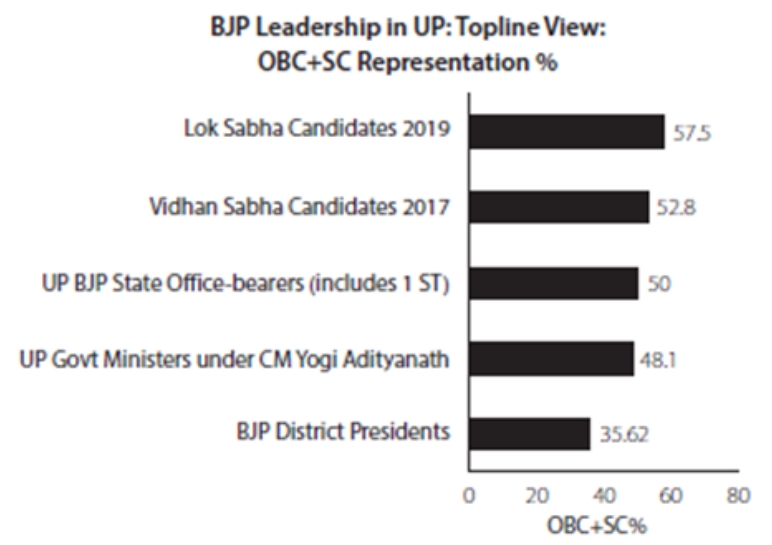




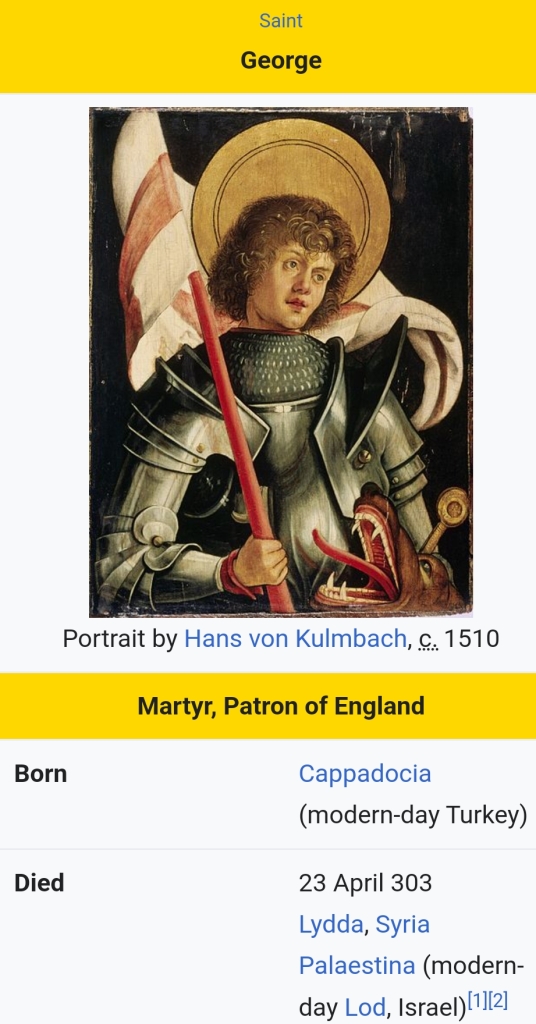
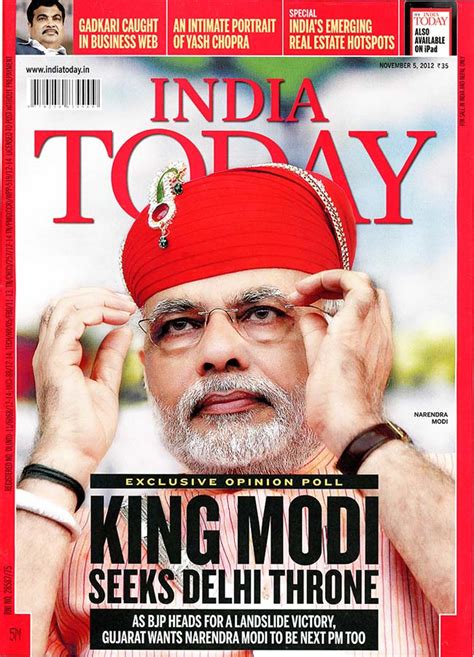



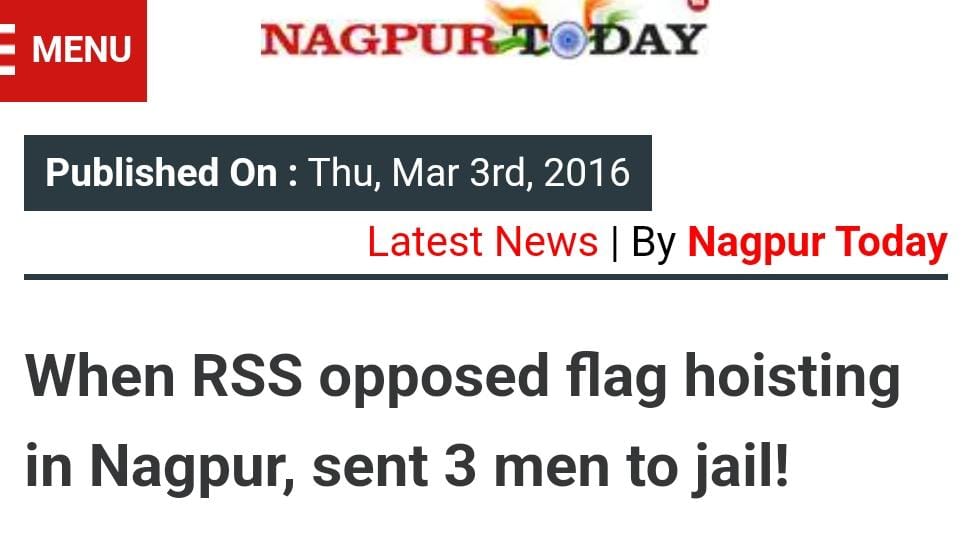


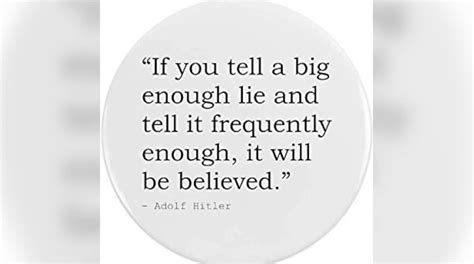


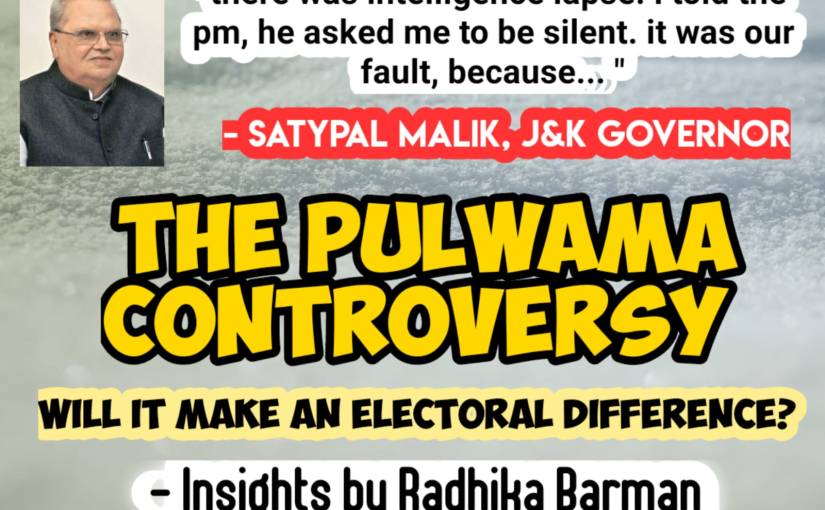
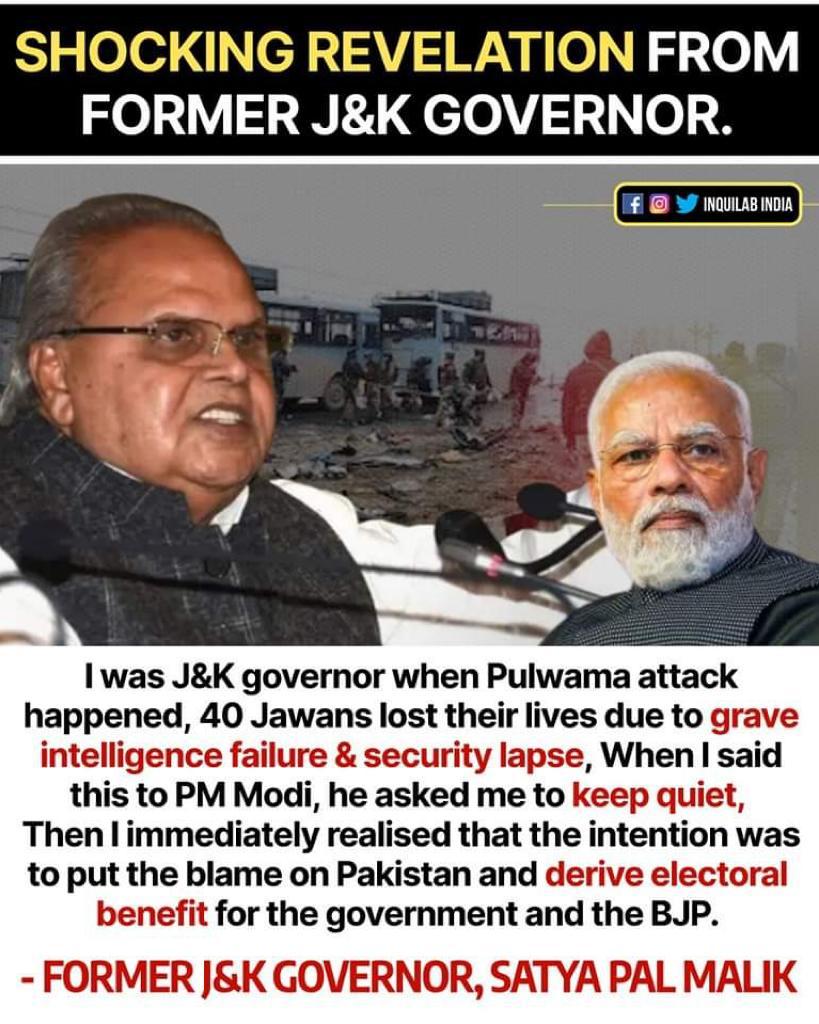

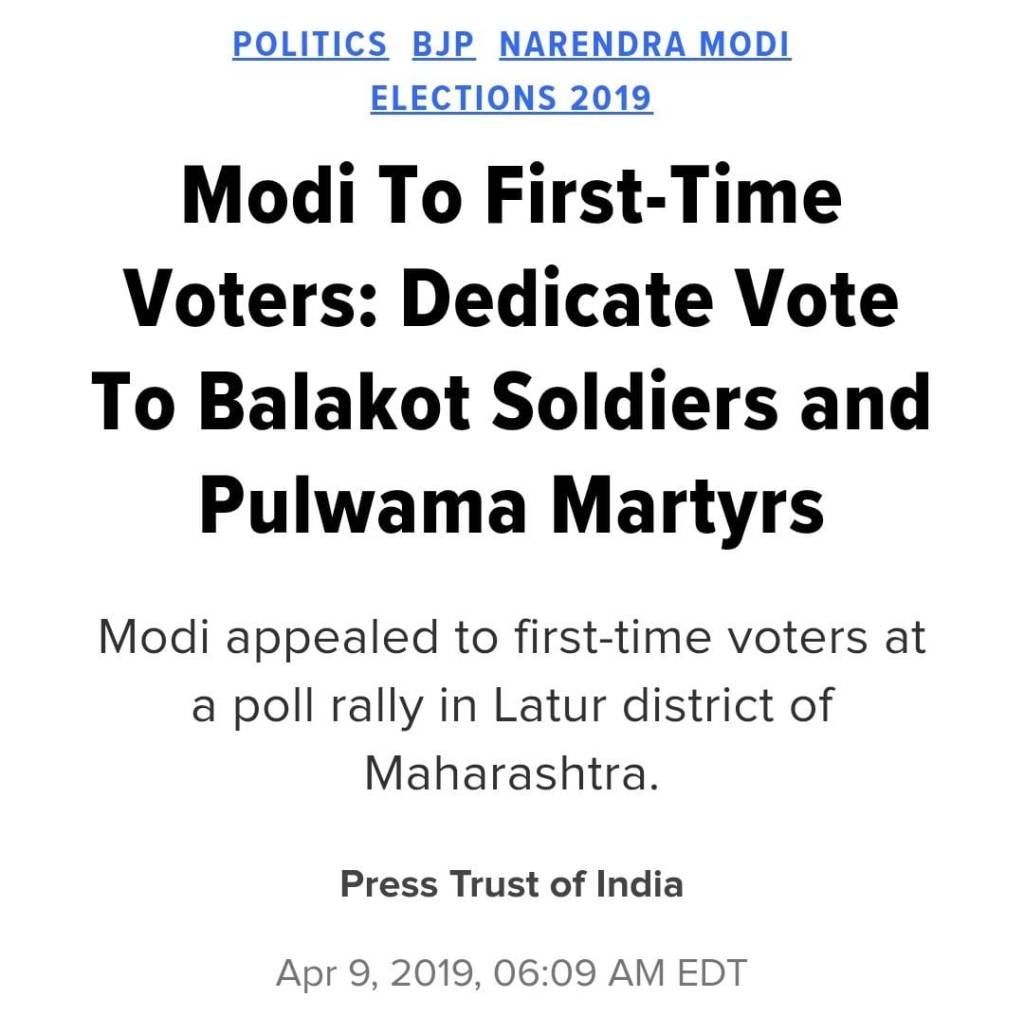
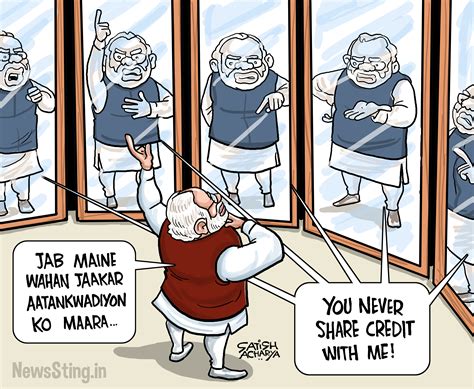












 Radhika Barman