The concept of being “apolitical” is often portrayed as a neutral stance, but in reality, it is largely a myth, frequently invoked to evade responsibility. Political theorists, including Antonio Gramsci, have long argued that neutrality in the political sphere is illusory; Gramsci’s concept of cultural hegemony suggests that even passive acceptance of the status quo serves to perpetuate existing power structures. In the Indian context, politics is not merely a partisan exercise but a critical mechanism for holding leaders accountable, questioning injustices, and implementing necessary corrections. As political scientist Rajni Kothari emphasized, political participation is essential to democracy’s functioning; a reluctance to engage in political discourse reflects not neutrality but rather a form of indecision or fear.
A reluctance to support a political party often indicates confusion or an underlying awareness that one’s chosen party may not be the optimal choice. Hannah Arendt’s exploration of the “banality of evil” in Eichmann in Jerusalem reminds us that moral and political disengagement can have dire consequences. Similarly, John Stuart Mill in On Liberty argued that the avoidance of political engagement under the guise of neutrality can lead to the erosion of liberty itself. Thus, apoliticism is not a neutral or enlightened stance but a failure to recognize the ethical implications of political inaction.
In a democracy, the true test of a society lies not in journalists adopting a neutral stance, but in the ability of party supporters to critically evaluate opposing perspectives and make informed decisions. As Amartya Sen pointed out in The Idea of Justice, public reasoning and debate are fundamental to a functioning democracy. Therefore, citizens must balance their roles as both party supporters and conscientious participants in democratic processes. This dual responsibility reflects not just political maturity but an understanding of democracy’s broader ethical demands.
Indian culture’s affinity for narratives of gods and demons has led to a tendency to deify or vilify political figures, rather than acknowledging their complexities as imperfect human beings. This tendency, analyzed by scholars like Ashis Nandy, often stems from a psychological projection, where individuals project their own flaws onto political leaders, simplifying them into symbols of good or evil. However, the notion of being an unapologetic political supporter, a democracy-loving citizen, and a courageous individual willing to be unpopular is often dismissed as utopian. This dismissal is what Paulo Freire, in Pedagogy of the Oppressed, would describe as a symptom of the “fear of freedom,” where the absence of role models and systemic pressures discourage active participation in democratic life.
FOMO (Fear of Missing Out) also plays a significant role in shaping political behavior, influencing both right-wing nationalism and neoliberalism. Political theorist Chantal Mouffe’s concept of “the political” suggests that this conformity, masked as individuality, is a result of cognitive dissonance—a phenomenon where individuals simultaneously hold contradictory beliefs. This cognitive dissonance leads to a critical question: Are Indian voters mentally equipped to participate fully in the electoral process? The question echoes concerns raised by Robert Dahl about the requirements of democratic participation and the capabilities needed to engage in it meaningfully.
Cognitive dissonance is pervasive across the political spectrum. However, Rahul Gandhi, as Leader of the Opposition, has demonstrated that ethics and politics can indeed coexist. Political ethicists like Michael Sandel argue that the intersection of ethics and politics is essential to public life. The criticism Gandhi faces is not necessarily a reflection of his shortcomings, but rather a product of prevailing trends and societal expectations. The reluctance of Indians to apologize or critically reflect on their political choices may stem from wounded egos, exacerbated by the fact that Gandhi’s current political standing and moral integrity challenge the expectations of many citizens.
Sadists, psychopaths, and the apolitical all share a troubling trait: a detachment from the pressing issues of our time. As Hannah Arendt warned, to remain indifferent or untroubled by the current state of affairs is to be complicit. Silence, in the face of injustice, is no different from the ignorance displayed by those who chose inaction during historical atrocities. If one is not bitter, sad, and angry about the current state of affairs, then one is part of the problem. This perspective resonates with the warnings of Antonio Gramsci about the dangers of passive consent and the complicity of inaction.
Choosing to be apolitical is not an innocent choice; it is an injustice to marginalized and oppressed groups in society, including Muslims, farmers, Dalits, women, the youth, and the elderly. The critical theory of scholars like Herbert Marcuse underscores the need for active engagement to resist systems of oppression. Apoliticism contributes to the erosion of an India where discussions on economics, not religion, were once the norm, as emphasized by scholars like Amartya Sen.
Politics may not directly impact everyone’s life, but the call to engage in political discourse is driven by a moral imperative. As John Dewey argued, democracy is more than a form of government; it is a mode of associated living, where every individual’s participation is crucial. It is not neutrality that keeps people sitting on the fence; it is fear. Speaking against the government is a democratic right, and it is essential to exercise this right to maintain the integrity of democracy, as was the norm before 2014. Therefore, the notion of apoliticism must be critically examined and rejected in favor of active political engagement and accountability in a democratic society.
Revive Congress: Why Taking the Middle Path in Bengal is the Way Forward
Indian leftists seem to have forgotten the horrors left behind by the CPM in Bengal. The solution to the right-wing challenge cannot be another left-wing regime, as this merely paves the way for another emerging cult. For genuine conflict transformation, the middle path, represented by Congress, is essential. While a leftist solution may appear appealing, it ultimately poses long-term risks.
The center-right TMC establishes a communal-secular binary, which is the last thing we need—more binaries and emerging cults. Bengal has experienced rule under CPM, TMC, and now the BJP. What Bengal and the country need is a revitalized Congress. A new beginning cannot stem from an impulsive, politically correct solution. The BJP’s rise was fueled by opposition to Congress, leading to Modi’s development failures and a shift toward hard Hindutva. Many voters were left without a clear choice due to ineffective opposition. Now that the opposition has gained some power, we must understand why people vote for center-right and right-wing parties.
Voting out of hatred for another party is problematic, as it gives undue advantage to the “lesser evil.” To improve politics, choosing the middle path is both strategic and ethical. Otherwise, we risk falling into clichéd and problematic discussions that justify incompetent regimes as ethical choices. The only way forward is if both the people of India and the Congress party embrace a radical shift now. This means transcending extremist ideologies, whether far-right or far-left.
In Bengal, Congress needs to challenge itself to stand alone, focusing as Arjuna did on the bird’s eye. This may not yield immediate results but will offer three benefits: opening electoral opportunities, ensuring safety for Congress supporters in Bengal, and establishing a strong opposition presence. The power to stand alone should not be underestimated. This radical approach can demonstrate to voters that Congress is a viable choice for Bengal. The best way to win voters is by showing that supporting Congress is an unpopular but gratifying choice.
Fighting alone now, amidst TMC’s communal politics and CPM’s lingering wounds, is strategic to avoid accusations of minority appeasement. As Rahul Gandhi challenges the BJP on religion, Congress must maintain a pragmatic balance. Alliance with the left is idealistic and the masses do not appreciate idealism. If they did, we would not be in this situation. Nor is there significant political consciousness among the citizens. What ought to be is different from what is. Nothing is absolutely moral or immoral. The left cannot monopolize liberalism, nor can TMC monopolize secularism. People respond to radical steps. Congress should take this radical step. People will appreciate our efforts regardless of the outcome. This approach is more of an experiment. Congress, with its current lack of structure, has little to lose. It wouldn’t threaten TMC, which is not expecting an alliance with Congress. Congress can function effectively by simply opposing the BJP, without needing to explicitly dissuade votes for TMC or the left. When people see they have choices, they will naturally lean towards Congress. This is a form of reverse psychology, not manipulation. Ultimately, the INDIA alliance shares a common objective: removing the BJP and preserving democracy. Democracy cannot be revived merely by removing the BJP, which is why Bengal also needs a strong opposition. Voters chose TMC not because they liked it, but because they had no other viable option against Modi. Thus, Congress should embrace a radical stance in Bengal to provide a genuine alternative to the binary choices currently available.
Beyond Stereotypes: A Reflection on Animal Sacrifice, Religious Hypocrisy, and True Humanism
This post might be controversial, but my conscience compels me to speak.
One of my Muslim friends posted a picture of a cow on Eid as their status. As someone who dislikes animal sacrifice, this made me feel uneasy. However, I didn’t feel any urge to harm her. I know that a significant portion of the meat will be given to the poor. I’ve seen my maids waiting outside Muslim shops on Eid to get goat meat at low prices. While I don’t consume beef or pork, I won’t boycott someone for doing so.
I’ve visited meat shops run by both Hindus and Muslims with my mother. Although I feel uncomfortable seeing animals being slaughtered, I haven’t destroyed their shops. I am an animal lover; I regularly feed crows and street dogs. Do I support animal abuse? No. Am I going to turn vegetarian to prove that? No. I respect vegetarians and their choices, but imposing one’s food preferences on others is unnecessary and problematic.
Should animal sacrifices be stopped? Yes. But should those who practice it be killed or persecuted? No.
You cannot compare goats sacrificed on Eid, which largely benefit the poor, with those sacrificed in Hindu temples of Goddess Kali, where the meat is primarily consumed by devotees and their families. I don’t support either practice, but it’s important to note the differences. According to Islamic rules, the meat is shared among family, relatives, and the poor. In contrast, in Hindu sacrifices, the meat is often offered to the deity and then consumed by those present, with some possibly donating it to the poor voluntarily, not by compulsion. If we aim to stop animal sacrifice, it should be stopped in both Hinduism and Islam.
Am I Muslim? No. Do I wish to convert? No. Am I atheist? No. I am opposing this hypocrisy both as a human and a Hindu. Does Hinduism believe in violence? No. The Mahabharata’s just war theory is a separate argument and not relevant here. How can you claim to be a Hindu if your conscience drives you to destroy religious places, bulldoze houses, and kill people?
While I agree that Shah Bano was wronged, there’s hypocrisy here. The BJP argues that Shah Bano deserved better from a humanitarian perspective, yet they justify the Ram Mandir construction and Babri Masjid demolition from a religious perspective. Hindu temples were indeed destroyed by Mughal invaders. Do I support this? No. But do I want mosques demolished in retaliation? No. This is textbook revenge. Does Hinduism teach revenge? No. Thus, both as a Hindu and a human, I oppose this.
Firstly, Rama represents a universal consciousness that transcends time and space. The temple is a materialistic duality. Names, identities, and religions are all constructs of the mind. God transcends mind and body. Consciousness is eternal and unborn. Thus, the concept of a specific birthplace for Rama is fallacious.
I don’t oppose idol worship; I practice it myself. But I won’t destroy someone’s house over it. Our scriptures are not infallible, but let me quote a few:
The Bhagavad Gita, Chapter 16, Verse 21, states:
“Trividham narakasyedam dvaram nasanam atmanah Kamah krodhas tatha lobhas tasmad etat trayam tyajet.”
Translation: “There are three gates leading to this hell—lust, anger, and greed. Every sane person must give these up, for they lead to the degradation of the soul.”
This verse highlights the destructive nature of anger, often a driving force behind revenge, and advises individuals to abandon such emotions.
The Isha Upanishad, Verse 6, says:
“Yastu sarvani bhutani atmany evanupashyati Sarva-bhuteshu catmanam tato na vijugupsate.”
Translation: “He who sees all beings in his own self, and his own self in all beings, loses all fear and hatred.”
This verse emphasizes the interconnectedness of all beings, suggesting that recognizing this unity eliminates hatred and, by extension, the desire for revenge. The Saraswati Mahaupanishad teaches that the finite and infinite are the same. Advaita Vedanta talks about “I am That” and how we are the universe, connected in one thread of consciousness. We are the same, not just similar, in different human forms. This perspective is supported by the Upanishads and modern thinkers like Yuval Noah Harari, who notes that religion often serves to control people.
Hence, can we not conclude that Hindus who kill Muslims are essentially killing themselves? And perhaps, that God has no religion? You cannot stay happy if you destroy others’ homes. While I don’t believe that a temple or mosque is the true house of God, I use this reference for explanation. Can we not see the underlying hypocrisy here?
If you want others to be humanitarian, be humanitarian yourself first.
Let me share a small example from my surroundings. There are many street dogs near my apartment, including one that is abandoned and handicapped and another that is a typical street dog. My mother and I feed them daily with cooked chicken and biscuits. Everyone in my apartment is Hindu and financially stable, yet they get irritated by our gesture. They probably wonder why street animals deserve so much attention and care. Every year, our apartment complex celebrates festivals like Jagadharti Puja and Vishwakarma Puja with grandeur, and mutton is cooked for everyone. They have enough meat to distribute widely but don’t share even a spare piece with these two lovable street dogs, preferring to throw the extra in the dustbin. They lack compassion for animals, ostracizing animal lovers despite belonging to the same religion as figures like Ramakrishna Paramhansa, who fed both animals and humans from temple rice and ate alongside them.
Do these people think they are greater Hindus than Ramakrishna Paramhansa, Nisargadatta Maharaj, or Maa Sarada? Most North Indian Hindus might not even know their names. Read their books and scriptures; what the BJP and its supporters are doing isn’t Hinduism. It is the antithesis of Hinduism.
All religions have their flaws and need reformation. You cannot portray yourself as a great Hindu by demeaning others. This isn’t a two-sided conflict when one side prays and the other engages in violence. Fencesitters should sit down. Secularism can only happen through secularization. I’ve seen both good and bad people in all religions. The blame game and friend-enemy distinction need to stop. Let humanism be the only ‘ism.’ I can’t believe I have to say this in 2024: Live and let live.
Lucius Annaeus Seneca said, “Religion is regarded by the common people as true, by the wise as false, and by the rulers as useful.”
If you still choose to be a fool, excited by politicians, and participate in this hate game and revenge, then you’re the biggest idiot. Also, any Hindu who thinks the BJP loves Hindus is wrong. They only care about the rich, who happen to be Brahmins or Banias.
Unpacking the Uniform Civil Code: The Saffron Burden and the Majority-Minority Divide
By now, it should be clear to everyone that the majority did not want to empower the minority through the implementation of the Uniform Civil Code (UCC). Like the British, the BJP seems to possess what I call the “saffron man’s burden” to civilize. The intent of the ruler is flawed, as it seeks to create an “us versus them” distinction. The problem is not with the UCC itself but with the person advocating for it, the timing of its introduction, and the intent behind it. Many minorities who opposed the UCC did so for the same reasons.
While there are conservatives in both religions, ostracizing a community for not fitting into a modernist paradigm is unnecessary. The majority’s neurotic desire to show the minority its place is problematic. The majority wants to prove its own righteousness by making the minority appear wrong, driven more by a desire to assert superiority than to genuinely empower others. The intent behind a law matters; a law that people do not feel morally obligated to follow is not worth implementing.
Arguments from the majority, such as Hindu men feeling upset about Muslim men having access to multiple wives, are equally problematic and misogynistic. Empowerment should not be about proving oneself right and others wrong. It should be about everyone having the same rights to live equitably without the need for validation from others. What we see now is a toxic relationship between the majority and the minority. The majority feels they are doing the minority a favor by allowing them to live as they do. Saffron fascists seek opportunities to claim, “See, I did this for you,” or “You are no good without me,” asserting that India is secular only because Hindus are secular.
The majority of men want to feel superior for having done something for minority women, believing they could not have achieved this without their support. The BJP claims to want to protect women from the patriarchal tenets of Islam. However, their actions are making things more difficult than they already are. When you attack a house, the most vulnerable are the women within it. At the core of this majority-minority conflict lies a man’s irresistible desire to protect women, a society’s urge to create friend-enemy distinctions, and a ruler’s desire for gratification by invoking assertions like, “I did this for you; you are no better without me,” whether literally or ideationally.
Religious Orthodoxy and Identity Crisis: The Evolving Bengali Border Dynamics
Over the past fifty years, mainstream and orthodox strands of both Hinduism and Islam have increasingly come to define identities on either side of the Bengali border. This shift can be traced back to the Partition of India in 1947, which laid the groundwork for a bifurcation of cultural and religious identities. The ongoing migration trends have further intensified these changes: Bangladeshi Muslims migrating to the Gulf States and West Bengali Hindus relocating to various parts of India have both contributed to and reflected this evolution.
In Bangladesh, the rise of orthodox Islam as a primary marker of identity has been influenced by socio-economic factors and global Islamic movements, leading to a stricter interpretation of religious practices and a more pronounced division between different religious communities. Similarly, in West Bengal, the identity of Hindus has become increasingly intertwined with orthodox practices and nationalist sentiments, partly as a reaction to perceived threats and the changing demographics influenced by migration and political discourse.
This shift towards more rigid religious identities reflects a broader trend where religious orthodoxy is increasingly used to define personal and collective identities, often at the expense of more diverse or moderate interpretations. The impact of this shift is visible in how communities on both sides of the border navigate their identities, often through religious markers that emphasize purity and orthodoxy.
Despite the significance of this transformation, contemporary politicians rarely address these issues. The focus tends to remain on immediate political concerns or electoral gains, rather than engaging with the deeper cultural and religious shifts that are reshaping societal identities. The border, in this context, is often reduced to a mere academic or diplomatic topic rather than a critical area of cultural and social conflict that requires thoughtful political engagement. This lack of discourse underscores a missed opportunity to address the underlying issues affecting millions on both sides of the border, leaving these critical questions to be explored only in specialized academic or cultural discussions.
From Soft Hindutva to Radical Humanism: A Reflection on Congress’s Ideological Shift
Despite my affiliation with Congress, I disagree with Rahul Gandhi on various matters. However, I applaud him for two key decisions: declining the Ram Mandir Pran Pratistha visit and initiating the Bharat Jodo Yatra. I vividly remember how many Congress members criticized him for both, urging him to adopt a “soft Hindutva” approach. He chose not to, proving that soft Hindutva is neither strategic nor ethical. Initially, Congress’s stance was confusing.
There were rumors that Sonia Gandhi was interested in accepting the invitation, and many Congress members supported her, arguing that it was necessary to show that we are not anti-Hinduism. This was the most absurd argument I have ever encountered. Why should any Hindu need to prove their religiosity?
It is no secret that Rahul Gandhi is a practicing Hindu, a Shaivite Kashmiri Brahmin. Yet, he was not invited; Sonia ji was, because the BJP intended to give them a cold reception. I was criticized by many Congress colleagues for opposing this decision as a soft Hindutva stance. Eventually, Congress had a moral epiphany and decided to practice secularism unapologetically. This was unlike many Congress members, like Tharoor and others, who went into worship mode post-Ayodhya verdict. Initially, Rahul Gandhi chose to play it safe, offering a more diplomatic response. As a practicing Hindu, his spiritual beliefs obviously conflicted with the decision. Nothing makes me happier than seeing his evolution from a soft Hindutva image to that of a radical humanist. He now holds the Constitution in one hand and Ambedkar’s photo in the other.
It’s not important for me to be proven right, but it is interesting how this mandate proved my argument that a center-left party cannot function with a confused ideology. It cannot play it safe or remain silent on such issues, nor can it adopt soft Hindutva tactics for pragmatism. You cannot oppose the Babri Masjid demolition and support Ram Mandir construction simultaneously. Many disagreed with me earlier, but now it’s proven that if a party like Congress wants to rise like a phoenix from its ashes, it must embrace secularism unapologetically.
Rahul Gandhi has previously spoken about how Hinduism differs from Hindutva. While I disagree with the necessity of discussing religion in public, I understand the larger picture. It’s important to demonstrate that the BJP cannot monopolize religion. From a utilitarian standpoint, I appreciate Rahul Gandhi for this. Ayodhya residents showed courage by choosing constitutionalism over theology, despite being stereotyped as communal and backward-thinking. The mandate proved that religion is capitalist propaganda. The educated class voted for religion, while the uneducated voted for schools and development.
I have said before and I repeat: the BJP does not favor a Hindu Rashtra; it wants a Brahmin Rashtra. It wants rich Brahmins, not poor Brahmins. Today, Hindus are fighting amongst themselves for socio-political reasons. Historically, Kshatriyas dominated Brahmins; now Brahmins seek revenge. It’s all a game. You are all being fooled—please realize it.
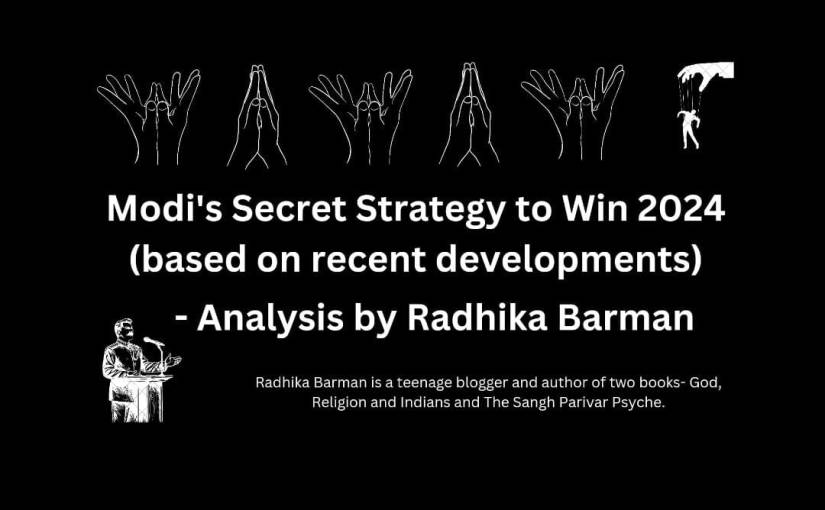
Modi’s secret strategy to win 2024
In a recent interview with Rubika Liyaquat, Narendra Modi made a striking statement: “I am convinced that I’m not biologically born but I was sent directly by God. I didn’t take birth biologically because God has sent me and I have appeared here. The energy I have cannot come from a biological body, only God can give this type of energy.” This implies that Modi sees himself as a divine figure.
Thinking oneself to be God can signal mental issues, but saying it publicly isn’t necessarily a sign of madness. The belief is one thing, the public declaration can be a tactic. Modi’s statement might be aimed at attracting voters. People who feel insecure might look for a god-like figure for psychological comfort. A politician who presents himself as divine offers wealth, fame, and security.
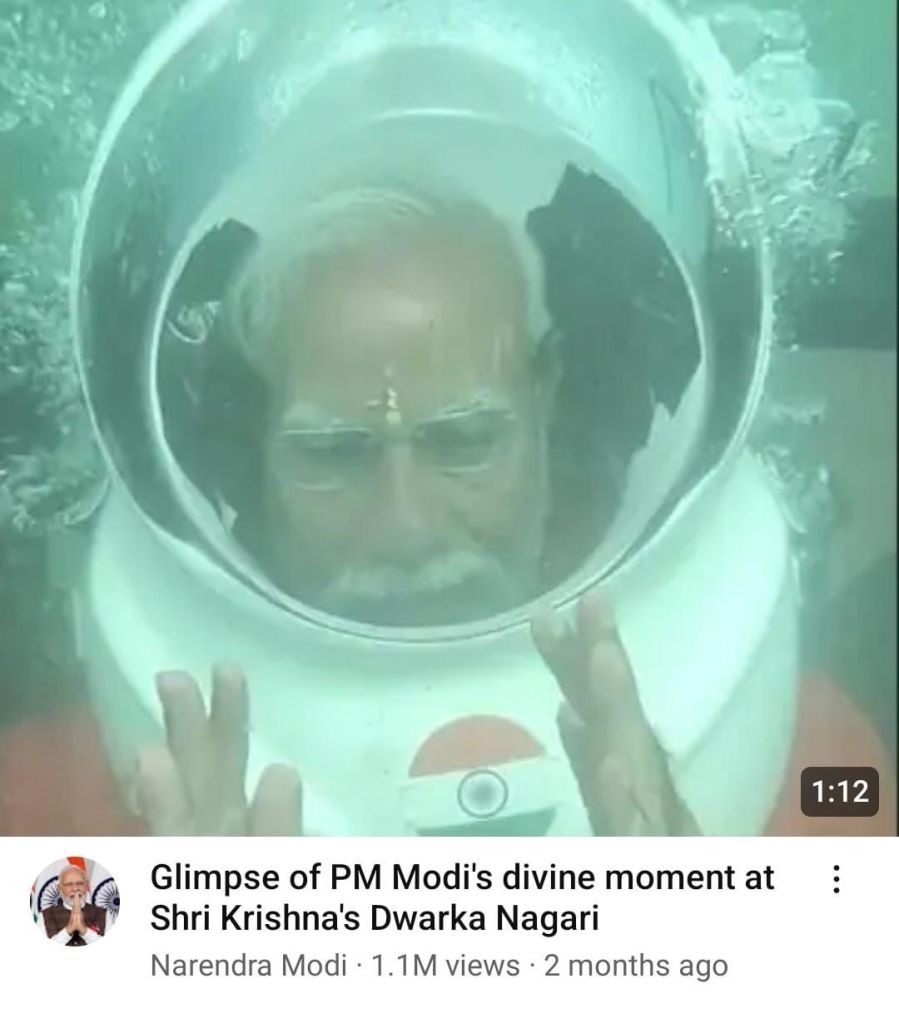
Religion’s concept of God commands wide respect. People may disagree on many things, but hesitate to deny God’s existence. By portraying himself as God, not just a follower, Modi taps into this respect. A follower can be criticized, but a god is seen as perfect and beyond human flaws. His divine claim is a way to ensure his followers see him as infallible and beyond criticism. Religion, as sociologist Emile Durkheim noted, is a powerful and lasting social force.
Religion, as sociologist Emile Durkheim noted, is a powerful and lasting social force.
Examples of this strategy include:
- In 2016, a viral Facebook post claimed people saw Modi in the sky. The supporters claimed to be blessed to see such an eminent personality in the form of God.
- In 2017, the “Modi Chalisa” became popular on social media.
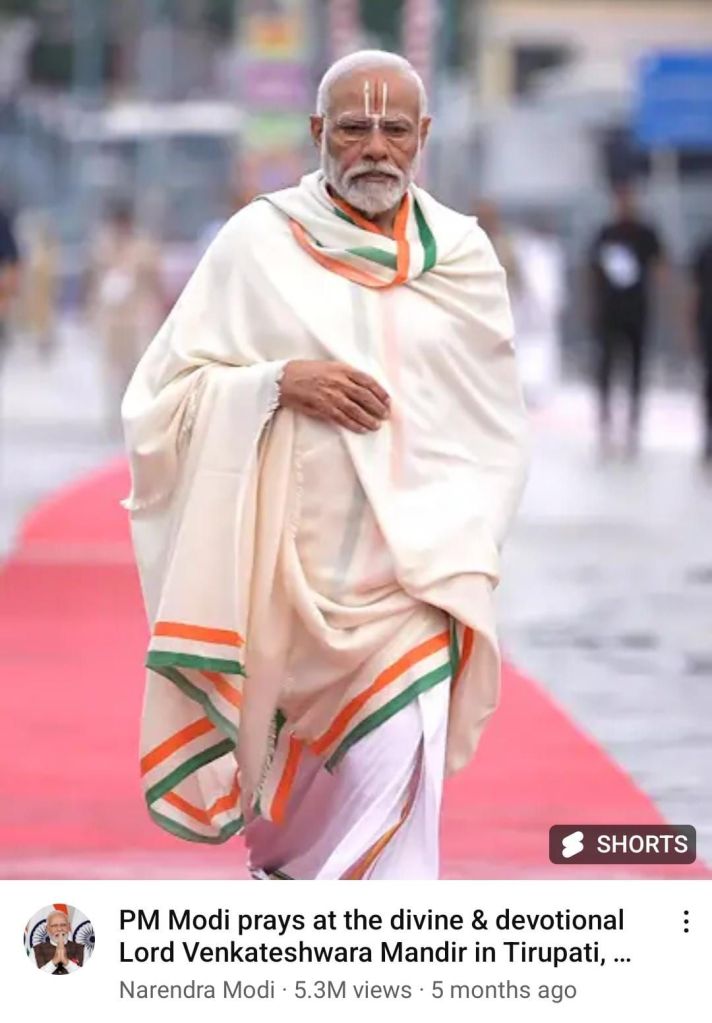
- Modi is often depicted in meditative poses, wearing orange robes, surrounded by priests, and mythological symbols like the golden Shesh Nag.
Thinkers like Niccolò Machiavelli and Erving Goffman suggest that leaders need to manage their image. Modi’s religious imagery boosts his image. Recently, BJP spokesperson Sambit Patra called Lord Jagannath a devotee of Modi. Modi’s supporters often refer to him as Vishnu’s Avatar or even God on earth.
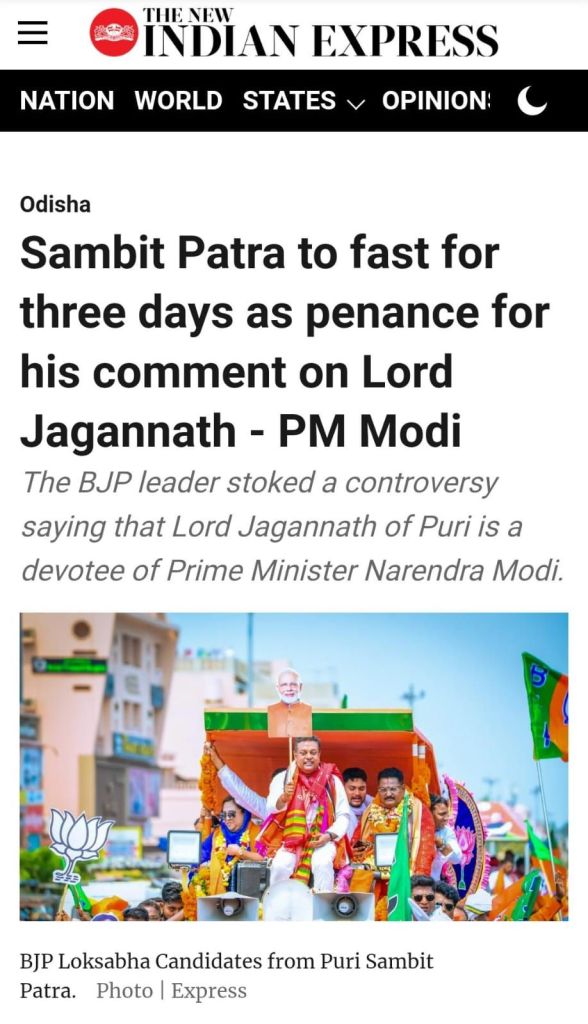
Bjp saw the dictator narrative is slipping off, thus they are choosing to make Modi God now. For a dictator can still face resistance, but God cannot. This is what happens, when polity, morality and religion as institutions mix together. Many in India have recently seen justifying dictatorship but since India is still officially a democracy therefore, we need a God in democratic setup.
A dictator still has the possibility to face resistance, God doesn’t. Modi doesn’t want to be remembered as a dictator. But as God. Thus, even if he loses this election, it will be a win win scenario for him. If Modi loses, BJP will say “God got defeated. ” If Modi wins, BJP will say “God won”. They won’t explicitly state Modi as God. By mentioning God or avatar , people can have multiple interpretations. Some may view it as Rama who got defeated or won, and some as Modi. (If you cannot convince them, confuse them) Yogi Adityanath had even said earlier that this election is between shiv bhakt and ram bhakt. Other leaders have invoked the sentiment of this election being a pro-religion or anti – religion election.
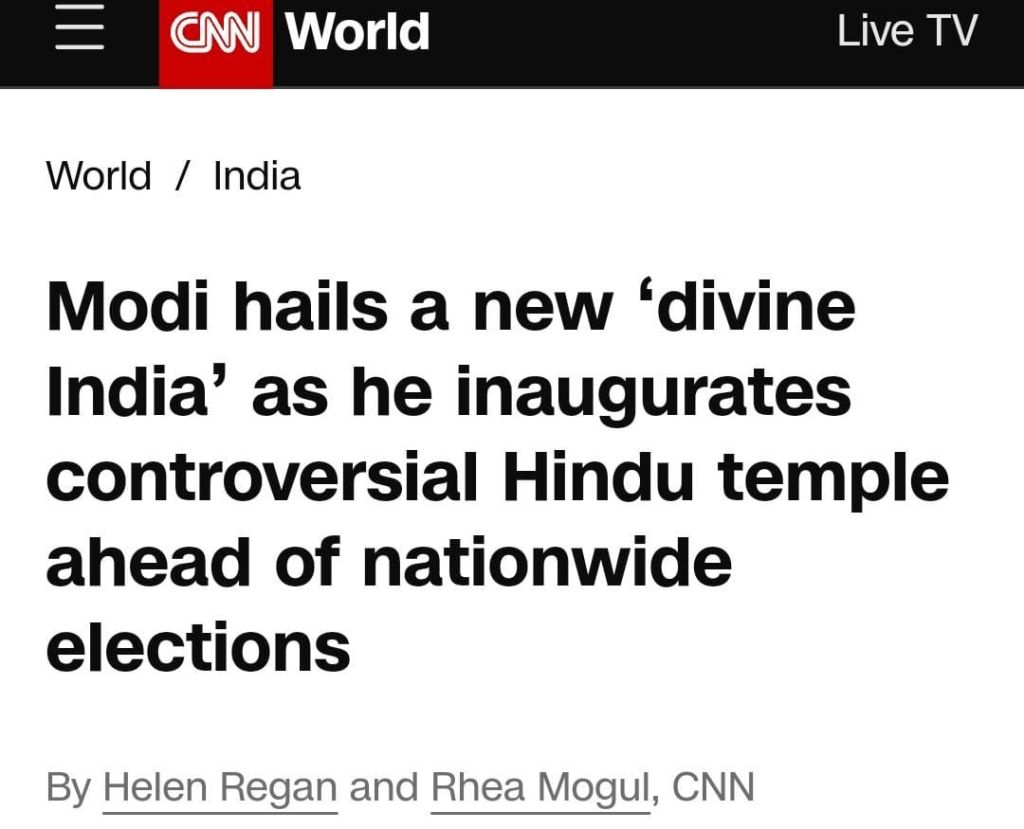
During the Ram Mandir inauguration, Modi fasted to evoke Rama, and on the Ayodhya verdict day, he was shown holding Rama’s hand. BJP’s new slogan, “Jisne Ram Ko laya hum ussey Layenge,” reflects this religious-political message. Modi also claimed to be beyond Hindu or Muslim identities, suggesting only God can say that because God doesn’t discriminate. This philosophical approach makes him appear morally superior.
This religious politics is not just communalism; it’s an attempt to create a new religion centered on Modi himself, making him a figure of worship. Modi isn’t just using religion for political gain; he’s positioning himself as a new deity.
Ram temple was only an episode of the movie which modi claims to be a trailer. This is no longer about the monopoly of one religion in India now, this has evolved to the transition of a politician to God. There’s already a Modi temple in India, Modi books are also popular in some parts of the country. Kim Jong un of North korea has feared people, but modi has hypnotized people.

Religion binds communities. By positioning himself as a divine figure, Modi uses the power of religion to unite his supporters and elevate his status beyond a regular political leader.
This can be seen as a strategy to win the 2024 elections. Here’s how this strategy works:
1. Cultivating a Divine Image:
By claiming a divine status, Modi taps into deep-seated cultural and religious beliefs. People often revere and follow religious figures without question. By presenting himself as more than a mere mortal, he seeks to elevate himself beyond ordinary political criticism.
2. Strengthening Emotional Bonds:
Religious imagery and divine claims can create strong emotional bonds with voters. This can make his supporters more loyal and less likely to be swayed by his political opponents.
3. Creating a Protective Shield:
Psychologists see such behavior as narcissism and the need for validation. Leaders with narcissistic traits may present themselves as special to mask insecurities and gain support. By portraying himself as god-like, Modi seeks absolute loyalty and reverence, shielding him from criticism. Invoking religious imagery and divine status aligns him with the powerful institution of religion.
By positioning himself as a deity, Modi attempts to make himself immune to criticism. It’s easier to question a politician than a god-like figure. This reduces the impact of negative publicity or political attacks from the opposition.
4. Mobilizing Religious Sentiments:
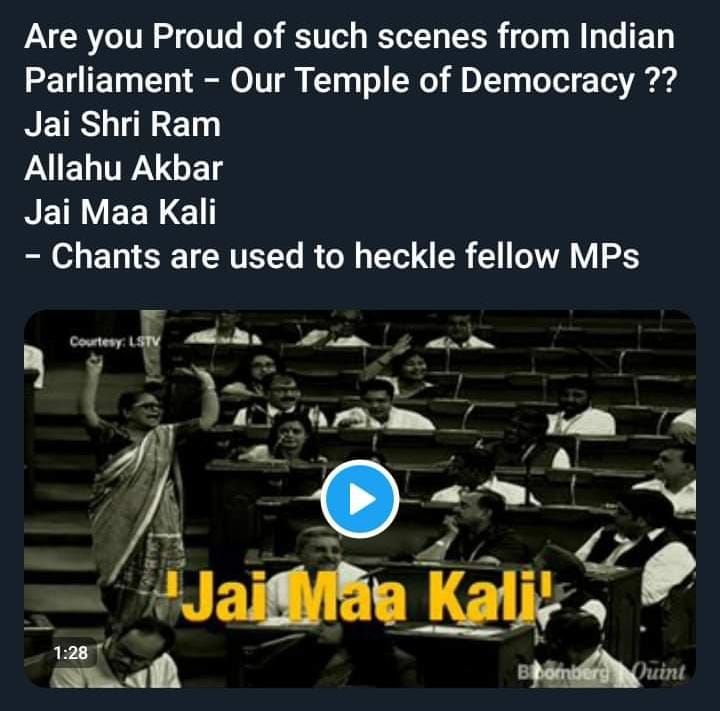
India has a large and diverse religious population. By invoking religious imagery and narratives, Modi can appeal to a broad spectrum of voters who hold these beliefs dear.
5. Projecting Moral Superiority:
By claiming to be beyond Hindu or Muslim identities and adopting a divine persona, Modi aims to appear morally and intellectually superior. This can attract voters looking for a leader who transcends traditional political and religious divides.
6. Consolidating Power:
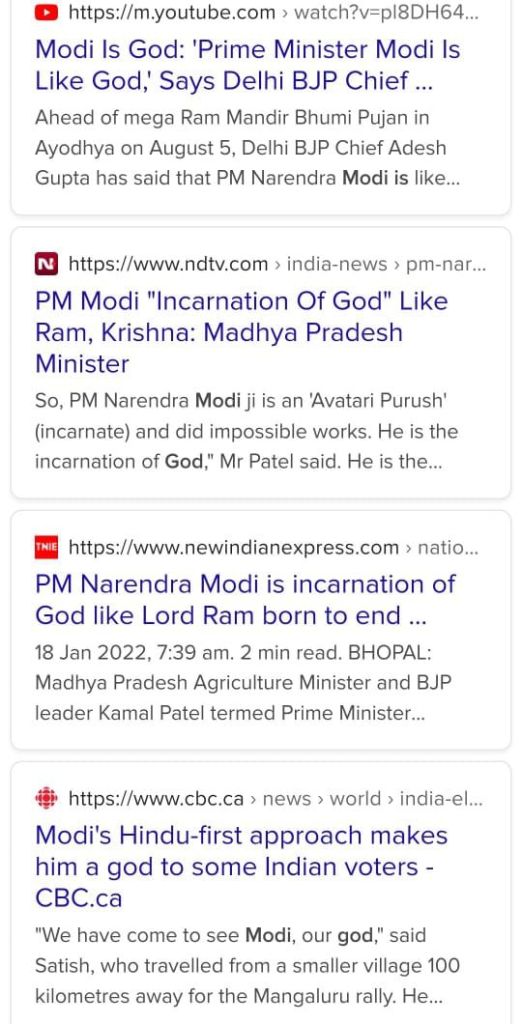
Political theorists like Andrew Heywood and Michel Foucault suggest that leaders seek validation and authority through such grandiose self-perceptions. By positioning himself as a divine figure, Modi consolidates his power and authority, making it difficult for opponents to challenge him effectively.
7. Historical Precedents:
There have been instances where leaders used religious and divine imagery to consolidate power. By aligning himself with this historical strategy, Modi seeks to secure his position and influence.
In our Indian mythology which modi has made history, we have heard stories of prominent devotees, out of greed wanting to take Indra’s seat and or heaven. Mythical figures have wanted to take the place of God. They went against their deities whom they once worshipped, wanting to take their place. The desire to be God is a subconscious desire present in many politicians in history.
Never in Indian history has a person attained sainthood while living. Mother Teresa was called a saint after death. People make stadiums on names of death people. Modi is alive yet he has a stadium in his name. Modi isn’t merely concerned about victory, he wants to experience what it feels like to be God and revered as a supernatural entity while living. For even if someone else wins, they have won after a struggle. No one in indian history has experienced this treatment especially a politician. This is what makes the situation win-win for Modi. Despite the contributions of Gandhi, Nehru and Indira Ji there are people who venomously hate them and people who love them enormously.
Future implications:
If Modi loses:
If Modi loses, that would lead to a change of government. However, modi supporters won’t perish. Modi supporters who will be there for decades will claim modi to be the wronged God or misunderstood patriot. Supporters however less, even a decade after his political ending, will see him as God not as a political leader. They will evoke sympathy for him as a wronged God or inconvenient nationalist. People will fall for this underdog orientation. Those who have a natural tendency to be sympathetic towards the weak, will be curious to know what modi did and why he was ousted. They will then be reading the books, watching the podcasts made during his reign and formulate a new thesis.
A century later if a government comes that proves disappointing , people will again fall for Modi, portraying him as less evil. On the other side, if not at a national level, at a regional level of a right wing government forms with good intentions, it will still be falliable. The idea that right is not good for democracy will be established. While seeing the debacle of Modi, any future government would be fearful to be authoritarian. Having said that, if India doesn’t come up with a third front, we would then never have proper opposition. An opposition with Modi’s fanboys would only be reflective of a egostic cold war. It’s unlikely, their ideas will come out of genuine concern for the people. The right wing ideology this way would always prove to be sceptical.
If Modi wins:
If Modi convinces the public of his divinity, his mission is accomplished. Modi aims to be seen not just as a devout leader but as a god. The intention is possibly this: His wish will become the law, people won’t worship Ram anymore, people will worship Modi. A modi supporter was recently heard saying, Modi is greater than his father. India cannot be ever healed properly if that happens.
References
1. Heywood, Andrew. 2015. Political Theory: An Introduction. Palgrave Macmillan.
2. Foucault, Michel. 1995. Discipline and Punish: The Birth of the Prison. Vintage Books.
3. Kippenberg, Hans G. 2003. The Neo-Hindu Movement in India. Columbia University Press.
4. Kakar, Sudhir. 1996. The Colors of Violence: Cultural Identities, Religion, and Conflict. University of Chicago Press.
5. Bhattacharyya, N.N. 1997. Hindu Mythologyl. Asian Educational Services.
6. Jha, Prashant. 2014. The Modi Effect: Inside Narendra Modi’s Campaign to Transform India. HarperCollins India.
7. Nussbaum, Martha C. 2007. The Clash Within: Democracy, Religious Violence, and India’s Future. Harvard University Press.
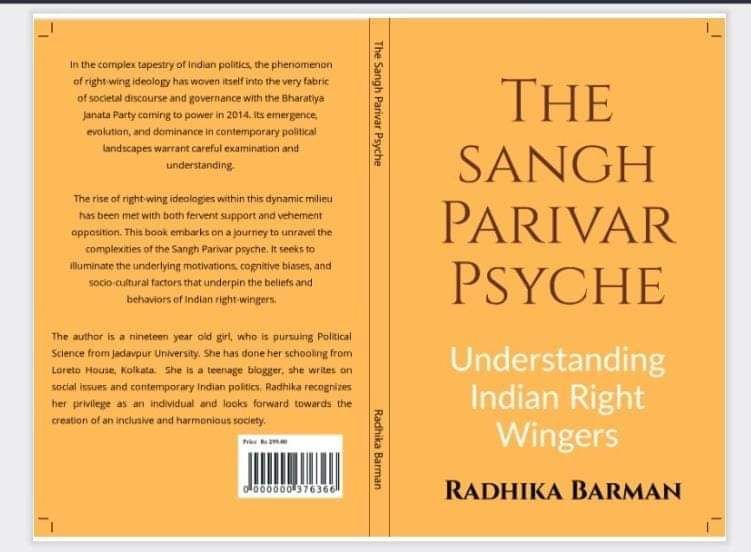
With elections underway, I want to share a book I wrote on right-wing political psychology. It explores how Modi influences people and the psychological tactics he uses. Please read it for deeper insights on political hypnotism and illusion mechanism.
The Sangh Parivar Psyche: Understanding Indian Right-Wingers
Thank you for reading:-)
The Injustice of Inaction in a Troubled Society
If anyone still chooses to be apolitical, you are committing an injustice to countless individuals. You are failing the Muslim friends you grew up with, the farmers whose food you consume, the Dalits who are tasked with cleaning public spaces, the women in your family who face a society where rape is often dismissed, the young people whose job prospects are being stolen, and the elderly whose pensions are being siphoned away. Most critically, you are contributing to the erosion of an India where the younger generation could once debate economics, not religion.
Politics might seem distant from your personal life, but its effects are pervasive and undeniable. Your decision to remain uninvolved in political discourse means you are turning a blind eye to the systemic issues that affect so many lives. You are not required to become a politician, but you are urged to use your voice as a human being—if not as a citizen. By remaining passive, you are not practicing neutrality; you are succumbing to fear.
Criticism of the government is not an act of disloyalty; it is an integral part of a functioning democracy, as it was before 2014. By avoiding political engagement, you are complicit in the deterioration of democratic norms and human rights. It is not merely a matter of personal comfort; it is about standing up for justice and equity. The silence of the apolitical is a form of complicity in the injustices that are increasingly prevalent. Your voice matters, and your engagement is essential for the preservation of a society that values human dignity and democratic principles.
Mind Games – Psychological Tricks BJP uses to manipulate voters
This blog delves into the intricate methods and strategies employed by the Bharatiya Janata Party (BJP), one of India’s prominent political parties, to sway voters. Through a critical lens, I examine the psychological mechanisms, messaging strategies, and campaign techniques utilized by the BJP to connect with voters, establish trust, and garner support.
1) Underdog orientation
This country has lost more conscience than anything. People are so busy with their lives as a consequence of financial disasters created by the BJP that nobody really cares what’s happening in the country. Everyday is frustrated, politically, socially and economically. The only thing they can get pleasure from is validation of winning arguments. I know people who don’t personally agree with the right wing ideology but have voted for the BJP. My hypothesis is the Bandwagon effect. To do something that everyone is doing to look cool and politically rational. Why rational? Because to be proven wrong on declaration of election results is an embarrassment.
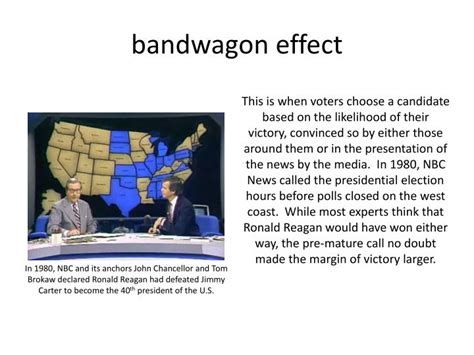
There are people I know personally who have voted for the BJP in 2019 to avoid facing embarrassment in their circle. They cannot afford to see themselves in the position of a person who has voted for the wrong party if they say so. How do they define wrong? Wrong party is the party that loses and right is the party that wins. Over glorification of materialistic definitions of success versus cliched happiness theories have contributed to politics being reduced down to a morality cafe. To win here means you are right, losing means you are wrong for the majority cannot be wrong. Besides, waves decide elections. The wave here is often an appreciation of a political party’s marketing strategy and less of people’s genuine connection with its ideas. The more the marketing the greater the winning chance. Usage of problematic and ethical incorrect stances and violation of human rights is overlooked here for election has to be won by hook or by crook. Means are lesser important than the end for the end cannot be wrong when offered by right and right has historical roots with the state. The devil’s citation of scriptures is justified as long as it’s a scripture. To quote the scripture is of greater importance than the relation to it.
This comes from a deeper socio psychological anxiety of being left out. An artificial fear generated to create impulsive behaviorial patterns in the electorate where loss of a party is loss of identity. Never in Indian history have we witnessed such level of association of politics in our personal life. That’s the reason behind this fight being unique in all mannerism where both sides are equally convinced that they are the Pandavas. Who wishes to be kaurava anyway? Not that duryodhana lacks defense mechanism in contemporary times but the hero surely is in an identity crisis whether to associate himself as a yudhishthir or arjun or simply play safe calling oneself chanakya!
2) Victim Mindset
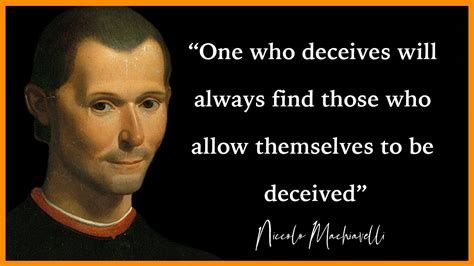
You may have often heard of the BJP ecosystem pushing forward a narrative that “Jab Sara vipaksh ek saath ho jaay, toh samaj Jana Raja sahi tha” (when the entire opposition unites understand that the king is true). This quote is often attributed to Chanakya to hype the Machiavellian politricks of Narendra Modi government as ethics and politics don’t match. The general psyche is standing with someone who is alone out of sympathy if not agreement. The voter may not ideologically agree but would be curious about why everyone is against this person.
This is how BJP generates potential leads to be converted to voters. Modi is portrayed as someone in the weaker side. The general psyche is to perceive that a person who is weak is weak because of some possible misfortune or is a victim of circumstances. These are self consolation remarks we give to ourselves when we are in bad position. Thus, people can connect with this scenario from a sympathetic standpoint. Modi is anyway famous to have called him “son of poor mother”, “obc” etc;
3) Pro- Rich vs Pro – Poor Politics
BJP voters have problems with congress for they are pro poor politics. No middle class wants to see someone financially weaker than them reach the top. So the least a political party can give to the middle class is a temple. Thus, they feel something better than nothing. By nature, the urban elite Indians are jealous of anyone reaching the top. They can’t see their wives succeed them how they will accept a dalit, a Muslim or an adivasi to do those. They feel threatened and resort to communalism to receive religious identity as self consolation.
This is a trend brought on by the social network. Peer pressure and social biases and unhealed trauma. Instead of trying to heal trauma, people try to give stories to themselves. Simply because they lack vision and clarity of purpose.
Typical Indian dinner table conversations are how Islamic fraternity is artificial, reservation is bad and women need not work. These are ideas that the BJP hasn’t officially advocated in its political constitution or manifesto but are illustrated in their politics. Almost every citizen doing such discussions turns out to be a BJP supporter. Thus, the unapologetic ability to put out these radical ideas give validation to the voters who subconsciously believe these but don’t express themselves outside of convention and fear of ostracisation.
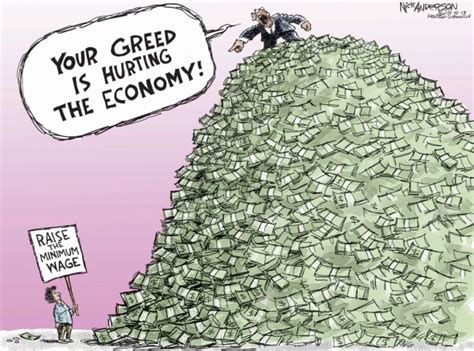
The root cause is sadism and narcissism. Nobody gives anyone his share irrespective of how rich he is. He thinks he deserves a right to it. Thus, the poor are portrayed as non-hardworking citizens. The biggest inequalities in life occur at birth. Some are born abysmally poor, some rich beyond imagination. This has nothing to do with their hard work & has no moral justification. The rich feel threatened to lose their identity as it will hurt their ego to see a poor having the potential to become them. As a result the poor are made to feel they are uncivilized hooligans if not perfect sanatanis.
4) Cognitive bias
Individuals who say degrees don’t matter, to be a good human being, success can’t be about money cannot tolerate the existence of Rahul Gandhi. In mass media Rahul Gandhi is that person who appears to be a good human being but a failed politician. Naturally the idealism preachers should have been sympathetic towards Rahul Gandhi however, chose to be critical making the cognitive bias obvious. However, it’s ironic that the former idealistic cult despite such preaching is voting on the basis of winniability and not ideology. It’s weird that Rahul Gandhi is treated like a murderer while the real murderer roams around freely. If he is a political failure then treat him like that , but why like a scandalous criminal? It’s ironic that even mythological characters like raavan and duryodhana have sympathizers in this country. But Rahul Gandhi appears to be the child of none.
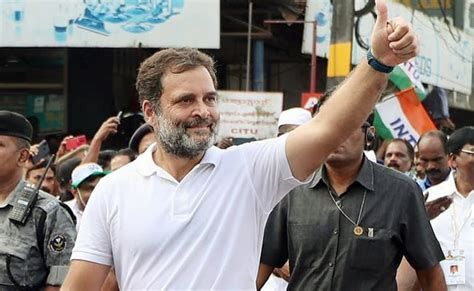
Then there are persons who say, “If Not Modi then who” suffers from a subconscious inferiority complex that they are unable to admit openly. Such persons possible are participants of scenario who have been through co-dependency scenarios. Thus, arises the desire to have someone superior and strong for stability if not anything. This is also from the belief that whatever means, the end should be stable. They feel an immoral leader is better than a weak leader. Over glorification of materialistic consumerism has led to development of this idea that at the end of the country should be in a very strong position. Though, the BJP is in coalition with NDA, but it’s basically a one party dictatorship.
Everyone knows if Congress comes to power then it would be a coalition. The possibility of a coalition party failing is what makes one insecure of losing their identity. The overhyped nationalism coupons by BJP has equated an individual’s identity as that of the nation. The obsession with defence has reduced the state to a secure state. The fear that India can be attacked anytime has made one succumb to an unexplainable but significant amount of fear within themselves. BJP has successfully confused everyone for their inability to convince the masses.
However, it was never a Gandhi vs Machiavelli contest nor a debate between idealism and realism. But about a man’s incredible courage to walk according to his conscience in an unequal race destined to fail.
Such people keep running around in circles trying to find the “perfect guy”. However, it benefits only that which we claim to be against.
5) Encounter strategy
Recently, Narendra Modi in an election rally said that Muslims produce more children, and if people vote for the opposition, only Muslims will benefit. He even claimed that mangalsutras would be attached and distributed among Muslims.
By stating this he followed the words of his master Joseph Goebbels – if you have to lie , then lie big. the audacity to say it publicly and that too unapologetically shows that he isn’t afraid of controversies anymore and is sure of his victory. All Modi wants is the oppressed to make an emotional choice impulsively. More than hurting the minority, he wants to rag them to do something, which gives him an opportunity to prove his point. So it’s a request to my muslim brothers and sisters to stay calm. I know it’s easy for me to say so but I am apologetic as a Hindu by the way you all are being treated but please understand whatever you say now or do will be used against your community. This is an encounter strategy. Like how the US made Palestine the bad guy for their retaliation towards Israel and people started supporting Israel. Ultimately, what happened Gaza got destroyed. Political correctness experts won the argument, but humankind was sacrificed. Similarly, Modi here wants to push Muslims to such an edge where they are emotionally tricked to do something violent or Hinduphobic as they call it like leaving country or riots then Modi will then take advantage of this scenario to prove his point and get Hindus by his side to remain in power.
It’s muslims today, tomorrow it will be the shudras. Idea is to create a rich Brahman rashtra not a hindu rashtra. They don’t want the Hindus. They want the rich Hindus. There’s hardly any Muslim billionaire in india. Thus, they have a problem with wealth redistribution. If Congress really appeased Muslims, their conditions would be better today. Today Muslims are largely poor, lliterate and demographically background. how many Muslims do you see in the posh urban elite cities? How many of you have muslim CEOS?
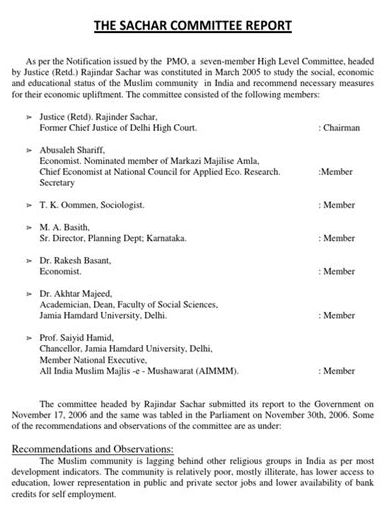
Sachar Committee report, 2005 revealed that muslims were economically disadvantaged. Ambani, Tata, Birla aren’t Muslims. Other success stories belonged to marvari & parsi. Thus there was hardly any visible appeasement.
Thank you for reading
Through My Eyes: The Human Cost of Political Polarization
Having been in politics for seven years, I have encountered a wide range of opinions—both positive and negative. What I find particularly ironic is the profound cognitive dissonance I often come across. This is not a critique from a hardcore ideological standpoint but an observation about the problematic attitudes within India’s educated intelligentsia, including IAS officers, convent graduates, and highly educated entrepreneurs. Contrary to popular belief, it is not only the illiterate IT Cell personnel who contribute to bigotry. Many of the statements I address here come from educated English-speaking individuals.
I am often told, “No matter how open you are to Muslims, they will never accept you. If keeping Muslims in check is fascism, then I prefer fascism.” When I speak against religious prejudices and communalism, I frequently face backlash from Hindutva elements who argue that people of other religions do not reciprocate and, therefore, do not deserve our acceptance. At times, I am accused of being indecisive or insincere in my stance.
What I find ironic is the normalization of cognitive dissonance in our society. My advocacy for secularism is not rooted in my identity as a Hindu or patriot but in my fundamental humanity. It is amusing how I am perceived as an atheist by some and a believer by others, depending on the day. George Orwell termed this behavior as “doublethink” in 1984—holding two contradictory ideas without experiencing the tension of belief.
Swami Vivekananda addressed such attitudes when he said, “In spite of their hatred… we will and must go on building churches for Christians and mosques for Mohammedans, until we have conquered love, until we have demonstrated to the world that love alone is the fittest thing to survive and not hatred.” To claim greater Hinduism than Vivekananda is misguided. Ramakrishna Paramhansa practiced all religions without identifying with just one. By contrast, some contemporary figures claim divinity, which is contrary to the essence of genuine spiritual practice.
In devotional circles, I often see comments such as, “I am Muslim, but I revere Ram,” or “I am Christian but worship Ma Kali.” These are not conspiracies but expressions of a universal spiritual connection. Lord Shiva, often associated with renunciation, is invoked by many across different faiths. Shiva transcends religious boundaries; his presence is in nature, not confined to any temple or mosque.
Both extreme right-wing and left-wing ideologies present challenges. The former claims to have all the answers, while the latter often dismisses the need for any solutions. In politics, as in life, the middle path is often most pragmatic. Many agree that personal issues are political, but few practice this beyond theoretical discussions. We need not a synthesis of existing ideologies but a new thesis that has yet to emerge.
Until such a new order is realized, experience should guide us rather than theory. In discussions on secularism, even a flawed secularism is preferable to majoritarianism. Acceptance should surpass mere tolerance. As Leo Tolstoy said, “Respect was invented to cover the empty place where love should be.” While pluralism may seem idealistic today, I urge you to respect different faiths and tolerate if you cannot accept, as a human and a Hindu.
Read the Ribhu Gita: “The sacrifice of the mind is the most sacred one.” This sacrifice involves transcending existing societal orders. Nisargadatta Maharaj’s I Am That teaches us to go beyond dichotomies of morality. Even the Pandavas faced immense suffering despite their victory in the Mahabharata, illustrating that justice often comes at a great cost.
Krishna’s love for Arjuna demonstrates that true leadership involves both strength and compassion. Rahul Gandhi’s actions, such as his Bharat Jodo Yatra and his commitment to the Constitution, reflect a deep humanism that transcends traditional patriotism and intellectualism.
In contrast, figures like S. Jaishankar and Nitin Gadkari often display narcissistic tendencies. Rahul Gandhi, however, embodies the potential for strength and compassion to coexist. His gesture of hugging Narendra Modi during a no-confidence motion is an example of this ideal.
In a society plagued by kakistocracy, I will continue to respond to my conscience. We need more empaths than mere intellectuals. If intellectualism is confined to philosophical jargon and political righteousness, I will not subscribe to it. Love remains our only hope in this polarized world.
The Urgency of Defending Democracy: Confronting Fascism and Political Complicity
Earlier, bureaucrats weren’t mere government pawns. While occasionally compromising on ethics for the bigger picture was acceptable, the profession still commanded respect due to its potential for meaningful change, approached with a Machiavellian outlook. Times have changed drastically. This is no ordinary political battle; it’s akin to the war at Kurukshetra. Today, any bureaucrat who silently supports Islamophobia, state-sponsored oppression, and assaults on human dignity has deviated from the profession’s noble roots. No IAS officer has recently made significant contributions to social development or change-making. The IAS industry has become a tool for right-wing nationalist propaganda disguised as general knowledge.
Neutrality is no longer possible. I reviewed the timelines of IAS officers on January 22nd, and many celebrated “Jai Shri Ram,” endorsing the politically charged Ram Mandir, which was built by demolishing a mosque. Supporting this without critique betrays their claimed ethical stances. Bureaucrats now feel compelled to prove their Hindu loyalty and allegiance to the government, reflecting a similar trend among educators in the IAS sector. The BJP has reduced democracy to an electoral machinery akin to North Korea’s, where elections don’t equate to democracy. People vote for the BJP not out of agreement with Modi but out of fear of missing out (FOMO) and a desire to avoid social embarrassment for not backing the likely winner. This focus on winnability over ideology exemplifies cognitive dissonance.
Indians preach that character matters more than marks, yet they glorify an uneducated prime minister who lies, violates moral codes, and exhibits Islamophobia. Why does good character lead to fence-sitting? The contradiction is stark: participation is praised, yet the bureaucratic profession has become one of servitude. In extraordinary times, there is no “bigger picture” to consider. Pretending neutrality in the face of oppression only benefits the oppressor, not the oppressed. The compromise on ethics has enabled a fascist regime.
Islamophobia is a concern not because I’m Muslim but because I’m Hindu. Modi’s actions harm Hindus more than anyone else. Small temples in Ayodhya and houses of priests were destroyed without compensation. Varanasi Hindu priests were betrayed, Dalits tortured, and farmers labeled as terrorists. The prime minister shares stages with rapists, and BJP supporters include those harming Hindu women and priests. Hinduism teaches “Vasudhaiva Kutumbakam” (the world is a family), not revenge. Proving religious righteousness to the state is unnecessary.
The problem extends beyond communalism. Modi’s Rajkot temple contradicts our secular stance. Kejriwal’s imprisonment during elections, opposition bank account freezes, MP suspensions, Pegasus surveillance, and the false disqualification of Rahul Gandhi all illustrate severe political oppression. The BJP’s dictatorship is openly supported by the media. Economic policies like demonetization and GST have wrecked the economy, and India’s global reputation has suffered under Modi’s leadership.
The COVID-19 pandemic was mishandled, with black marketing of drugs and prioritizing electoral gains over public health. Rising rape incidents, communal violence, and targeted oppression go unaddressed by the government. The rich-poor divide widens under crony capitalism. Manipur burns while the prime minister remains absent.
This is not a mundane political conflict. State-sponsored classism, exploitation, and hatred mark these times. Secularism and democracy are under threat from an incumbent regime obsessed with civilizational revival. Glorifying ancient legacies risks endorsing monarchy, dictatorship, and religious decrees.
Yet, the educated IAS elite and Gen Z remain neutral. When confronted with the claim that Modi’s state is fascist, the initial response is denial, followed by reluctant admission that we are heading toward fascism. Waiting for it to become a reality is dangerous. Political correctness won’t save democracy.
It’s time for introspection: what’s more important? Winning arguments or saving democracy? “India isn’t an absolute dictatorship” is a weak consolation. It’s heading that way. If you don’t speak now, you won’t be able to later. Anyone but Modi.
This is a plea for introspection and action. The upcoming digital media bill threatens free speech. Speak up now. Political neutrality and silence are no longer justifiable. Otherwise, your education and ethics are in vain. The BJP doesn’t seek a Hindu Rashtra; it seeks a rich Brahmin Rashtra. Tomorrow, they will come for you.
Reflect on the urgency of our political situation. Prioritize democracy over winning arguments. Your silence is complicit. Speak up now, or face a future where speaking up is impossible.
The Religious Paradox – How BJP has brainwashed GenZ
India is today identified as the country that has a Hindu Nationalist regime. Secularism is a subject of trolling and anyone calling themselves secular is criticised for not being nationalistic enough.
Patriotism has been coloured with religion to uplift a sense of pride called ‘Indic Essence’.
To be an upper-caste Modi supporter is the only qualification required to be a Indian. The label of Sanatani is considered a badge of honour. In other words, to be born a Hindu is considered a relief. Spirituality is practiced out of gratitude towards ascribed status. The Paradox here is that the rise of Hindutva is essentially an anti-abrahamism movement under the label of an anti-atheist movement.

Generation Z is a generation that has grown up in a BJP regime. In 2024 a 18-year-old would be someone born in 2006. If I consider 13 as the age a person can begin to develop political consciousness, then he/she would age 13 in 2019. 2019 was the year Mr.Modi returned to power with a thumping majority. This was the best time for the bandwagon effect to work as a political influence factor.
Let us understand this more deeply. The human creature is a creature of emotions. The greatest satisfication it receives is from the sense of being great. Nothing can make a human being attain more pleasure than winning an argument, gaining a sense of superiority in the group and receiving self-validation.

The BJP has carefully placed the youth in an artificial bubble of righteousness. Morality is a social institution and man is a social animal. Man becomes man amongst men. Socialization cannot take place in isolation and social convention is the most important factor. Social conventions are anything that is accepted in human society. When we associate value to it it becomes morality. To fit into a mainstream morality conscious society is seen as a an achievement. Religion another dominant social institution has been historically perceived as a morla institution in India. From the perception that religion teaches value arises the thought that to be religious is to be moral.
The BJP has taken advantage of this reality by defining what is religious. Hindutva is a political ideology but no less than a religion. How Taliban is patriarchy itself, Hindutva is a religion in itself. For religion is a belief system that has an unanimous support, given set of rules and regulations and a tinge of magic or supernaturalism. In modern times an artificial enemy and a political party is another requirement. Hindutva is BJP’s religion. It’s followers are BJP supporters.

The support for a Hindutva can be both understood in two ways at a social-psychological level and at a political level. To begin with, its primarily a psychological illusion. The desire to be out-of-the-box is the root cause. There is a theory that suggests that in 21st century there is a rise of atheism. The perception therefore sets is that to be an atheist is what is popular. The desire to have an unpopular opinion is what makes one religious.
Enters morality, that now says “You must be different.” The human mind under the perception that everyone is an atheist desires to be out of the box. That is religious. The person now receives tremendous self-gratification by being out of the box. This gratification is now of two forms, internal and external. Moral gratification is what one receives internally. The idea is this: To be out-of-the-box you need courage. The person considers oneself courageous. Religion as a social institution is associated with morals.

The person thinks this way, “The world is largely immoral living in a Godless world, I am moral for I belief in God, I am different therefore, I am great.” External gratification comes from the society the person lives in that too applauds the person in the same manner.
Enters BJP as a political institution. The BJP now sets the narrative that Hinduism is under threat. The proud layman now tends on to belief it is because of Abrahamic religions. This arises from the belief that most atheist in India are Hindu atheists. There are hardly Christian or muslim atheists. The justification given is that Hinduism is an unorganized religion and Abrahamic faiths are organized thus to visit church, do 5 times namaaz is a common scene.

The desire to be out-of-box has led to youth forget that neither merely visting Churches can make you a Christian nor doing Hinduism podcasts qualify you as a Hindu. The reason for this ignorance, is that the root cause of worship came in from pride and revenge. It was nurtured on superiority complex. The person became a believer to cancel a non-believer not out of love for God. The propagation of Sanatan Dharma was done to look politically correct in society.
BJP fooled Hindus by making them believe they are doing a righteous deed by being hyper-nationalistic.
At a initial level it started with a disdain towards atheists, which evolved itself to disdain towards anyone non-sanatani. Hindus are made to belief that in modern times due to rise in secularism, a hindu is ashamed of his/her identity. This was shown as an output of a colonial mindset as secularism has its roots in the west. Therefore, we must respect our roots and settle for India a religious land and not subscribe to western idea of civilisation.
The cancel culture is now coloured with the colonial card. Indians being sentimental about their wretched colonial past developed fell for this narrative. Secularism is now seen as a cultural imposition. When asked about tolerance, Hindus have settled for Vasudaiva Kutumbukam – the world is a family. Interestingly, by cancelling atheists and Abrahamic religions. “Proud Hindu” therefore is more of a protest slogan to the cultural imposition.
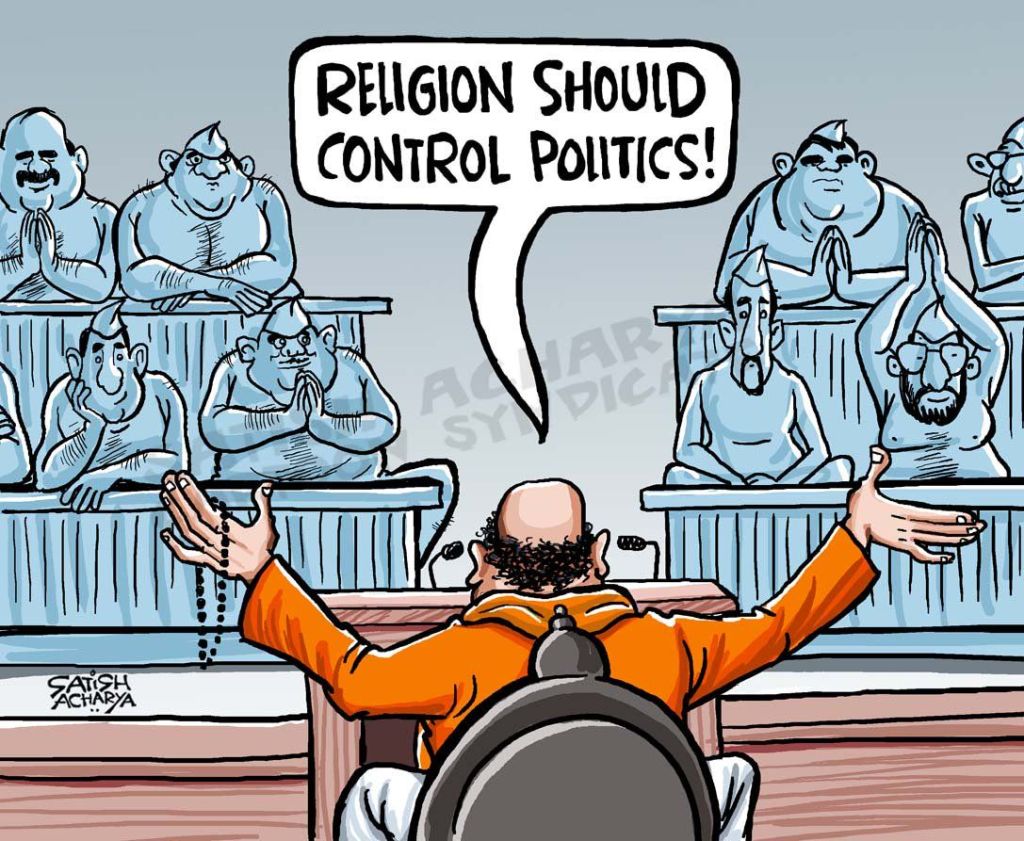
If this scenario is observed from a sociological perspective then these actions have been taken by a mob out of impulse. As it is said if you have to lie, then lie big. In a room of 10, if 7 people suddenly say A has murdered B, then the room collectively will not believe that. However, a doubt would develop. If this pattern is repeated consecutively for months then they would avoid A out of the fear of being murdered.
In one chapter of the Brihadaranyaka Upanishad, Gargi appears in the court of King Janaka, and challenges Yajnavalkya, the best of the best, in a debate. From Yajnvalkya’s response, we learn that she was not an ordinary lady or a housewife. That was our legacy which the Hindutva brigade has today reduced to roasting videos.
Generation Z is more upright generation. Righteousness comes along emotions of anger, anxiety and impulsive behaviour. Contradictory to popular belief human beings are more interested to convince themselves they are right than others. Sadism and voyeurism are real problems. Communalism sprinkles salt on these wounds, insecurities rise up this time like a burning fire with an extreme desire to prove oneself right. Most sadists do evil knowing its wrong. In this case however, religious sadism is justified for its post truth age and everyone is a Machiavelli. However, Machiavelli was not a religious fanatic.
The theory of rise in atheism is also vague. Exactly, how we come to the conclusion atheists have increased is unclear to me.
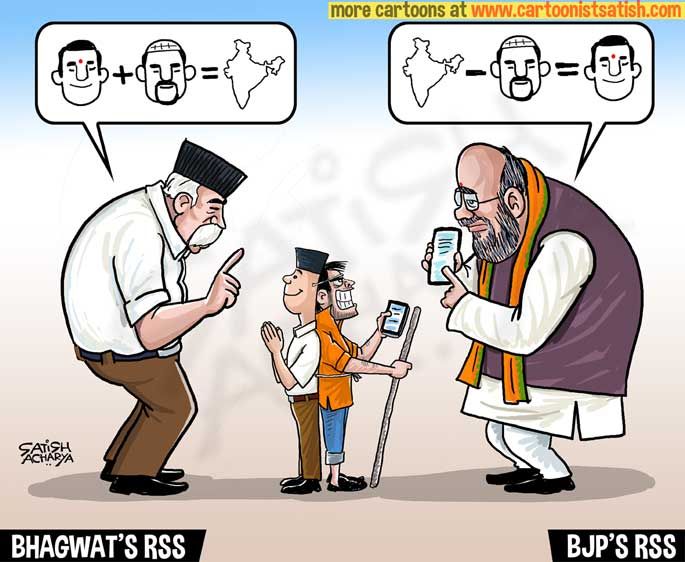
Everyone in Hindutva is referring is referring to an artificial everyone. If 40 people out of 50 say, “People are losing faith in religion.”, you do not consider the remaining 10 as majority. Everyone is referring to an invisible minority. Its possible there is rise in opening up as an atheist. Earlier people did not openly claim they were atheists out of fear of social ostracization. Besides what qualifies you as a believer, mere recitation of slokas and the habit of watching religious videos to cancel people?
Hinduism is a religion that talks about nirguna as the ideal state of being where man is above the state of satya, tama and raja guna. For God is above the purview of righteousness. To believe that possession of righteous deeds, thoughts and words are enough to attain God is false. As per Hindu theology one needs to rise above the idea of self that is ethically neutral to the material world. A state of being where in complete self-absorption with the divine the self is merely a witness to activities conducted by him. Neither happy nor sad. Neither proud nor confident but in a state of silent acceptance of the world.
For the BJP, God is a dictator, macho man without women who is always angry. Circulation of images of Krishna with a sudarshan chakra, angry hanuman, shiva with trishul have set this narrative. No female goddess is given attention by the BJP. But can Shiv exist without Shakti?
Impulse, anger and existence of any behaviour that is negative, drains human body and creates an uncomfortable scenario is condemned by Hinduism in its scriptures. Thus, the false sense of vanity is nothing more than an illusion.
Where is the shame to be a Hindu? Who is ashamed? Is unclear. The jingoistic pride has targeted opposition leaders at a political level.
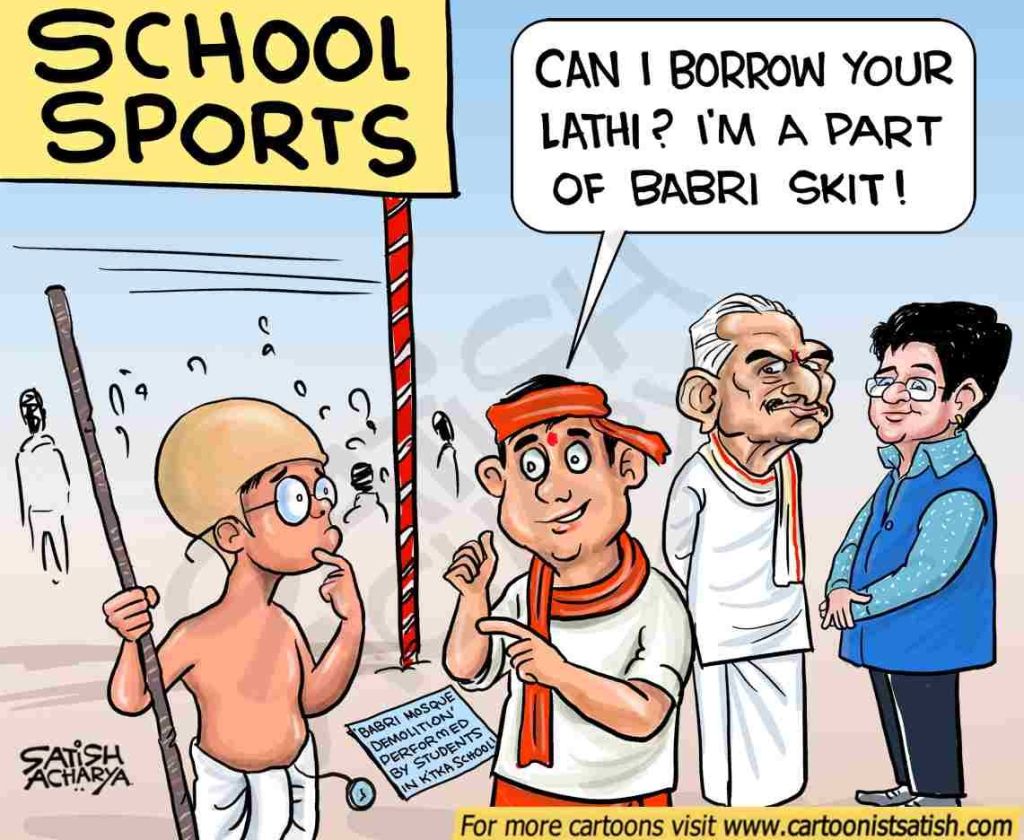
This narrative has been set by normalisation of politics and religion. Indians love to live in the past. Mahabharata, Ramayana are seen as golden ages during those days, politics was undertaken by religious men. Shri Krishna who is God is also a politician in Mahabharata. These narratives have normalised the idea that anyone who is pro-bjp is pro-hindu and anyone anti-bjp is anti-hindu. The interlink of religion and morality in social sphere has evolved this to an anti-humanity narrative. With Hinduism being potrayed a human religion anyone anti-hindu is anti-humanity. Who is anti-hindu? Anti-bjp. This way, BJP has placed itself at the top of the humanity pedestal.
The human mind is whimsical, it chooses to make unnescary inter connections between different things. There may be or may not be a relation between two things, however, the human mind is going to make a connection. This is the reason for the emergence of pseudoscientific content in current times, it is primarily consumed by the youth. The desire to be out-of-box makes them fall for it. The common perception is anything that has to with religion and some ritual is discarded by calling it unscientific. The counter argument given to this is that not everything can be rationalized. It’s not about being right or wrong but to look popular in society.
Desire to be religious has emerged from opposition to atheism. More youngsters are religious to prove they are not atheists. It is anti-atheism that has generated religious consciousness.
Human beings have a spiritual longing for understanding and meaning, and given the mystery of existence, that spiritual quest can only be fulfilled through some kind of relationship with ultimacy, whether or not that takes the form as a “transcendent other”. Religion has power to meet this need for meaning and transcendent relationship
Most Indians are religious for the sake of being religious. In some cases, it is often without any islamophobic thought. However, in modern times, this theory has become an exception and not example. Due to prevalence of carefully designed tricks of brainwashing, rightwing inclination is no longer avoidable.

BJP’s rightwing ideology has a tinge of classism. Have you ever heard of a rich person losing house in a riot? Economically weaker sections of the society are targeted. Classism is a reality in Indian society irrespective of religion. Thus, a hindu/muslim businessman would not be here be effected. For that matter, BJP has been in good touch with top businessmen of the country. Businesses benefitted by BJP will not oppose BJP whether it is run by a Hindu or Muslim or Christian.
If the person switches to YouTube then BJP has an alternative theory to offer. That is BJP has done more for muslims than he has done for the Hindus but he doesn’t want the Hindus to know that. This claim is made by educated BJP supporters to look politically correct. When questioned about lynchings and other atrocities the response is that this is an opposition imposed narrative. In other words, it is the opposition that claims BJP is anti-muslim.
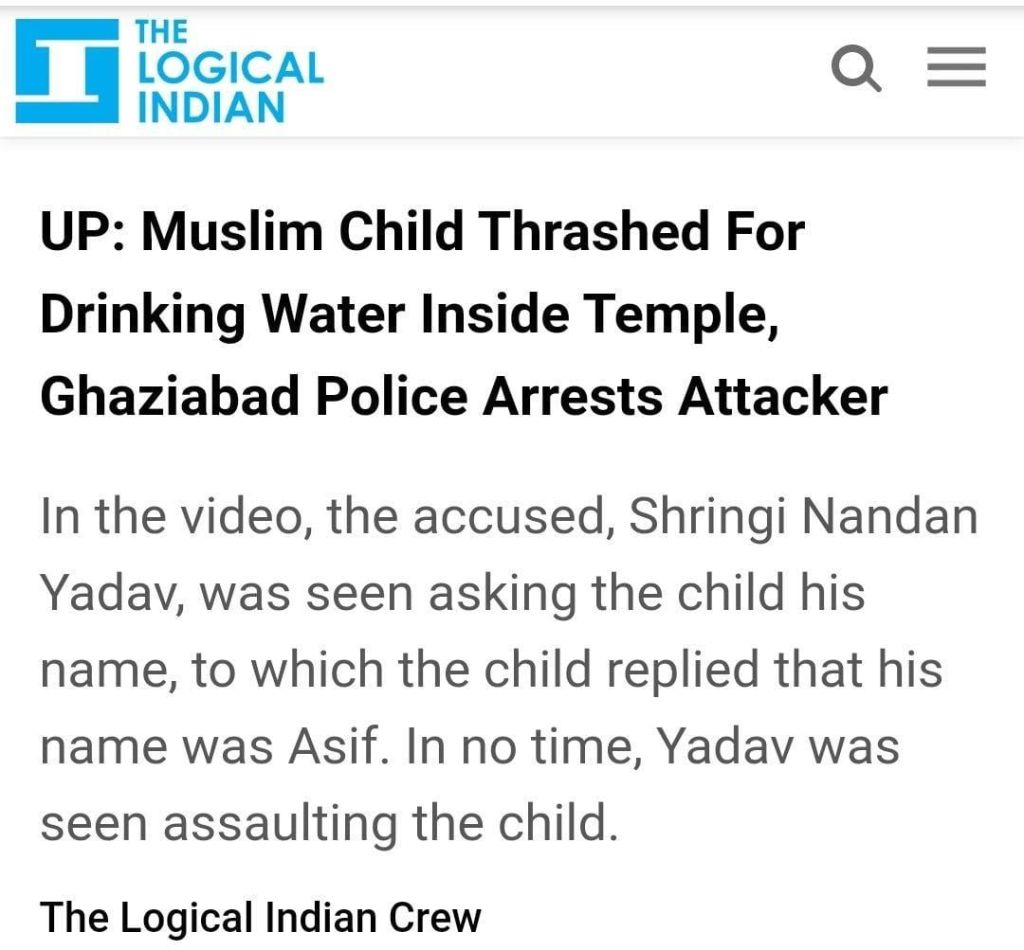
Another methodology to attract the youth in religious paradox is superstition. Superstition is a popular reality. The youth desires to have an upopular opinion, therefore, it settles for pseudoscience in the name of religious knowledge. The cliché that not everything can be rationalized is placed in a hyperbolic manner at the cost of losing ones individual intellect. The youth can be brainwashed easily by using psychological tricks. For example, when you read captions like, “Everyone says this is false, no one will tell you the truth.” or “real history” or “what they won’t tell you”, you are more likely to fall for it. The desire to know a new information, something others do not will make you fall for that content. These captions generate a feeling that something is being hidden from you. To know the truth, a person will dig deeper and by the time one reaches rock bottom, the tunnel is closed. Before you even realized you are already a victim of systematic manupliation.
How is this relevant to politics? There is an unfortunate similarity in the audience.
Modern day superstition is spread in the name of healing. There is a rise in clairvoyant and numerology practitioners. You may have come across videos that have captions, “You are not reading this by accident”, “Angel number 11.11 suggests etc;”. While its true that synchronoties do take place in life but glorification of it leads to a weak mindset. Rise in positive synchronties videos and healers is doing more harm than any good. This is a business. Visit any channel that uploads such videos in the name of manifestation tricks, carefully observe all videos read “Do not skip, God will be angry.” or “This message is for you”. If the message is indeed for a specific person then how can all videos have the same caption.

The problem with rise in motivational and astrological content is that there is no check in the intention of the viewer. Today a person with bad intentions can also watch the same video and feel he is in the right path and so can one with right intentions. A criminal can be equally motivated to be productive as much as a student can.
The intent behind the productive task needs to be checked. For example, there is a young adult who has been misguided by wrong information to support a political party. It is not that he/she doesn’t have a mind of his own but if evidence is manupilated then conclusion too will be distorted. The same person could be also consuming spiritual content where positive messages are given by angel numbers and synchronities. This reconvinces his/her idea that he is not in the wrong path. With an increase in conviction he desires to consume more of the political content.

Motivational videos that have inspired him to be productive leads him to now be a content creator. The consumer is now a creator. However, the loophole here is that a rightwing supporter and a non-rightwing supporter cannot be receiving the same message. For example, there are two friends. Both are educated and are spiritual. Both also believe in manifestation and astrology. A is a BJP supporter and B a non-BJP supporter. Both receiving the same message cannot be a synchronity. The universe cannot be double decking. God cannot be asking both a BJP and Non-BJP person to create political content with an epilogue that “You are in the correct path.” This is not my theory but a real claim made by multiple youtubers that they have been guided towards this path. YouTubers both rightwing and non-rightwing have made the same claim.
Religious fundamentalism in India is thus linked to science denial. Since science is nothing more than a method of determining truth using empirical measurement and hypothesis testing, denial of science equates to the denial of objective truth and tangible evidence. In other words, the denial of reality. Not only does fundamentalism promote delusional thinking, it also discourages followers from exposing themselves to any different ideas, which acts to protect the delusions that are essential to the ideology. This ultimately leads to the creation of a kakistocracy.
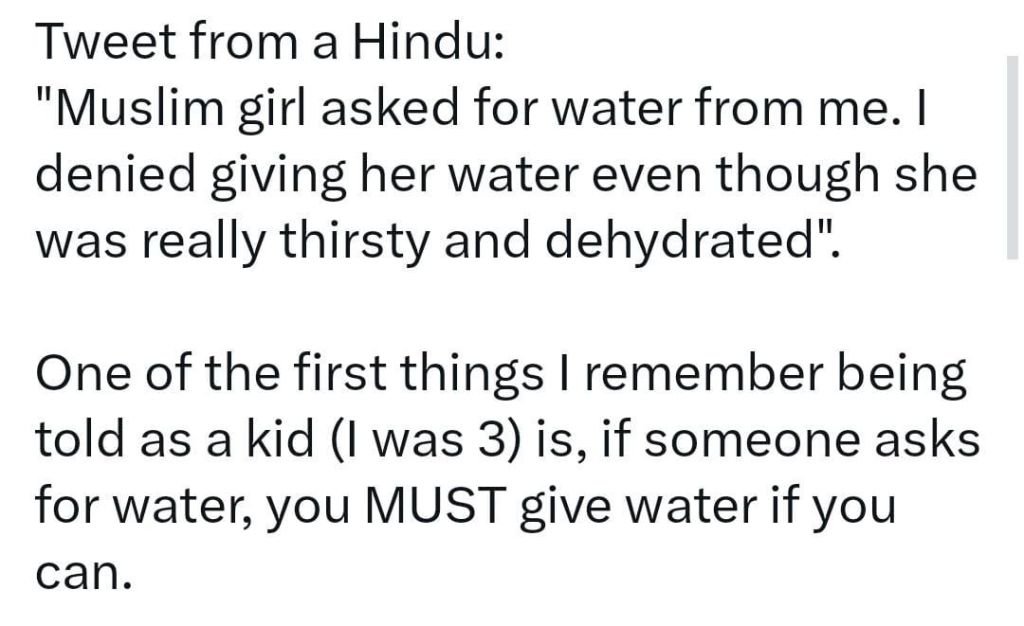
From the belief that ‘I cannot be wrong’ nor can the ‘synchronities I have received can be wrong’ man chooses to surrender his intellect to a higher power. This higher power is a politician. This politician is not an ordinary politician but someone who is a social psychology expert. This politician therefore is a messiah. A messiah is not a leader but a saviour. A saviour comes when there is a crisis. But what if there is no crisis? Then crisis has to be created. Fear here is the catalyst to create a sense of panic. Fear, disastification, anger and hatred are the necessary elements required here. Religion is the best tool to be used here as it can generate all the above emotions as well as the reverse of it. The complexity of the structure in the social institution of religion is an advantage. Presence of overlapping abundant theories makes it unambiguous.
Truth is there is no one way to attain God. No one uniform formula is recommended in Hinduism. It is its diversity, contradiction, imperfection that makes it a beautiful religion. For that matter, it is not a religion, but a way of living. Why so? It is because God has no religion. God lies in the silence of your thoughts. You need to be nothing to attain God as per Hinduism.

Hindutva is anti-thesis of Hinduism. Hindutva is not even remotely related to the values and shrines of Hinduism. The Sanatan Dharma that BJP talks of is an infinite concept. Sanatan means timeless infinity. One that has no beginning nor any ending. Sanatan Dharma is therefore resemblance of human beings as creations of God. One that is infinite cannot be under threat. You are unborn. All of the births and deaths occur within the consciousness impressed through identification with a body-mind form. The one to whom the ‘I AM’ appeared onto, had to be there prior to any manifestation. You Are That. Formless unmanifest Presence.
Its clear that those who support Hindutva neither know Hinduism nor themselves. Nobody is under threat, fear is only in the mind of the evil. That evil who is insecure and therefore, chooses to politicize religion. Its ironic that everyone talks about being religious but no one talks about being nothing. To be animalistic is to be religious. To be nothing is to realize oneself. Here’s a passage of nothingness.
“Once you know with absolute certainty that nothing can trouble you but your own imagination, you come to disregard your desires and fears, concepts and ideas, and live by truth alone. The greatest freedom is having nothing to prove. Realize once for all that neither your body nor your mind, nor even your consciousness is yourself and stand alone in your true nature beyond consciousness and unconsciousness. No effort can take you there, only the clarity of understanding.” Nisargadatta Maharaj
Rama, Beyond Religion: Understanding Consciousness and Rejecting Temple-Mosque Politics
Rama means “Jo har kan kan mein Rama hua hai” (one who is absorbed in every atom of this universe). In other words, Rama is consciousness. Consciousness is timeless and changeless, beyond the confines of space. The temple represents a materialistic duality. Unfortunately, the BJP may not understand this.
Names, identities, and religions are all creations of the mind. God transcends the mind and body. One who is born in time, dies in time, but consciousness is unborn. Therefore, the idea of a Janmabhoomi (birthplace) for Rama is fallacious, as Rama is eternal—unborn and beyond time and space.
It wasn’t just the minorities who disagreed with the Ram Mandir; as a Hindu, I do too. My Hinduism teaches non-dualism, and my conscience tells me that this was a political rivalry and a waste of money. It’s a humane issue rather than a religious one.
You cannot oppose the Babri Masjid demolition and support the Ram Mandir at the same time. We are undergoing a recession; we cannot afford to engage in temple-mosque politics. And yes, I would say the same if we were inaugurating a mosque instead of a mandir.
There’s no such thing as soft Hindutva or hard Hindutva, just as there is no such thing as soft terrorism. Religion and politics should be completely separate. No political leader, whether from the opposition or the ruling party, should participate in any religious activity in public.
Secularism has never been, nor does it need to be, an antonym for Hinduism. The problem is that the BJP has brainwashed people into mistaking secularism for atheism. Unfortunately, people across religions often vilify atheism, which allows the BJP to frame debates around righteousness.
Wise are those who know that God has no religion, and wise men need no politician to teach them either religion or morality.

From Democracy to Kakistocracy – The Indian Tryst is lost
At the stroke of the midnight hour, Pandit Nehru delivered a speech upon receiving Independence that is famously remembered as “tryst with destiny”. His speech went on to pay homage to Mahatma Gandhi’s efforts in the Independence Movement and called upon his countrymen to work together to bring freedom and opportunity to the common man, to the peasants and workers of India; to fight and end poverty and ignorance and disease; to build up a prosperous, democratic and progressive nation, and to create social, economic and political institutions which will ensure justice and fullness of life to every man and woman.
Today, democracy has become a negotiable concept to the extent that mass suspension of members of parliament is not a hot topic. Never in Indian history have you heard of 150 opposition MPs being suspended consecutively. There is no civil society movement. The ruling party MP justifies it saying they were asking too many questions. Media glorifies this “Ek akela sab per bhari”. That is open support to dictatorship.

In contemporary times democracy has been a subject of righteousness. Democracy is been as a model of government that cannot provide political stability in the long run. Democracy as a form a government isn’t necessarily bad but desire of a strong government has changed the narrative of about democracy. The primary challenge of practicing democracy is that as a form of government it has become a victim of misuse by right governments that have populist tendencies.
There is a rise in far right populist governments across the world. Due to this tendency there is a rise in extreme opinions. Citizens are usually far right or far left, with cancel culture being normalised. Right always right, majority wins are no longer overhyped statements they have become a subconcious programming code. The institution of polity has been linked with the institution of morality. The desire to be righteous has led to flawed decision making.
The reduction of democracy to merely an electoral mechanism has led to normalisation of electoral malpractices. Horse trading is glorified as Operation Kamal by the fourth pillar of democracy.

Recently, a picture went viral of mass burial of death bodies of Manipur violence victims. Yet the Prime Minister chose not to visit Manipur. Why hasn’t he visited Manipur? Is it because it is North East? Or is it because death due to hate is normal in India now?
Narendra Modi was possibly silent because he knows this human catastrophe is one where he can’t talk himself out of. Silence is preferable because he has no answers or solutions.

I wish Indians and even in the international community could outrage the same way for Manipur the way they are doing for Israel-Palestine. The Israel-Palestine war revealed our hidden racism, ego as well as the subconscious fascist inside us. Sadism is at it’s peak. The country is infested with hatred.
In Uttar Pradesh we saw a teacher instructing children to slap their classmates for religious differences. The Uttar Pradesh incident is merely not a problem of communalism but a symptom of sadism that has inflicted India deeply. If you are not bitter, sad or angry about this country then you are part of the problem.
From banning meat to passing bills that can curb public dissent, India has reduced itself to a morality cafe. The last nail of the coffin has gone in wrong in hands. In a country, where there is more discussion on religion in an era of unemployment and falling economy, can’t be called a democracy. Calling it a democracy, itself is an insult to the concept of a democracy. This normalized version of sadomasochism is assail.
Nationalism is that menace which can be refurbished to its initial panorama only by dissent.
In Karnataka the BJP being in opposition has restarted discussion on Hijab. Iran and India are two states that are more concerned about a women’s dress than her education. The former is killed to pull it off, the latter is humiliated to wear it. So much for a piece of cloth! Truth is, it was never about women, education, Islam, or theocracy. It’s a systematic illusion to divert the attention of the masses into a labyrinth, or an uncalled rhetoric.

Interestingly, an average Indian day begins and ends discussing religion. Then they boost secularism. Contradictions of secularism’s significance can’t be endured as an element of democratic dissent in a republic or be valued in the garb of freedom of speech & liberty of thought.
The emperor walks naked, the pied piper blows the flute, yet the blind men of the nation bow down in front of the king, calling him the greatest ever one-eyed man. That’s how the story of India goes, for, your ignorance is as good as my knowledge. No wonder, democracy has evolved itself to kakistocracy.
India has been unapologetically renamed as Bharat, the Prime minister chose to rename dishes upon his name in G20, yet the media is openly and unapologetically defending dictatorship. That’s where the tryst breaks.

The populism latching on to the politics of winners and losers is to mobilize psychically potent resentments & anger against the “outsiders” responsible for the pain of the “people”. While, the true terrorists of democracy are the ones heading the country. The answer isn’t authoritarianism. The answer isn’t populism or Chanakya. Neither idealism nor realism. When you fall in the labyrinth of doing good, you destroy the natural homogeneity of India. India is a chaotic contradiction. There is no correct answer. That is our beauty. Politics about unmaking the chaos. Diversity should be appreciated and utilised.
A country is a conversation if that conversation perceives equity as idealism to be politically correct then that conversation will only lead to non-negotiable arguments. People are the core of democracy, if they lose faith in its practicality and ideals then how can it be practiced.
People vote out of FOMO – Fear of Missing Out. People are more interested in proving themselves right by voting a party that has winning possibility than mere ideological inclination.

Lastly, all I have to say is this, democracy is a non-negotiable concept. It’s no longer about the effectiveness of an opposition, it’s about bitter acceptance of a reality, that is we are a kakistocracy. Time we choose between perfect politics and the need to resuscitate our Constitution. 2024 is a litmus test.
Thank you for reading. For more such interesting write ups and political analysis, do follow me here or on Twitter. My social links are given below for more such freshly brewed content. 🙂
Disclaimer
Any views or opinions represented in this blog are personal and belong solely to the blog owner and do not represent those of people, institutions or organizations that the owner may or may not be associated with in professional or personal capacity, unless explicitly stated. The views or opinions are not intended to malign any religion, ethnic group, club, organization, company, or individual. All content provided on this blog is for informational purposes only. The owner will not be liable for any errors or omissions in this information nor for the availability of this information. The owner will not be liable for any losses, injuries, or damages from the display or use of this information. The blog owner is not responsible for the content in comments. This blog disclaimer is subject to change at any time.
Living Unity: My Experience of Cultural Assimilation in Kolkata
I was born and raised in Kolkata, a city where religious harmony was a natural part of life. Throughout my upbringing, I never heard the Azaan blaring from loudspeakers, nor did I witness meat being sold in temple complexes. The notion of Hindus being lynched was completely alien to my experience.
What I did witness was a vivid tapestry of communal integration. Hindu-Muslim Durga Puja celebrations were common, with Muslims partaking in prasad and Hindus organizing iftar during Ramadan, all while celebrating Jagadhatri Puja with equal fervor. Hindus in Kolkata were proud of their religious identity but did not feel the need to impose it on their Muslim neighbors. This acceptance and mutual respect were intrinsic to our community life.
In Raiganj, interactions with Muslims often reveal their identities only if they choose to share them. Similarly, elderly Christian women in central Kolkata blend seamlessly into the community, their Christian identity becoming apparent only through personal revelation rather than external markers. This seamless cultural assimilation highlights a way of life where religious identities coexist without the need for forced imposition or Sanskritisation.
The media’s portrayal of communal issues often seems skewed and sensationalized. The BJP’s narrative, in particular, appears to exploit these issues to create divisions rather than fostering genuine understanding. Such portrayals do not reflect the lived reality of Kolkata, where communal harmony is a lived experience rather than a political tool. The media’s distortion of these issues serves more to manipulate perceptions than to address any actual communal discord.

